Monxo Lopez
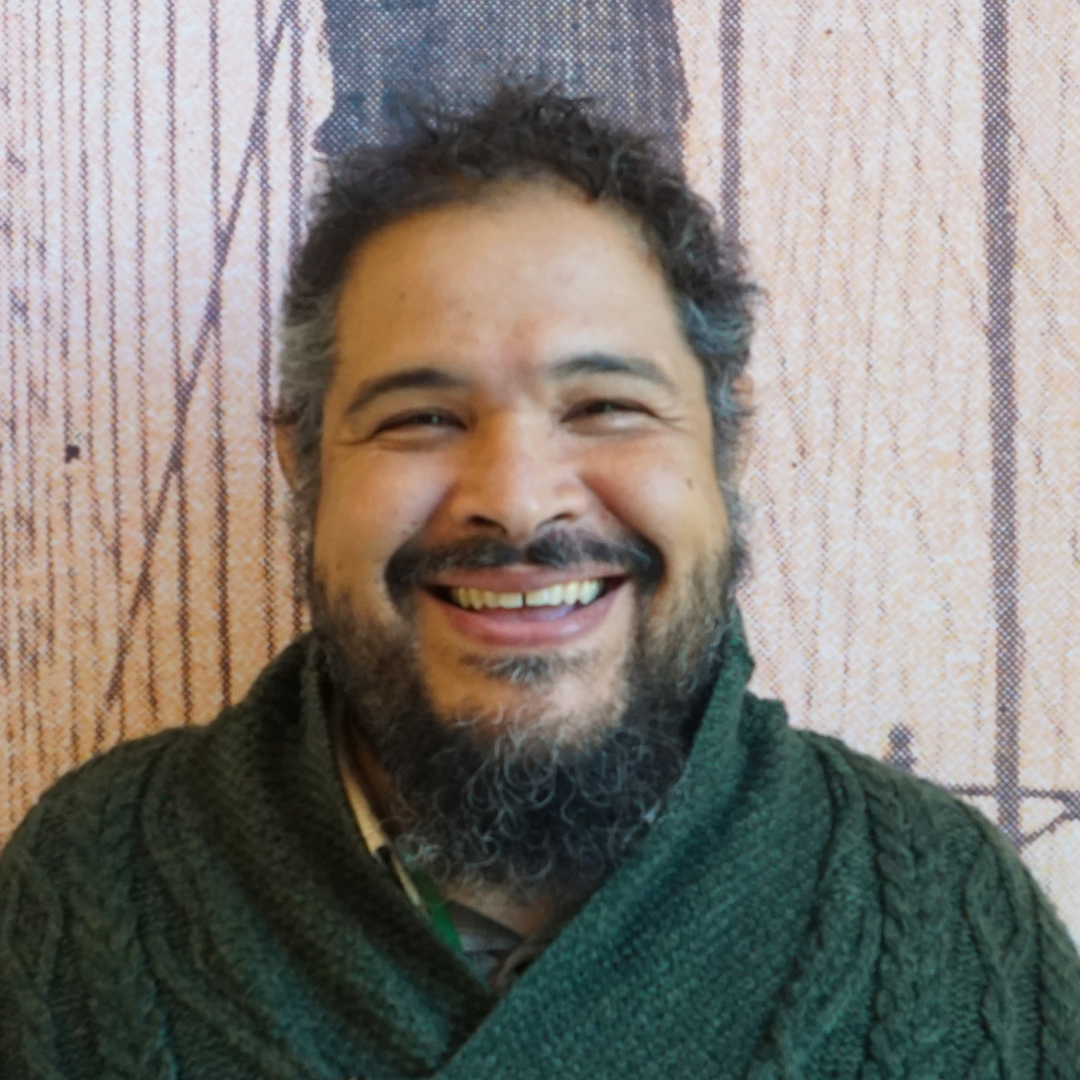
In this oral history, Monxo López shares his journey from growing up in Puerto Rico to becoming a key figure in housing justice and community land trust organizing in New York City. Born in 1973 in Puerto Rico, Monxo recounts his political awakening at the University of Puerto Rico, where playing guitar drew him into Independentista circles and protest music. He traces his academic path through a master's degree in political science at Université Laval in Quebec and a doctorate at the CUNY Graduate Center, where he studied under the late Marshall Berman.
Monxo describes how his move to New York City in 1999 was initially centered around culture, music, and the Lower East Side, particularly the Clemente Soto-Vélez Cultural Center, where his wife, Libertad, later became director. His political focus shifted to urban issues in 2012, when the proposed relocation of FreshDirect to the South Bronx waterfront galvanized neighbors and led to the founding of South Bronx United. The birth of his child deepened his radicalization and commitment to organizing.
He explains how the South Bronx organizing effort eventually led to the creation of a community land trust in Mott Haven, inspired in part by the concept of environmental stewardship and the rights of nature. Through this work, he connected with Tom and Corrie and eventually joined the board of the Cooper Square Community Land Trust. He reflects candidly on the fragility and internal conflicts he encountered at Cooper Square compared to the more dynamic, youth-engaged organizing he had built in the South Bronx. He also discusses the HEArts Center, a $140 million restoration project in a building with Young Lords history and the broader challenge of generational succession in community organizations.
This interview will be useful for anyone interested in the history of the Cooper Square Community Land Trust, South Bronx United, environmental justice organizing, and the broader history of community land trusts and housing justice in New York City.
Community Land Trust
Environmental Justice
Housing Justice
Generational Succession
South Bronx Organizing
Independentismo / Puerto Rican Independence Movement
Gentrification
Real Estate Speculation
Non-Profit and Government Relations
Cultural Organizing
Urban Social Movements
Young Lords Party
Libertad (wife, Director of Clemente Soto-Vélez Cultural Center)
Marshall Berman
Jack Silverberg
Donald Dunn
Tom and Corrie (Tomangori)
Rubén Díaz Jr.
Michael Bloomberg
Evo Morales
Zohran Mamdani
Frances Goldin
Robert Francis
Bolivian Constitution (Pachamama rights)
Bronx Coalition for a Community Vision
Community land trust
Environmental justice
FreshDirect relocation campaign
Housing Justice for All coalition
Independentista movement
Mutual Housing Association (MHA)
Rights of nature
Shadow government model
South Bronx United
Puerto Rico
Quebec City, Canada
Montreal, Canada
Fort Greene, Brooklyn
South Bronx / Mott Haven
Lower East Side
Cooper Square
Clemente Soto-Vélez Cultural Center
HEArts Center
CUNY Graduate Center
| time | description |
|---|---|
| 00:00:00 | Monxo introduces himself. He was born in Puerto Rico in 1973 and lived there until 1996, when he moved to Quebec, Canada, to pursue a master's degree in political science at Université Laval. He later completed a doctorate in political science at the CUNY Graduate Center in New York City. |
| 00:02:00 | He reflects on his transitions through college and graduate school. As the first in his family to attend college, he credits playing guitar, his wife Libertad, and supportive academic advisors Jack Silverberg in Quebec and Marshall Berman in New York as key to making those moves feel manageable. |
| 00:04:00 | Monxo describes his political awakening. Coming from a politically moderate family, the University of Puerto Rico exposed him to Independentista thought through leftist professors and protest music circles, convincing him that the United States should leave Puerto Rico. |
| 00:06:00 | He identifies a second political turning point in Quebec, where he discovered that the provincial independentist movement was nationalist and, at times, racist, pushing him to distinguish between anti-imperialism and exclusionary nationalism. Frequent escapes to New York led him to Marshall Berman's writing on cities, eventually pulling him toward urban politics and the CUNY doctoral program. |
| 00:09:00 | Rendón asks how Monxo became involved in housing organizing in New York. He explains that from 1999 to around 2012, his life in the city revolved around culture, music, and the Lower East Side, particularly the Clemente Soto-Vélez Cultural Center — with his political energy directed entirely toward Puerto Rican independence, not local urban issues. |
| 00:11:00 | He recounts two experiences that shifted his focus to New York City: being effectively displaced by gentrification from their Fort Greene apartment despite being homeowners, and then in January 2012, the announcement that FreshDirect would relocate to the South Bronx waterfront with over $100 million in city subsidies. Neighbors came to Monxo to analyze the situation, and South Bronx United was born. Learning that Libertad was pregnant shortly after radicalized him further. |
| 00:18:00 | Monxo explains how he connected with Cooper Square CLT through Tom and Corrie, who served as expert witnesses during South Bronx United's lawsuit against the city and FreshDirect. That relationship eventually led to an invitation to join the Cooper Square board. |
| 00:21:00 | He recounts the intellectual path that led South Bronx United to the CLT model: research into the rights of nature, the Bolivian Constitution's recognition of Pachamama, and the concept of stewardship. A late-night conversation with lawyer Donald Dunn ended with the formal incorporation of a land trust within a week. |
| 00:25:00 | Monxo describes South Bronx United's role as a "shadow government" for their district, doing the work elected officials are unable or unwilling to do. He recounts the HEArts Center project: a building built in 1937, occupied by the Young Lords Party and Black Panthers in 1969, abandoned around 2010, and eventually transferred to the community land trust after seven years of lobbying. Restoring it is estimated to cost $140 million. |
| 00:30:00 | He recalls being invited to join Cooper Square CLT just before the pandemic, in late 2019 or early 2020, because Tom recognized Cooper Square needed someone with experience in hard-hitting organizing and direct action from the South Bronx. |
| 00:34:00 | Monxo shares his candid first impressions of Cooper Square CLT: despite its celebrated name, it was fragile, disorganized, and under-resourced. Historically, the CLT had been dormant, with the MHA functioning as the primary organization. He describes his and Rendón's current work as an effort to build the CLT into an independent, functioning entity. |
| 00:37:00 | He reflects on the contentious internal culture at Cooper Square — deep friendships alongside personal attacks and a "civil war" between factions wanting to dissolve the CLT and those wanting to preserve it. He describes his own approach as one of listening and minimal intervention, with the CLT acting as a kind of supreme court while residents make most decisions. |
| 00:41:00 | Monxo addresses the question of government support for CLTs. Skeptical of government involvement given its role in destroying communities through disinvestment and environmental damage, he argues that CLTs represent a necessary alternative to both private for-profit development and government-owned housing, offering protection from both sides. |
| 00:47:00 | Rendón asks about generational succession. Monxo expresses alarm that he and Rendón were among the youngest people involved in Cooper Square organizing, both around 50. He attributes the lack of younger leadership to decades of toxic internal conflict that drove people away, and contrasts this with South Bronx United, where intentional efforts — including involving his 13-year-old daughter in stewardship work have built a stronger generational pipeline. |
| 00:53:00 | Monxo concludes by identifying generational succession as the single biggest challenge facing Cooper Square CLT. Once a political culture of conflict becomes entrenched over decades, he notes, it is very difficult to shift. He expresses cautious hope, particularly if Zohran Mamdani becomes mayor, but acknowledges the road ahead is difficult. |
Gabriela: Okay. Today is Monday, October 6th, and we are here at the Museum of New York with Monxo López. Thank you, Monxo, for having this conversation with us. Yeah, I would like to start by asking you, where were you born, and where is your family from?
Monxo: I was born in Puerto Rico in 1973. And my family, they're all from Puerto Rico. So yeah.
Gabriela: So and so you grew up there, your, your whole childhood and-
Monxo: I was in Puerto Rico from the day I was born, living in the same house, (laughs) ... until 1996... when I moved to Quebec, Canada to study my master's at Laval University. Université Laval, a French university in Canada, in Quebec.
Gabriela: And what did you study in, in, in Puerto Rico?
Monxo: In Puerto Rico, I studied political science, and then I studied my master's in political science at Université Laval.
Gabriela: Ooh.
Monxo: And then I did my doctorate in political science, here in New York City at the Graduate Center of CUNY.
Gabriela: And, and how was, how was that, that journey for you? Like, starting like in Puerto Rico, then Canada, and then here in New York, like three different places now, and ...
Monxo: I think that the... it was easy in general. In, I'm the first person in my family that went to college. And, and now, I, I see how, for example, me, I, I, I've been playing guitar-
Monxo: Since I was 12 years old. And playing guitar at the university made it easy for me to meet a lot of people and to make friends, and to be really popular. So I, I thought at the beginning, I was very paranoid that it was gonna be like a hard transition... because I was the first in my family to do that, to go to college. But it was really easy. And then, my master's and my, and my PhD, which were in different countries, in Canada and here in New York, they were also really easy because, primarily I, I did them with Libertad, with my wife... now wife. So we moved together and, and we were like a family, that, that immediately made community and friends. So I, I never felt, felt alone or out of place. I also was really lucky both in, in Canada and, and here…
Monxo: That I'm, I m- when, when I entered the university, I immediately met, the people that were gonna be my, my a- my academic advisors. It happened that both of them were Jewish men. Both of them died really young. Jack Silverberg in, in, in, Quebec City, and Marshall Berman here. And they adopted me. They adopted us, my wife, as well-
Gabriela: Oh.
Monxo: As, as part of the family. So, so that made it really, really easy, as well. I had a great time in the-
Gabriela: Yeah.
Monxo: In college all along.
Gabriela: Yeah. And then how, how did you start, you know, how this, how this journey prepare you politically, you know, and, and, and to create consciousness about, you know, social issues? I mean, I know that you work a lot with land, housing, and many other things. And, and having like also like those two figures, so.
Monxo: I come from a very politically average family. So they were not right-wing. They were not left-wing. They were just status quo. Don't, don't rattle the cage, you know. Let's keep things as easy as possible. But, the University of Puerto Rico is a breeding ground for, for leftists (laughs) ... and for progressive people. And so when I... the, the way that that, takes shape in Puerto Rico specifically-
Gabriela: Yes.
Monxo: Is that Puerto Rico is, a colony of the United States? So, and, and left- wing ideally thinking movements in Puerto Rico... take the shape of, being, what they call Independistas, being people that oppose the presence of the United States in Puerto Rico.
Monxo: And so as soon as I, as I went into college, I immediately started, started taking classes, with, with professors and, and, and people that really opened my eyes, basically to everything that my, that my family was really happy to accept. And also because of me playing guitar, I ended up playing, for, for a, a protest music group.
Monxo: So I ended up being very close friends with musicians and people from the Bohemian environment in the university that, that all were Independistas. They converted me to this day, and I believe that the United States should, should, get, get, the hell out of, of Puerto Rico. And so that, that was the first time that I ... that, that I woke up, politically.
Monxo: Eh, then, I think that the, the second political- politically important move, moment for me was that, I was already an independentista and I... and we went to, to Quebec, Canada, which is a place that has an, an important independentist movement. And when we moved there, we assumed... that, that what we were gonna see there, what we were gonna learn there, eh, was gonna serve as, as lessons ... eh, to, you know, to use and to, to be creative, eh, and similar to the situation in Puerto Rico. And what we discovered was that, the independentist movement in Quebec is very nationalist. Eh, it can be, and it was with us, very racist.
Monxo: Eh, so that was the second m- moment of political growth for me from being an independentista, the first one, to suddenly discovering that yes, I want... I am critical of the United States. I want Puerto Rico to be independent, but I don't want this nationalist, racist shit. And then, eh, the, the third moment was that, while being in Quebec and seeing that close-mindedness, and, and being relatively close physically from New York, like, you know, whatever, a 12-hour drive or eight-hour drive or something like that. Libertad and I, my wife, we, we used to come a lot to New York City every time that we could. Because we really didn't enjoy Quebec for those three years, so we tried to escape, eh, as much as possible, eh, to New York.
Monxo: If we couldn't reach New York, we stayed in Montreal, eh, big cities. And, and so in one of those trips, eh, I, I picked up a book, eh, about the guy who was gonna be my, my advisor later, Marshall Berner, that was about, you know, like a theory of New York City, a theory of cities, a theory of why cities are special, what they do to people, how people influence them. Eh, and so when we moved to New York after we did our masters in Quebec, I, I came, I came here. I, I called Marshall, that person. Eh, and, eh, I, I asked him if I could attend one of his classes. He said yes. Eh, and, and after taking one year of classes with him, you know, under the table, basically unregistered, eh, I decided to apply to the, to the doctorate program. Eh, and so that's the third moment really, like.
Monxo: When all the politics that had been in my head for a while somehow filtered down and concentrate, eh, in urban matters.
Gabriela: That's-
Monxo: So-
Gabriela: Interesting. And, and just being here in New York, how did you become interested or involved, like, in, in housing organizing land, and all that? What was kind of like... Is there, like, a particular moment that you were like, "Okay, this is my, my mission or what I want to be involved with"?
Monxo: Yes. So when, when we, when we moved to New York City, eh, again, because of my playing guitar, being a musician, and Libertad's interest in culture, we were always surrounded and involved in, in cultural events and producing cultural programs.
Monxo: But I, I personally, eh, was just in a headspace of having as much fun as I could. Eh, and, and also concentrating on my studies. So, I wasn't involved at all ... in anything political. Like, we, we arrived here in New York City in 1999. And from 1999 until around 2012, I wasn't involved at all in anything political in the city. I was still involved, eh, in all the organizing and the movement of pro-independence of Puerto Rico that, that happens here in New York City. So, that was the extent of my political life. It was looking towards Puerto Rico. Nothing, nothing involved with, with the city.
Monxo: Eh, I, I know that, that the two things that sort of, eh, really concentrated and focused me. The first one was that, that my wife and I, we bought an apartment in Fort Greene. So, we bought it. We were really young. And, eh, even though we owned the place, after three years living there, we really couldn't afford to live there anymore because the place gentrified around us. And even though we own the place, the, the places where we like to hang out, the supermarket, the, the bodegas, everything became super expensive. And, and so that was one of the reasons why we decided at some point, like, "We need to leave this place, even though we are, we are homeowners." Eh, and, and so that, that's a moment that suddenly the, the gentrification situation, like, it ... eh,
Monxo: Affected me, eh, personally. Eh, and then we move, we moved to, to the South Bronx. Again, still, like, mostly concentrated on working.... eh, studying(car driving by) and having a good time. I was working at the time as a cartographer for, for the City of New York, doing maps. Eh, and then in 2012, eh, FreshDirect, the, the online grocer, eh, announced with Mayor Bloomberg and, and the Bronx Borough President Rubén Díaz, Jr., that they were going to, to move their operation from Long Island City... eh, to our waterfront in the South Bronx. Eh, and, and, and so the, the neighbors came to me like, "Listen, this is happening. We don't know what the consequences are gonna be,
Monxo: But they have presented this, eh, as a done deal." Like, "FreshDirect is going to move here. The city is gonna offer them 100 something something millions of dollars in subsidies." Eh, and, and in those first days, eh, my neighbors were like, "Let's, let's analyze this ... before we oppose it, but, but it doesn't sound good, because they're not consulting us. Like, we are not part of that conversation." And so that's how South Bronx United was born. Eh, and that's when I got really, like, for the first time, really involved in, like, in, in politics that relate to urban, eh, eh, urban development in the city, eh, eventually including housing. Eh, so yes, it, it was... I... Because of, because of Marshall Berman and what he had written about the Bronx, because he grew up in the Bronx,
Monxo: I always, eh, knew the history of, of my neighborhood, of, of the borough, of the city. Eh, but I thought that all, all that crap about the Bronx burning, all the environmental racism, all that structural violence: ... that that was a thing of the past. Eh, and, and in 2012, early 2012, June 20- eh, January 2012, that's when I suddenly realized, shit, this, this is still happening. And, and this is happening to me and to my neighbors. Eh, and so, eh, that happened in, in January of 2012. And in April of 2012, like four months later, we learned that, that my partner, Libertad, was pregnant. And so I think that
Monxo: That was really important, because that's what made me uncompromising. (laughs) Because then I'm like, I'm not, you know, I'm, I'm okay. I'm okay. I'm like, I have my education, I have good jobs, whatever. I'm, I'm gonna, I'm gonna soldier on, but then when, when you have kids or, or you have responsibility, you don't need to have, they don't need to have, be your kids, but when you feel that kind of responsibility, eh, towards a new generation that still has no power, that, that everything that they will get, it's really dependent on you... And on your generation, that's when I think I radicalized. Eh, yeah.
Gabriela: Oh, thank you. And, and while I note that, you have been like really involved in, in, in the Bronx, in the South Bronx, and, but also in the Lower East Side.
Monxo: Yeah.
Gabriela: So, how is that connection?
Monxo: So, during those years that I was mostly concentrated
Monxo: On having fun, eh, one of the places that, that was like a second home, or maybe a first home actually, to us, was the Lower East Side. Eh, it's, I think it's my favorite neighborhood, in, in the, in the city, eh, because it's really a combination of, of this, of a place that my people, Puerto Rican and Latino, Latinx people, build with, with a lot of craziness and, and artistic, creativity and cultural ferment. So those two things come together there. And, and from very, very, very early on, eh, we were attracted to the place, eh, to the neighborhood. We felt at home there. We found mentors that showed us how to navigate the place. Eh...
Monxo: And, and we specifically, eh, concentrated around the Clemente Soto-Vélez Cultural Center, which is the cultural center that Libertad now directs. 20-something years later, we never imagined back then... that she was gonna end up directing that place. But, since 1999, 2000, when we got here, we immediately connected with the cultural center, and, and that really helped us, like, anchor ourselves around the area. So it's, it's a place that has meant, eh, a lot to me and to us, eh, since we got here to the city. And, and what about like the connection with, with Cooper Square? How was it related with being part of that, ecosystem and, and the Lower East Side of how, how was it that you got involved with the Cooper Square Community Land Trust? No, I, eh, that's, that's a, that's a different conversation. I knew the Cooper Qua- Square Community Land Trust existed.
Monxo: I knew that there was a movement that had happened there and organizations that were there. But I was never involved, eh, with them. I, I connected with them specifically through Tom and Corrie, who was a, a mentor. And I connected to Tom and Corrie... because, of our organizing in, in the, in the South Bronx. So when we, when we organized to oppose the, the move of Fresh Direct into our neighborhood, we sued the city.
Gabriela: Oh.
Monxo: We sued Fresh Direct, we sued the major, we sued(laughs) like everybody. And in presenting our legal case, we needed experts ... to really back up our argument of how this move, this relocation, was gonna negatively impact our neighborhood, and Tomangori was one of those experts, technical experts. And so he came to,
Monxo: To our house, you know, to talk over with, with all of us how he felt that the project was gonna impact us, like, and, and to really advise us on, on how to organize, I mean, with lawyers and everybody-
Gabriela: Yeah.
Monxo: To organize our case and our presentation, in front of the court, and that's how I, I connected with him and eventually became friends with him.
Gabriela: Oh.
Monxo: So yes, and, and then the, the fight and the organizing in, in the, in Mott Haven in the South Bronx went from opposing Fresh Direct to, to using a lot of culture and cultural organizing to really bring people together, and create energy, political energy-
Monxo: To- towards our cause, and eventually that led to the creation of our own community land trust in the South Bronx, which was born totally independent from Cooper Square. It was something that is very organic to the South Bronx; it's very organic to the environmental justice concerns that were driving our movement in the South Bronx. But once we created the community land trust, again, the name of Tomangori came up because he was connected to, to the Cooper Square Community Land Trust, and that's how I connected again with him. I had never disconnected from the first time, but that's how, like, "Hey, we have this CLT, like, how are your bylaws? Like, how do you do this?" And so he advised us again there, and so eventually he invited me to become part of the Cooper Square Community Land Trust.
Gabriela: Before talking more about the Cooper Square, I know that in the South Bronx you, kind of recover a building that was…That had been occupied by the Younglords.
Monxo: Yeah.
Gabriela: Can you tell us a little bit about that?
Monxo: Yeah, yeah. At the- the... So I, I think that for this history... it is important also, like, the story about, about how is it that that we came to the, to the community land trust idea. So basically, we... when we, when we started opposing and organizing against Fresh Direct, we suddenly realized that Fresh Direct was the latest in a line of serial abusers, environmental abusers in our neighborhood, okay? People that kept abusing, like, our waterfront, blocking it
Monxo: Dumping waste, diesel trucks, traffic, you know, were burdening our streets, et cetera, et cetera. Fresh Direct wasn't the only one, it was just the latest one. And so I, I, I started thinking about them, and, and at one point I... Yes, at one point, the other thing is that at that time I was vegan. I'm still vegetarian. And I did my veganism and ve- my vegetarianism is based on, on ethical concerns and environmental concerns, like animals and the environment. And so those two things came together and I was like, "How can we protect the land if these motherfuckers in government and the elected officials do not care about the people?"
Monxo: Okay? So they obviously do not care about us because we're a Black and brown community, because we're an immigrant community where a lot of people cannot vote, or are cynical about the political system. So maybe we can make them care, maybe not about us, but about the environment. And so I started doing my reading, I, I was studying political philosophy, that's what I've studied all the time. I was, I was doing a lot of research on that and, and I came up on a book called, Do Trees Have Rights?
Gabriela: Oh.
Monxo: And I, and I also read about the Bolivian Constitution-
Gabriela: Oh.
Monxo: Where Pachamama is given rights in the Constitution by the government of Evo Morales. And about the concept of stewardship, like, that you... Like, you know, and at that time we had a, a baby already, I was like, "You know, babies, babies.
Monxo: Have human rights, but they cannot represent themselves." "And it's up to other people to represent the rights of the babies, although the babies are the ones that possess those rights. How can we do that?" And that's how we landed in the Community Land Trust movement.... eh, like, it was like that. And I remember specifically that I was rather drunk, talking over, eh, about this with a lawyer friend of ours... eh, Donald Dunn, in my house. It was very late. We had drank a lot, and we kept talking about this until we, like, landed on this idea very abstractly. And then we started Googling, and we're like, "Shit, there is something like what we're talking about. They're called community land trusts. And wow, they did it in the Civil Rights Movement. Wow, there is .........................." And so we, we went to bed, and a week later,
Monxo: My friend, the lawyer, came to me and came to the group of, organizers and, and, and activists that he had incorporated a land trust.
Gabriela: Oh.
Monxo: He was a lawyer. And he was very obsessive, and he was like, "Here."
Gabriela: Wow.
Monxo: "I did it. So now, we need to do with this whatever we want." And so that's how it was born. And, and eventually, we connected with Cooper Square, and so on and so forth. So eventually the... Eventually, what happened was that that land trust, like our, our mo- modus operandi has always been that, that we are sort of a shadow government... for our district.
Gabriela: Yeah.
Monxo: So our district has layers of elected representatives, the mayor, a senator, a
Monxo: Congressperson, a council member, most of which have done their job very imperfectly, to put it mildly and diplomatically. And so our job as a land trust is really to do the work that they are not able or unwilling to do, and to support them in the cases that they are trying to do it but cannot figure how or need some support, so we do that. So it's really like a shadow government. And, and so one of the things in... that was happening in the neighborhood was that we had, we have a very beautiful building that was owned by the Department of Health… Built in 1937. And, and that was part of the Department of Health forever, and in the 1970s, this building was occupied, in 1969 was occupied by the Young Lords Party with members of the Black, eh, Panthers,
Monxo: Eh, and other, eh, radical, eh, health, eh, workers, nurses, eh, doctors, and so on and so forth. Eh, and so it's a, it's a building that i- is a block from, from our house, that the had... has this amazing history... but that, for reasons that still are not fully clear was abandoned, in 2010, 2011... and was left derelict like that. It became a public nu- nuisance and so the, the community land trust, one of the first thing or the first thing that we did publicly, was that we asked our neighbors through a series of visioning sessions and meetings, many meetings, we asked eh, people what they wanted to see us do and prioritize in our neighborhood.
Monxo: Eh, and to our surprise and delight, the first thing that people said that they wanted was a site, a venue for cultural events. The second thing that they wanted was affordable housing. Eh, w- the... It, it was, it was easy to understand why in, in our neighborhood we have a, we have a, a lot, a, a high concentration, eh, of public housing, so I think that people there in the neighborhood are like, "We have a lot of this. It doesn't make the place affordable," but given the mismanagement of public housing by the city and the stereotypes and da da da da, people were like, "Let's, let's not prioritize that." "And let's prioritize, this cultural s- you know, cultural venue," and, and that's when we zoomed in into this building, the one that had the history of the Young Lords
Monxo: And so on and so forth. And, and through a second series of visioning sessions, we confirmed that our neighbors wanted to see a cultural center in there. And so that's the HEArts Center ... for health, education, and the arts. It's a cultural center that after seven years of intensive lobbying to the city... they transferred the deed of the, of the land and the building... to us, to the community land trust, which is a great victory, but it comes with a huge, responsi-
Gabriela: Responsibility.
Monxo: Responsibility and, and the first and most evident one, the mo- most urgent one is that in order to bring back the building, which was abandoned for, for years, up back to code and, and to turn it into a cultural center.
Monxo: Eh, is a break of... that is gonna cost us $140 million dollars, and so we're raising that money. We have raised a lot of it already, but that has been like a big thing. So that's how one thing led to the other.
Gabriela: Yeah, that's an, an incredible effort of you all-
Monxo: Yeah.
Gabriela: And, Wow. So, and, well, now like going, going back again to, to Cooper Square(00:03:00), Monxo, so you were having these conversations with Tom and Gory, and while all these things were happening, and then how, how was that that you, you became part of the board, right? So-
Monxo: Yeah.
Gabriela: How was, how was that and yeah.
Monxo: Just, before the pandemic... it was like December 2019, or January 2019... 2020, Tom called me
Monxo: To see if I was interested in, in joining the, the land trust in Cooper Square. I am because of the work that we've done, it's... it has been very intense. I, by that time, and, and now even more, I had a lot of experience organizing, and really in a- actions. And so I, I think he, he rightly saw that, that the, that the land trust in Cooper Square needed someone that was able to fight. And in the South Bronx, it's really…It's really hard-hitting, the type of organizing and the types of protests and the type of things that, that we have to deal with. So I had that experience, and so that's, that's why he brought me in.
Monxo: I mean, I, I know how to do other things, but in terms of the organizing, yes, is, is what I think that I have contributed the most.
Gabriela: Oh. But it was, ... So considering the, the rich h- history of Cooper Square, you know, and, and the MHA, and while you were like at this moment kind of building like all these other, CLT and, and then you arrive to a CLT that has been there for decades, you know, that has like also like this history of, you know, organizing, but that somehow has, has lost a lot of... Some power in terms of like organizing, you know, like... or, or not power, but dynamism, you know... because it is established, you know. So it was like two CLTs... being in a very different phase, you know-
Gabriela: Of, of development. What, what was your impression, and what, what did you think that was important for you to, to contribute, you know, like in Cooper Square? Just a second, I'm going to reframe that, that question, and I'm going to... Okay. So, so how was for you, you know, considering the, the rich history of Cooper Square CLT and MHA, just come to this, CLT that has been there for like decades, but also like a very, interesting history, you know, of organizing, but that has a ball, no, like, and, kids have grown up, you know, like, from the generation that were organizing. And so it was kind of like in a different stage that the other one in, in the South Bronx, you know, that everything was kind of like in the making, you know. So-.
Gabriela: How was your feeling, you know, arriving to Cooper Square, and what was the, the, the urgency, you know, like the urgencies at the moment?
Monxo: So, you, you edit this, as you will, what I'm, I'm gonna say. So the, the first thing that I, that I was surprised with Cooper Square is, how frail and their sto- disorganized it was given the, given the, the weight that it...its name carries. So it's, it's really famous, it's really beloved and, and respected, is perceived, I think rightly so, as being very fierce
Monxo: Because it takes a lot of, ovarios and cojones to have a, a CLT. In, in New York City, you know, the capital of, of real estate speculation. And, and so all of that is true, and at the same time, when I came in, just seeing relatively how few people that were involved behind this, how, how little resources that were allocated for this, how, how minimal the CLT really was because the CLT, historically, I think that you and I were involved now in the CLT. We are trying to make the CLT into something because historically the CLT was kind of dormant because like the real, main character in that play has always been the mutual housing association, the, the MHA. So the work that you and I are trying to do
Monxo: Is really to bring the CLT into becoming something independent and of itself. And so I was surprised of how how much on paper it was. It was just, "Yeah, it exists on paper." And these people are here, but there are few people. And, and they manage a lot of land and buildings, or are responsible, supervise, but they have very little resources. And they are very, very famous-... but is really fragile. So all of those things came at the same time to me as a shock. The other thing that really, was, that was important for me, or noticeable for me, was how passionate the few people that were involved in this were about it. The- the deep friendships among them, but also the jealousies, the love-hate relationships,
Monxo: The vitriol, the- the- the at times the cruelty of- of attacks and personal attacks between neighbors. So that's- that's another thing that I noticed. I, I- I came, and I still remain in the CLT with, I came with a spirit of- of learning, you know, and listening. I- I think that the CLT should be as minimal as possible in one respect because it could be the stakeholders, the people, shareholders that live there, the ones that take most of the decisions and the CLTs minimal is like more like a Supreme Court that whenever they are deviating too much, we're like, "Eh, eh, eh, pay attention to this." So- so that's- that's still my- my conviction and my approach to this. Eh ... but at the same time, and- and I wanted to learn about what they had done right and the problems that they had.
Monxo: So I could help my own community. But immediately when I came in, I- I came into a moment, you came in relatively soon after, in which wha- there was like- like this kind of civil war, between two sides in the CLT. And so I- I had to get involved in that civil war, people that, you know, it was an issue that pitted people that- that wanted to do away with the CLT against people that wanted to preserve the CLT. And so being part of the CLT... I was like on that side. And- and so it was a very disagreeable, and surprising few years, those early ones in which I had to spend so much energy. Fighting and trying to stabilize the …
Monxo: Helping to stabilize the structure of the- of the experiment. It's an experiment. That it's possible, yes, because of policy, yes, because of organizing. But that, it requires, it requires a lot of neighborliness, a lot of trusting your neighbor, a lot of community building, things that you cannot write policy about. Things that are- are- are natural or organic, dynamics that happen between ... or not between people that live together or close together. And- and so that has been a challenge. That has been a big challenge. I love the ... I love the experiment and I- I love what we- what we're supposed to do and what it stands for.
Monxo: I am very hopeful that (knocks on wood), if and when Zohran Mamdani becomes mayor, that- that maybe this is something that- that can more easily be elevated. So that it becomes a model for- for our neighborhoods. So I- I- I feel very bullish about it, but it has been- it has been a seesaw. It has been really challenging at times.
Gabriela: No, I think that what you mentioned about the not having the resources, no? And being like, how is that possible, no? That, there are 300 and plus units, you know, like on the-
Monxo: Yeah.
Gabriela: Well, o- on this CLT and where the resources, it- it is quite related with the fact that the city hasn't given so much importance, no? To like all these CLTs that are emerging, no? Like the- the one in South Bronx, now is a great example, no?
Gabriela: Like, of organizing and all the things that should happen. But again, the resources are not there. There is no support. It like fighting against like this huge power, you know? And, and you are alone but it shouldn't be that way, you know? I- I- I feel. So, and you're mentioning Mamdani, there were like some policies, no? Like, you know, during the '70s, '80s, even the '90s, that allow, you know, like the, the establishment of housing co-ops and all that. And so what do you think about policy, you know? Like, and what type- what type of support made like all this…
Monxo: I ... Yes.
Gabriela: CLTs that are emerging, you know?
Monxo: That's, that's a question to which I don't have a clear answer because this is where I come from.
Monxo: The way that I see and the way that I understand the ... all the herbicide that happened in the South Bronx is that that herbicide, that destruction of the urban fabric and community was sponsored by the government. Yes, there were private developers involved, and yes, insurance companies were involved, but it really was sponsored, led, and facilitated by the government. And so even though I consider myself someone from the left-I, I am very skeptical of the role that governments should play in all of this because it was the government who fucked us up in the South Bronx in the first place. And, and the government can create a lot of harm.
Monxo: It can create a lot of good. But it so happens that in, in our case, in the South Bronx, and story isn't that different, the history isn't that different in the Lower East Side. A lot of what happened in the, in the Lower East Side in terms of disinvestment, drugs, police brutality, eh, environmental damage, and so on so forth, it was sponsored by the government. And so I don't know how to answer the question because, although abstractly, theoretically, ideally, I'm like, "It would be really nice for the government to give us like da, da, da, da amount of money so we could do, like, things right and, eh, easier." At the same time, I'm like, what Caesar gives, Caesar takes away. Eh, and, and we need some kind of independence from the government. That's why, although we all believe, meaning you, me, all of us in the, in the Cooper Square, eh, eh, CLT.
Monxo: We all believe in public housing; we are not in the business of public housing. We are in the business of a community land trust, which represents, eh, an alternative to both private for-profit development and government-owned housing. Because our communities need protection from both sides, you see? Eh, like, I think we're safe right now, but what will have happened if it were Cuomo ... that suddenly wins the mayorship, you see? And so, like, how exposed and fragile our position would become. So, I think that that's why CLTs are important, eh... because it's like the middle ground between this and that.
Monxo: Eh, and it's like a tightrope that, that we need to, that we need to, to keep, eh, walking. At the same time, it is true, as you said, that we do need, eh, more support. Eh, I, I am convinced that the formula for support in the case of Cooper Square, this is different for the case in the South Bronx.
Gabriela: Yes.
Monxo: Involves... That answer involves how we structure the relationship with the storefronts and the businesses ... that we host or lease our, our spaces, the offices, and so on so forth. Eh, that I, I'm... I don't know the exact formula, but I know that, that it involves that.
Monxo: It... And, and yes, it involves, eh, more government support at different levels, the city, state... and, and, and the federal government. But look what's going on now in Washington. And, and also, eh, I think it involves, eh, private foundations and, and private allies... wealth that have their, their head and, and their hearts and their wallet, in the right space. So it's, it's really like a balancing act of all of that, all in the, in the hope of achieving like, like as much independence as possible, as, as much resilience as possible so that we're not just dependent on one source of, of income, eh, or support.
Gabriela: Hmm. No, this is, this is a really great mature. And, and just, lastly.
Gabriela: Just like all the legendary organizations here in New York, people get old, people retire, pass away, no? And they're like, the new generations that, that are there, that are most of the time benefiting from like all the, the good things, no? That the- their elders did. So how do you see this, this evolution of Cooper Square, no? So there are like, I think like three generations already, no?
Monxo: Yeah.
Gabriela: Like of residents. How are they, contributing, no, like to the preservation of Cooper Square? Are they on the right path or what? What is needed, no? Because this, this is a question for like all the organization, no? That, building leadership, no?
Monxo: Yeah. So, it's a complex answer. Like I think that, eh-
Gabriela: I mean, considering also like your experience in the South Bronx, no? That you really activated like many, many neighbors and organizations and...
Monxo: Yeah. Eh, so, so from a political organizing and every, eh, even ethical point of view, I, I must tell myself and tell everybody that, that we're gonna... that they, we are gonna figure it out, like generationally. You are talking about generational politics. But, realistic me sees a lot of challenges, eh, ahead. I am personally terrified that you and I, until very recently, were among the youngest people involved in, in, in the movement, in the, in the organizing, and I am...
Monxo: I'm 52, you know. And so when, when the youngest people are 50-something, and you look behind you and you see very few people that are younger, like able to take like the baton and keep on the fight, it's really, really concerning. And the reason for that is because it's understandable. It's because, like, that civil war that I talked about, that you also experienced, in part, wasn't a once occurrence. It had been a series of battles that had been occurring for a long time, and that really put off a lot of people… younger people, and I believe rightly so, from participating because it was really toxic. It was really emotionally draining. It was really time-consuming. It was really risky that,
Monxo: You know, why would I enter a fray that will surely create enemies to myself among my neighbors? You see? So, so I understand why people didn't jump into the ring to fight, but it's really, really, really concerning. I, I look and, and so th- the other thing there is that I look at South Bronx United, and in part because we're another community, in part because we're still not dealing with housing, in part because of the lessons that I brought from what I seen in Cooper Square, we... I feel much more comfortable with what I see in terms of passing the baton generationally in the South Bronx than in Cooper Square, that we, we are doing that work.
Monxo: I see young people getting involved, including our daughter, who is 13, but she's already like, you know, a steward in the community garden, and she's... I, I don't see that in Cooper Square as frequently. And, and it has to do with the political culture that you, that you, that you grow and that you nurture, that we from the very beginning, we nurtured that political culture in the South Bronx and in Cooper Square, that's something that, apparently after Frank Golden, like, faced doubt of, of her, of her leadership role, that people didn't prioritize, you know. And so that generational shift, it's more difficult because it has been decades… without, without like a focused effort, to really engage with that and to deal with that.
Monxo: And so once that becomes the politics of the place, the political culture of the place, it's really difficult to tell people, "Hey, no, like after 20 years of this, we're going to do that. Another thing, we're going to do things differently." Like, people are like, "What? No, no, no, this is the way that we're doing it." And you're like, "Yeah, but you're, you're jumping into a... off the cliff," you know. And it takes a long time to change those organizations in the South Bronx because it's young, it's nimbler, it's an old community, but also because we've seen what happens elsewhere. We are like, "Let's, let's have a bench of young people ... because we're not gonna be around forever." So- and it takes the shape... I don't know if this happens in Cooper Square, because obviously I don't live there, but it takes the shape, for example, that just two weeks ago, I'm in charge in, in the South Bronx of the…
Monxo: Solar panel systems in the community gardens, and I took a few of the kids ... with me because I needed to repair something, and I was like, "You three are coming with me, and you're gonna learn how this shit works. You're gonna put the gloves and the panels, take the sun, and they go into an inverter, and they go, and da, da, da. Now you do it. Now you do it." And so we fixed the system. I needed to fix it. And I am hopeful that the worst three kids, that at least one of them, a third, so will remember. But I'm making those kind of efforts, and I know that I'm not the only one. There are other people like gardening, like, you know, playing music, like da, da, da. All of that, we are making a conscious effort about it. I don't know if that's happening in Cooper Square. I don't think it is. So yeah, it's a, it's a big, big challenge. I think it's the biggest challenge that the CLT and that community faces.
Monxo: It's really the generational passing of the baton. Yeah.
Gabriela: Thank you so much. Well, I don't want to take more of your time. I don't know if you want to add anything else.
Monxo: No.
Gabriela: No? (laughs) Okay, I'm going to turn this off.
Monxo: Yeah.
Gabriela: So, thank you so much for your time.
Monxo: Thank you so much. Bye-bye now.
Lopez, Monxo, Oral history interview conducted by Gabriela Rendón, October 6th, 2024, Cooper Square Oral History Project; Housing Justice Oral History Project.