Brian Rose
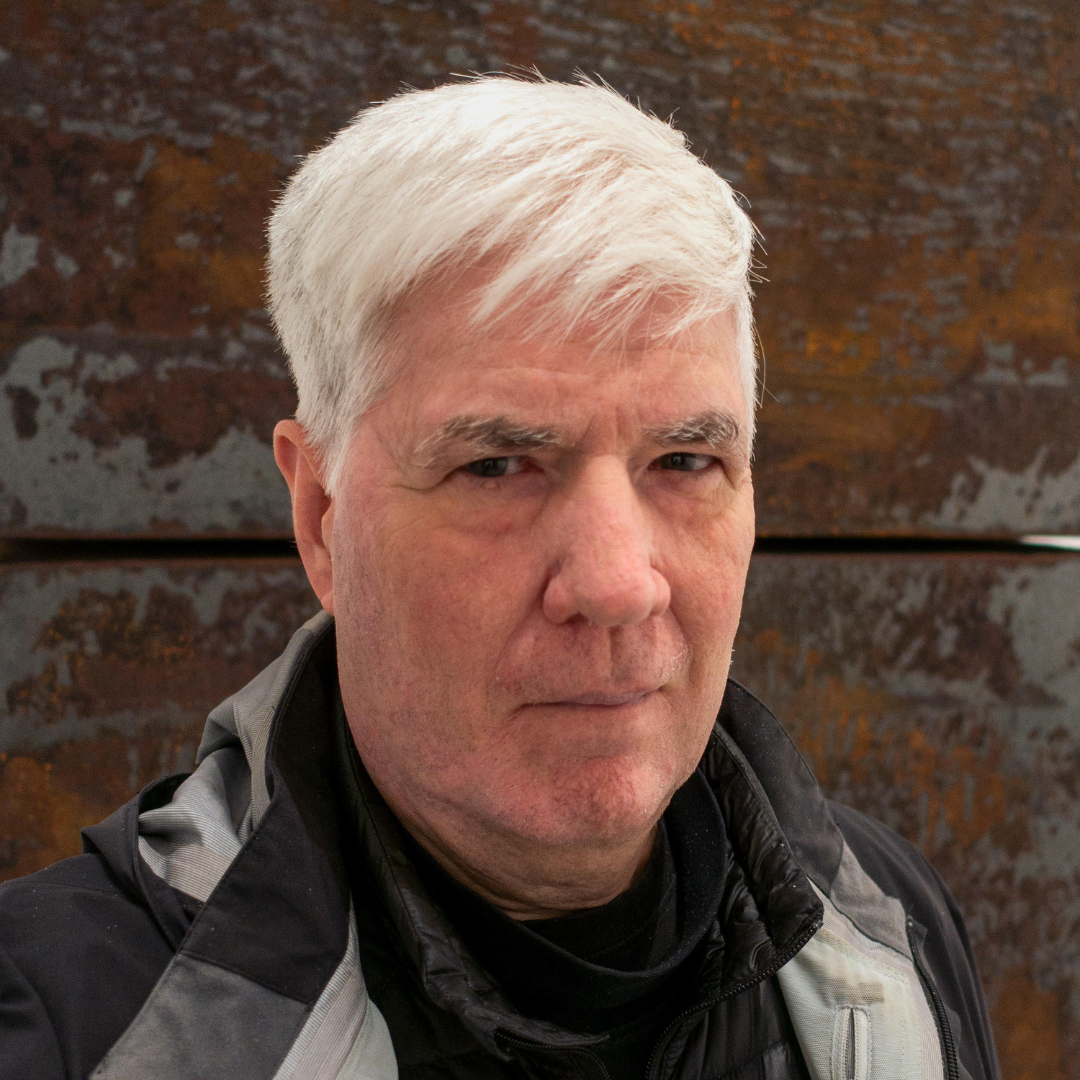
In this oral history, Brian Rose shares his journey from growing up in Williamsburg, Virginia, to becoming a photographer and community organizer on the Lower East Side of New York City. Born in Portsmouth, Virginia, Rose recounts an unusual childhood steeped in American history, performing with the Colonial Williamsburg Fifes and Drums before studying architecture and urban planning at the University of Virginia. He ultimately pursued photography, training under color photography pioneer Joel Meyerowitz at Cooper Union, which brought him to New York City in 1977.
Rose describes arriving in the city on the very night of the 1977 blackout, moving into a tenement apartment on East 4th Street, and gradually becoming involved with the Cooper Square Committee. Drawing on his urban planning background, he helped shift the organization's focus from urban renewal to building preservation and renovation. He eventually served as chair of the Cooper Square Committee and played a central role in developing the model for the Cooper Square Mutual Housing Association and Community Land Trust, a hybrid nonprofit structure informed in part by Dutch housing models brought by his future wife, Renée, and her colleague Josha.
Rose shares vivid stories of key figures, including Frances Goldin, Walter Thabit, and Brian Sullivan, as well as hard-won battles with city and state government, including a creative, improvised funding scheme that secured the renovation of the Q Building for homeless families. He also reflects on his 1980 photographic documentary project of the Lower East Side, his personal life, and his eventual departure from the neighborhood. He concludes by expressing hope that the MHA/CLT model could be applied more broadly, including to NYCHA housing, and reflects on the difficulty of replicating Cooper Square's unique conditions today.
This interview will be useful for anyone interested in the history of the Cooper Square Committee, the Mutual Housing Association, the Community Land Trust, and the broader history of community organizing and housing justice in New York City.
Community Land Trust
Mutual Housing Association
Housing Preservation and Affordability
Urban Renewal / Alternate Plan
Community Organizing
Section 8 Housing
Photography and Documentary Practice
Real Estate Speculation
NYCHA and Public Housing
Advocacy Planning
Frances Goldin Legacy
Occupy Wall Street
Frances Goldin
Walter Thabit
Brian Sullivan
Joel Meyerowitz
Renée Rose (wife)
Josja van der Veer
Marty Berger
Maria Byrd
Chuck Ritchie
Val (steering committee member)
Joe Schildner
Kathleen Dunn
Felice Mascetti
Reuben Glick
Steve Witkoff
Ian Schrager
Ed Fauste
Bette Midler
David Dinkins
Ed Koch
Cooper Square Committee
Cooper Square Mutual Housing Association I
Cooper Square Mutual Housing Housing Association II
Cooper Square CLT
Housing Preservation and Development
New York Community Land Initiative (NYCCLI)
Portsmouth, Virginia
Williamsburg, Virginia
University of Virginia
Cooper Union, New York City
East 4th Street, Lower East Side
Stanton Street, Lower East Side
Houston Street and the Bowery
Q Building, 81 Second Avenue
Thelma Burdick Apartments, 10 Stanton Street
Seward Park Urban Renewal Area
Zuccotti Park
Henry Street Settlement / Abrons Art Center
Williamsburg, Brooklyn
Amsterdam, Netherlands
| time | description |
|---|---|
| 00:00:00 | Brian Rose introduces himself. He grew up in Williamsburg, Virginia, where he performed with the Colonial Williamsburg Fifes and Drums and was deeply immersed in American history. He studied architecture and urban planning at the University of Virginia before shifting to photography, eventually transferring to Cooper Union in New York City in 1977 to study under color photography pioneer Joel Meyerowitz. |
| 00:03:00 | Rose describes his arrival in New York. He found a tenement apartment on East 4th Street by morning, and that same evening experienced the 1977 blackout, spending the night in Penn Station while parts of the city burned. He recalls the summer as defined by intense heat, street life, and the Son of Sam murders, a dramatic introduction to the city. |
| 00:07:00 | He describes how he came to know Cooper Square. His building on East 4th Street was city-owned and managed by HPD, and Cooper Square's office was just a few doors down. After needing help securing his apartment from an illegal sublet, he turned to Cooper Square, gradually became involved, and eventually joined the steering committee. |
| 00:09:00 | Rose explains the organizational context when he joined. The Cooper Square Alternate Plan, originally developed by advocacy planner Walter Thabit in opposition to Robert Moses, had envisioned new construction, but federal urban renewal funding had dried up. Rose, drawing on his planning background, championed a shift toward preserving and renovating the existing tenement buildings on 3rd and 4th Streets and developing vacant lots on Houston Street and the Bowery. |
| 00:15:00 | He reflects on the significance of that moment, noting that Cooper Square was at the forefront of a broader shift from top-down mega-planning to fine-grained, people-oriented development. He describes Frances Goldin as one of the smartest and most charismatic people he has ever known, brilliant and self-taught, and someone you simply could not say no to. Despite their very different backgrounds, they trusted each other deeply. |
| 00:19:00 | Rose discusses the multicultural makeup of Cooper Square's community, including a significant Latino and Puerto Rican population. He reflects on the steering committee's efforts, sometimes awkward, to include Latino leadership, and recalls chairwoman Maria Byrd warmly as a genuinely capable and beloved figure. |
| 00:22:00 | He recounts how he became chair of the Cooper Square Committee after the previous chairman broke down at a meeting. He then describes the long political negotiations with the city, noting that Frances had deep animosity toward Mayor Ed Koch and that progress only came during the Dinkins administration. The plan was finally adopted in a ceremony at City Hall's Blue Room, a major victory after years of organizing. |
| 00:26:00 | Rose describes the adopted plan: renovation of the tenement buildings, new development on Houston Street including low-income units and a swimming pool, and preservation of community green space. He also discusses the Thelma Burdick Apartments at 10 Stanton Street, the one piece of the original Alternate Plan that was built, and its current vulnerability under potential federal Section 8 funding cuts, which he describes as a major emerging threat. |
| 00:40:00 | He explains how the Community Land Trust and Mutual Housing Association model was developed, something entirely new in the United States. The idea emerged from collaboration with his future wife Renée and her colleague Josjaa, Dutch urban planning students who brought models from the Netherlands. Lawyer Marty Berger helped work through the legal framework, which required navigating New York State law with no existing precedent. |
| 00:47:00 | Rose describes the structure of the MHA/CLT model: the MHA would own and manage the buildings while the CLT would own the land underneath and require, through its lease, that the MHA maintain affordability. The two entities had separate boards, creating a mutual check on each other. Buildings were renovated through a checkerboarding process, relocating tenants to freed-up buildings while others were renovated, with HPD overseeing construction. |
| 00:53:00 | He discusses additional components of the plan: AvalonBay developed the vacant lots on Houston Street with 20 to 30% affordable units, specialized housing for the elderly, a YMCA with a pool, and the community garden at Houston and the Bowery, the first community garden in New York City, started by the Green Guerillas and secured against displacement through negotiation. |
| 00:54:00 | Rose recounts the story of the Q Building at 81 Second Avenue, a six-story corner tenement slated to be sold to a private developer for a dollar. Cooper Square improvised a funding strategy, securing two weeks of site control from sympathetic HPD deputy commissioner Joe Schildner and submitting a state application for a homeless families program with deliberately rough numbers. Against all odds, the state awarded the grant on the spot, allowing Cooper Square to leverage the remaining funding. |
| 01:05:00 | He reflects on Frances Goldin's later years, including accompanying a frail but fierce Frances to Occupy Wall Street at Zuccotti Park, where she had wanted to get arrested. He recalls asking her whether Cooper Square's work had been a success, and she answered without hesitation: "We won." Rose is moved, recalling how few people can say that at the end of their lives. |
| 01:11:00 | Rose describes his 1980 photographic documentary project of the Lower East Side, undertaken with fellow Cooper Union student Ed Fauste. Working with a large-format view camera, they systematically covered the neighborhood street by street. The project was exhibited at the Henry Street Settlement's Abrons Art Center and launched his photography career. |
| 01:15:00 | He reflects on his eventual departure from Cooper Square, describing the personal toll of false accusations of misappropriating state grant funds, a state attorney general investigation that found nothing, and being spat on in the street. He concludes by expressing hope that the MHA/CLT model could be more widely replicated, suggesting NYCHA housing as a candidate, while acknowledging that the people, the moment, and the available land that made Cooper Square possible are very difficult to recreate today. |
Gabriela: Okay. It is October 7, 2025, and we are here at The New School with Brian Rose. Thank you, Brian, for having this conversation with us.
Rose: I'm really happy to be here.
Gabriela: Okay. So, tell us a little bit about you. Starting with where were you born and where is your family from?
Rose: I'm from Virginia. I was born in Portsmouth, Virginia. And I grew up in Williamsburg, the restored colonial town, open-air museum, museum. And, was really steeped in American history as a result. And I was actually in the Colonial Williamsburg Fifes and Drums. We performed, and were paid, and I played for presidents and heads of state, and things like that.
Rose: I had a very unusual childhood as a result. And then I went to the University of Virginia. And I was interested in urban planning, and was in the architecture school for my first two years, with the idea of becoming an urban designer. And, changed my mind. I'd been doing photography since I was about 16. And I, I decided that I couldn't see myself in a suit in an office in a couple of years. And I decided to go to art school. I was in Baltimore for a couple of years, and then I ended up at Cooper Union, here in New York. And that's how I got to the City.
Gabriela: Hmm. That's a great school. So, and what was for you to come to New York City at that time?
Rose: Well, it was actually quite specific. I mean, I had a general idea that I wanted to go to New York,
Rose: You know, for all the cliché reasons. You know, I was a young artist and I wanted to make it, you know, in the Big Apple and the, on the big stage, and that sort of thing. And, you know, I was ambitious. But I, at a very early point, I was interested in color photography ... at a time when color was not really done that much. Black and white was what was expected of serious photography. And, color was associated with advertising and, you know, things like that, fashion. So, but I knew that there was someone teaching at Cooper Union, named Joel Meyerowitz, who was one of the pioneers of color photography. So that was the reason that I wanted to go to Cooper. And I came up here as an exchange student for one semester, and then I managed to.
Rose: Transfer, in as a full-time student at Cooper. So that was a, a remarkable, life-changing, thing.
Gabriela: What, what year was that?
Rose: Well, I came here in '77. And, so I was only needed a couple of years to finish my degree. So I graduated at the end of '79. My, my arrival was, kind of, interesting. I needed to live someplace, I wanted to live someplace near the school, so that's what brought me to the Lower East Side and ... the East Village. So I came, with a friend of mine who was also coming to New York. And, we arranged to, get the, Village Voice as they threw it off the truck early in the morning
Rose: 'cause that's how you got apartments in those days. You got a Village Voice and you went straight to the, the, to the listings. And, I saw this unbelievably low-priced, I mean, everything was pretty cheap in those days. But I saw something that was, like, even less, and I couldn't believe it was real. And I, I, I phoned the person and, ended up visiting the apartment, and it was real. And, so I had a small tenement apartment on East 4th Street by 10 o'clock in the morning.
Gabriela: Wow.
Rose: It was done. And was able to spend the rest of the day just kind of doing things. And then that evening, as I was heading back and it was in Penn Sta- Penn Station, the power went out and it was the blackout of 1977.
Gabriela: Oh.
Rose: So I spent the night in Penn Station while the city was on fire and there were riots, in various neighborhoods around the, around the city.
Gabriela: Yeah. That, that was-
Rose: So that was my first day.
Gabriela: I was going to ask you, you arrived right in the, in the bankruptcy of, of the scene, no? But, but being in that moment, so how, how was it for you?
Rose: It was, well, it was...(sighs) I was ex- I was excited because I wanted to be in New York and, all of that, you know, stuff going on, I, you know, it was all just... It didn't really matter to me, you know. It was also, that summer was, the serial killers, Son of Sam, so there was this kind of tenseness. And it, I just recall the summer being very, very hot... and, steamy, and, when I got to my, you know, neighborhood, to move in, I just remember just the streets sort of oozing with the heat and the…
Rose: Teeming people. And, you know, it was, it was quite, an introduction to the city. But I was, like I said, I was extremely excited and I was happy to be... be there, and I had my own little place, and...
Gabriela: Yeah.
Rose: Yeah.
Gabriela: I, I, I have heard about like the, the, the outcomes of this, blackout in, in Bushwick, for instance-
Rose: Yeah.
Gabriela: And in other neighborhood. What was the, the case with the, with the Lower East Side?
Rose: I think there was less of it on the Lower East Side. It was some of the Brooklyn neighborhoods, and, yeah, some of the I- you know, other... Mostly, like, commercial strips ... were targets of, you know, arson and, and, vandalism. Why, and what unleashed that? I, I don't know, you know, 'cause as, as I've seen in subsequent events in the city, it things were always very mellow. The last time,
Rose: we had a big blackout really was the, the Hurricane Sandy and ... you know, everyone stayed quite calm and... So it's a, it's a very different situation now.
Gabriela: So you arrived during this time to what is Cooper Square, no?
Rose: Yeah.
Gabriela: And you didn't know much about what happened over there and the, the struggle to keep those buildings and... How, how did you find out about this?
Rose: Well, my... The building I moved into was one of the city-owned buildings. So my landlord was actually, HPD, Housing Preservation and Development. They had their satellite office across the street, so I would occasionally have to go over there to, arrange for, maintenance or something. And in fact I was, I was a subletter in the beginning, and it was an illegal sublet. We actually went across the street to the office and, you know, I signed my name and,
Rose: and so I was... and then the- my, my, the renter chose not to come back and I was able to get the apartment. And the way I was able to get it is I went to Cooper Square to get their help. I didn't know much about them at that time. When I first moved there, I knew nothing about them. But it's a tight community there, and you find out pretty quickly, and they sit right there on the street, just a few doors down from me. I was at 69 East 4th, and, and they're at like, 57, 59, that loft building there. So, so I g- I, I got their help. I just had to show that I didn't make very much money, which I didn't as a student, and In fact, I was pretty broke(laughs) mo- most of the time at that point. So that's how I, If I heard about them and, and got connected to them
Rose: And then I just gradually I became involved, and at some point I joined the steering committee, which was the, you know, the board of directors of Cooper Square. You know, we were all volunteers and just regular folks from the neighborhood, and you know, they were, you know, they were always looking for new people to get involved. So that's how that started.
Rendón: And what was the, the work that they were doing at that time during those years?
Rose: Well,(clears throat) yeah, this was this transitional period. All of the plans up to that point had been about urban renewal, and th- the expectation was that buildings would be torn down... and new buildings were, would be built. And, so there was a, the Cooper Square plan.
Rose: The Alternate Plan, as it was called. It was, it was called Alternate because it was different from what the city and Robert Moses wanted to do. The plan was to not displace anyone. They would shuffle people around if, if necessary, but that everyone would get guar- would be guaranteed an apartment. But, it became pretty clear to me and some other people that, that the, that urban renewal was not gonna happen. The, the money, the money from the federal government had dried up, so there was no money available for doing those kinds of big, urban renewal projects. So there was a g- there was a guy named Chuck Ritchie who was on the board, on the, on the steering committee. And, and Chuck's thing was that we should.
Rose: We should shift our focus from the idea of new development to preserving the housing that was, that was there. And, so I, I, thought that was, the way to go too, and, so I started to promote that idea, that we should, you know, develop the, the vacant sites that were down on, Houston and The Bowery, and we should, renovate the, the tenement buildings that were on 3rd and 4th Streets. So I got, you know, be with my urban planning background, I was very focused on that kind of, that aspect of it. You know, other people had their, you know, what they were doing, but I was- I, I was really, you know, I was drawing on paper, you know, what we could do and, and lobbying, you know, within the group-
Rose: For doing this, and that was a, that was a, a major undertaking because people had become quiet, locked in to, you know the, the Alternate Plan. And, the Alternate Plan was developed by Walter Thabitt ... who was cl- he had a close relationship with, with Fran Golden. And, Walter was a, a, a planner himself, and very much a, a, an advocacy planner.
Which was a kind of almost a new thing. Planners usually were, you know, bureaucrats who worked for, you know, city government, and he was, you know, there too, from a grassroots perspective to look at, at things. So, so it was his, it, the, so there was this, I had to, you know, there was a little bit of give and take there with him about ...
Rose: We have to shift our emphasis away from what you had originally planned on doing, and And the thing was, Walter was really great, and he was not opposed to this. And I had a, a number of, you know, talks with him about stuff, and, and he was around a lot. So... you know, he was just a really great, great guy.
Gabriela: Yeah.
Rose: So that helped a lot. You know, Fran, Fran, who was, you know, never officially the chairwoman of Cooper Square. She never assumed that role. But everything, you know, ultimately went through her. And, the fact that Walter was on board with this change, you know, helped. So we, we began to develop a, our, a new Alternate Plan.
Gabriela: Yeah. Yeah, because I understand that it was because at the federal level, there were, like, all these cuts. So the first plan was not going to be developed as it was a vision, ah? So then it was this second, second option, ah? And did Walter Tabbit continue working also on this, ...
Rose: He didn't work on it, directly.
Gabriela: Eh- okay.
Rose: He was in the background.
Gabriela: Okay.
Rose: the person who had more direct influence on it was Brian Sullivan- ... of, Pratt-
Gabriela: Pratt.
Rose: ... Pratt Institute. Brian was a, an urban planner and a professor at, at Pratt in the architecture planning school over there.
Gabriela: Yeah.
Rose: And, I have not had any contact with him in a long time, but he was ... he would come to our meetings, and was there all the time.
Gabriela: Oh.
Rose: And, I had a pretty close working relationship with him.
Gabriela: That's great, like what an opportunity for you. Even if it was ... I mean, it was what you had start studying, you know, and you had an interest in this. But then being part of this, well now legendary organization, and, and being part of that work, what was the feeling back then of being part of ... Did you think that this is big, now what is happening and with all these buildings? Or what was the feeling of, on those days?
Rose: Well, I thought it was important. I don't know. You know, I, I thought that, you know, I, as I, as I got more involved, I, you know, learned much more. I had, you know, I'd read, Jane Jacobs' book, so I had that perspective, and I knew that she had started out as an activist on the West Side of Manhattan, and she was involved with trying to stop Moses and his highway across the, through SoHo into the Lower East Side.
Rose: And, and her, you know, her concept of, of what urb- you know, urban life should be, which at that time was a, you know, a relatively new thing. And, and then, you know, I read Chera's book, The Powerbroker. So, you know, these sort of seminal...books about New York. And, so I had a sense of, you know, the p- you know, the long, the longer arc of, New York history, and, and, what had gone on previously. And I knew that we were at a pivotal kind of moment, where we were shifting from those kinds of mega plans to a more fine-grained, people-oriented... kind of, planning and, and, and development.
Gabriela: Yeah, this, this became the first Community Plan in the city.
Rose: Yeah.
Gabriela: So that is huge.
Rose: Yeah. Well, it, th- we had an interesting mix of people. You know, on the one hand, we had, you know, Fran, who was this charismatic and visionary person who was, you know, larger than life character in a lot of ways. She was brilliant as well as charismatic. She's a smart, one of the smartest people I have ever known. Not book smart, not only book smart, yes. She was a, a literary agent, but she didn't, she didn't have degrees. She, she sort of, was, sort of self-taught, I suppose.
Rose: But she was, you know, very quick, would quickly apprehend things and, and understand things, and you didn't have to do a lot of explaining t- things to her, you know. She and I had, you know, we were so different from each other. You know, I was from the South and had this completely different attitude about things. And she's this, New York, Jewish, communist, sharp-witted, kind of person. And, but, we understood each other, and she trusted me, and I, I had a very good relationship with her. We had moments where we, we battled over things
Rose: But it was just the heat of the... struggle. It was not, it never, I never had any sense that we were not together on the same... you know, ultimately in the same direction.
Gabriela: Yeah. And, and this must have been like a multicultural area, you know, for so long. So what about, like, the other residents of what is today Cooper Square? I guess it was, L- Latinx population, also, Puerto Ricans, so how was that dynamic?
Rose: Yeah. It, it, there was a l- yeah. It was more Puerto Rican, but there were people from all over. I mean, relatively, there, there are now more Asians than there were then. But there were some. But yes, Latino definitely. And that was always one of the issues, that in the, in the steering committee
Rose: And the organization was to, you know, include, Latinos in the, you know, in the steering committee. And, and, you know, as f- a- as ch- chair. Sometimes I thought it was a little patronizing. It's like we had to have... You know, a Latino as the, as the chairman or chairwoman. And, we had several over the years that I was involved. Some were good, and some were not, but you know. But I, I, I always chafed a little at the idea that they were kind of figureheads. But there were people like a Maria Byrd. You know, she died a few years ago. She was the chairwoman. She was, you know, she's, she...
Rose: I don't know what her background is, but she came from a, a probably Puerto Rican background. Desp- despite the Byrd last name. And she was wonderful. I liked her tremendously, and...
Gabriela: I liked her. Yeah, she was mine.
Rose: Yeah, she was a, a, just a really warm and, but also, also, smart person, you know. So, th- so I don't mean to s- to, to make it sound like that we ended up with, But the, the, the re- the re- the reason I ended up being chair at one point ... was that the, the chairman of the organization, was having drinking problem. And basically broke down in one of the meetings, just, "I couldn't go on." And, so Frances and Val basically asked me if I would, you know, run.
Rose: And, and so I said, "Yes, I'll do it." So that's how I became chairman. I did that for a year or two. I, I don't remember what it was and-
Gabriela: And this was chair of the Cooper Square Committee?
Rose: Yeah.
Gabriela: Oh, yeah. Mm-hmm.
Rose: This was before the, the MHA. So, yeah, you have to bef- bef- before you get to the MHA... you have to, you, there's the whole process ... of getting the city to go along with our plans. So there were l- there were all these negotiations that took place. We w- F- Frances always had bad blood between her and the earlier mayor, Ed Koch. I never quite understood it. The what was going on there, but they both came out of the Greenwich Village Democratic Club, you know. And y- you know, they were both from
Rose: This kind of intellectual Jewish community on in Manhattan. And they had, they, there was no way we were ever gonna do anything with Koch. And then, later, you have, you know, Giuliani. And we were doing our negotiation, we were negotiating with HPD during those years. And, we weren't getting anywhere but we were talking. They would, they were at least willing to talk to us. And, there was one deputy commissioner named Kathleen Dunn, who we met with regularly. And then when Dinkins was elected she, she moved on to be in his administration... as a deputy commissioner. I may have the, her titles,
Rose: Mixed up, but I believe that when, during the Dinkins administration, she was the deputy commissioner of HPD. Commissioner was Felice Mascetti. Felice Mascetti was a, also incredibly smart person who ran HPD at that time. And, another advocate we had who was really important was the borough president, and I can't think of her name right now. It's just slipping. You have to look it up. She was a very important figure during...Borough presidents had more power in those years. They've become less. They have less autonomy to do things that they had in those at that time. So that was the thing.
Rose: That was the, that was the other aspect of all of this, is that Cooper Square, and particularly through Frances, cultivated political relationships. So, when we would go to the city, you know, we would not just have. We would have people power, but we would also have political advocates... advocates. So when you would go, we'd, you know, we'd have the city council, we'd have the borough president, we'd have, you know, our local, you know, congressperson, and, you know, and they, these people would come to our meetings. You know, congress- congressmen would come to our, our public meetings. So, so anyway, we... It, we finally were able to were successful getting the plan adopted during the Dinkins administration.
Rose: And, you know, we had a ceremony in the Blue Room, in the, in the City Hall. I think this... I don't know if you have the picture I took of, of Fran with a, a model in front of her. That was t- taken in the Blue Room at that ceremony.
Gabriela: Right.
Rose: So, so that, that's the... At that point, we're, we're gonna go forward with this idea of renovating the buildings and doing new development on Houston Street, which would include, a, a substantial number of low-income units. It would include a swimming pool and recreational facility, which was something that Fran was adamant about, because she was still very upset that the what had been called the Church of All Nations, which was at Houston and Bowery,
Rose: Had been torn down, or I mean, had been abandoned by that group. There was some kind of corruption, and then the building was just empty for years, and it was... There was this pool in the basement that was unused, and she was still upset about it and wanted that to be part of the plan. So, I should say, there, there was one piece of the plan that did get built of the original alternate plan, and that's the Thelma Burdick House. Hou- the Thelma Burdick Apartments. It's at 10 Stanton. It's at the corner of Houston and, sorry, Stanton and the Bowery. And that's just a, a small piece of what was gonna be that whole block. That was part of Walter's, Tabbit's original plan. It turned out to be pretty stripped down
Rose: Just this sort of brick...building with, you know, very little decoration to it. Some artwork was put on the inside. Nevertheless, we were proud of it because it, we got something built.
Gabriela: I didn't know about that, that building. So is, is it, what, just residential units and..
Rose: Yeah. Well, I've been talking to my, my son about it… Lately, 'cause he's a, he's a recent graduate of the Columbia journalism program, and so he's doing some freelancing and trying to make it as a journalist at a very difficult time in the field. But, the people that are in that are Section 8. Which means that they have... They're dependent on subsidies that are paid by the federal government.
Gabriela: Oh.
Rose: And just in the last couple of weeks, the HUD is making noises that they might put restrictions on the Section 8 program, which could jeopardize the housing there.
Gabriela: Yeah.
Rose: So I was telling my son, "You should talk to, talk to some tenants, talk to Cooper Square-" "... see what, you know, what they're thinking, if they're prepared for the possibility that there may be a real serious situation."
Gabriela: Yeah. Yeah, I, I, I knew that there was a property from Cooper Square, over there, but I didn't know that it was built, you know, like, that was a new building, and part of the original plan. So that, that's interesting.
Rose: Yeah. Well, this is something… this is getting a little far afield here, so you can pull this out later if you want to, but I, I, always was c- a little bit concerned about the fact that it was Section 8 housing
Rose: Because it's like any of these programs that, you know, th- they are subject to the whims of politics.
Gabriela: Yeah.
Rose: And, Section 8 was pretty solid for many, many years. But now, of course, everything is-
Gabriela: Yeah.
Rose: Up in the air. But a few years ago, they were... They had a, a 20-year commitment to, for Section 8 housing, Section 8... subsidies through the owner of the building, which was the original developer. And the original developer worked with Cooper Square. Cooper Square was the sponsor-
Gabriela: Sponsor, yeah.
Rose: And they were the developer, and HPD was involved. And, we had a good relationship with the developer. This is somebody that I remember Francis really charmed, this Reuben Glick, the developer. The…
Rose: Francis's skills were at this sort of thing, were just off the charts. And, and Francis was somebody that you could not say no to. And I have more to say about that.
Gabriela: I have heard that(laughs) Yes.
Rose: Yes.
Gabriela: But then, this building is not part of MHA. It's more like a rent-subsidized building?
Rose: No, it's, it's, it's a privately owned building... with, Section 8, commitments. And the, the, the idea is that the owner charges fair, market rents, which are similar to the a, you know, of, you know, just a open market rental. But it's, there are some guidelines that are set. So they, you know, pr- they make a profit on the building, and the, the tenants pay 30, 40% of their income, for, for the rent, and then the rest of it's picked up by the Section 8 program.
Rose: So, a few years ago, they were,(clicks tongue) "We're coming to the end of the agreement of," which had been 20 years. So, at that time, there was, the, the, the owner was selling the property to ... it gets complicated to someone who wanted to build a hotel.
Gabriela: Oh.
Rose: And, this is,(clicks tongue) what's his first name? His last name is Schrager, who's known for being the founder and owner of Studio 54 back in the day.
Gabriela: Oh.
Rose: And, having various nefarious sort of relationships with other business people. And he, it, it turns out the, the, he was selling, he wanted ...(sighs)
Rose: It gets complicated. But this company called Camabeys, Camenbeys purchased Thelma Burdick and the vacant lot where the hotel is now, and then turned around and sold it to Schrager and his partner, Steve Witkoff, who's Trump's right-hand man in real estate. Camenbeys, which is the owner now of 10 Stanton, when, when Trump had, when Trump's father had built the Coney Island development, just where the money for Trump really started, Trump, the son, wanted to expand his business, and this was the main asset that he had. So he, he wanted to sell the property. So he sold it to Camenbeys
Rose: Camenbeys, at a price that was actually a really, really good deal for Camenbeys. So Trump basically ... got ripped off, but he needed the cash. So that's when he took that cash and, and turned it into his Manhattan-
Gabriela: Oh.
Rose: Developments. So Trump's out of the picture, but Witkoff was still there. Also associated with Camenbeys has the, was owned by this guy named Schron, S-C-H-R-O-N, who's a (clicks tongue) a major real estate figure in Brooklyn. But Witkoff is this out in the front, very aggressive and sort of person. Schron is sort of in the shadows and, and is sort of known for being(clears throat), you know, not being,
Rose: Not socializing and that sort of thing. So, so…So they made a deal with Schrager and Witkoff in, in exchange for getting another 25-year agreement to Section 8 (knock on table) housing, because I think at that point, they could have walked away from the Section 8. They could have, like, not renewed it, and then you would have had 150 households, essentially on the street. So they ... I was just saying that they (knock on table) ... it was at this point that Camenbeys could have walked away... and not renewed the Section 8, and basically evicted the tenants, 'cause they had come to the end of the agreement. So the, the building agreed with Witkoff and, and Camenbeys to, (clears throat) allow them to take some of their open space
Rose: In exchange for a 25-year agreement to Section 8 housing. And, and also to put some money into fixing up their community room. And I remember at the time thinking, "No, no, no, no, no, no, no."(laughs) I was not involved at all, but I remember thinking, "Y- you guys need to get more than this." "You need to get, like, a whole new building or something." "You know, you n- this is like, you have leverage, and you're not using it. You're getting-"..., taken advantage of by some of the most powerful real estate forces in the city. So they, but they agreed to it. And, they did take the extra space. They lost a lot of their public space. Schrager built his hotel. He partnered with Whitt- Whitaker.
Rose: Whitaker. They had a falling out, and then Whitaker sold his share back to Schr- to Schrager, so Schrager's the, the complete and total owner now. And so here they are now. They have this agreement. It runs to about 2040, I believe. But now all of a sudden, they're looking at a situation where they might have the rug pulled out from under them. Even if it's just changes, like to restr- res- you know, like work res- work requirements or, there are various different things that are being proposed. It could, it could undermine the whole project. It could undermine Section 8 throughout the city. Buildings could be in trouble. Developers could, you know, owners will want to, you know, get out of these deals. It's a, it's potentially a major story. But..
Gabriela: Yeah.
Rose: But anyway, so any of the ... it's crazy. It just, when I real- when I learned all this stuff. It was, like, crazy to me that it seems like you can't get anywhere without running into Trump. And so even on Stanton Street, you run into-
Gabriela: That's crazy.
Rose: His, his person, Whit- Whitaker, who's h- his ni- Middle East envoy is Steve Whitaker. He's the one who's negotiating Gaza.
Gabriela: Oh my god.
Rose: So, okay.
Gabriela: This is so interesting, yeah.
Rose: You can pull this all out, of the 'cause it's not relevant to the history.
Gabriela: Well, it is, but th- this is, this is, because I like this cube building, also.
Rose: Oh, that? Yes. That one.
Gabriela: So this was one of these, this is one of the, the original, sides of the plan that you said that, that was developed, and then-
Rose: The Thelma Burdick, Thelma Burdick's
Rose: Named for Thelma Burdick ... who was an earlier,
Gabriela: Yeah.
Rose: I guess founder of, of Cooper Square Committee.
Gabriela: Yes,
Rose: She, she had died before I... came on the scene, so I never knew her.
Gabriela: Yeah, no, I know about her, her involvement. Well, th- so this is, for that building, so and then what about the other, what is like 21 buildings? So it was like a s- a slow process. So how did that happen?
Rose: Well, we-
Gabriela: Were you part of that process?
Rose: Yeah. Oh, yeah. Yeah. We needed a, we needed to come up with a way to own and manage. And we wanted to do something that would ensure that the buildings would remain low-income housing.
Rose: There have been plenty of non-profit co-ops that had, you know, flipped and gone to, at some point had, sold out and-
Gabriela: They weren't marketed, yeah.
Rose: Yeah. There were other city programs that allowed that to happen, and we didn't wanna go that direction. So we, we, we came up with something completely new, at, which was the Community Land Trust and the Mutual Housing Association. And, that's where my, my wife comes into the picture.
Gabriela: Oh.
Rose: So she and, h- she was a student at the University of Amsterdam, and her fellow student, Josja van der Veer, came over as interns. And actually, they came first, as a brief trip.
Rose: To do sort of exploratory, and there's this moment, I mean, if you ever talk to my wife, which you should.
Gabriela: Yes.
Rose: This moment where she and, and Josja were talking with Frances. And Frances said to Renée, " My wife, she said, 'We need you.' And Renée took it really seriously and so decided that she would come back. And so she and Josja came back as, as interns to work with the Cooper Square Committee for three, you know, just a three-month... visa.
Gabriela: Oh, wow.
Rose: They didn't ha-
Gabriela: And what year was this?
Rose: This would've been in the early '90s, late '80s. Something like that. I get my dates mixed up. But, ... So, I remember when they came because Val called me up.
Rose: I was in my apartment on East 4th Street, and he called me up, and he says, "These two Dutch women just arrived, and I don't know what to, to do with them at yep," you know? He says, "Why don't you come down?" So I came down, and, you know, there were these two young Dutch women, and I gave them a little walking tour around the neighborhood. And, you know, we started working together on creating what would be the Community Land Trust and Mutual Housing Association. And they, they came, they were-They were using some of the models of the way things were done in the Netherlands. In the Netherlands, a lot of the l- most of the low, cost housing is done by large, nonprofit organizations that are essentially, well,
Rose: They're basically just nonprofits, and they- they're, they're, they don't really do co-ops, but they do the, the, the tenants are part of these, or are members of these organizations. So there's a kind of mutual housing association model there. And, so then we started to think about that, that what we would do is create a nonprofit that would own and manage these buildings ... and was, could potentially build new buildings if, if that came, came into being.
Gabriela: Yeah. Th- this is so interesting because, yeah, the, the model of the Mutual Housing Association was, was not common here.
Rose: No.
Gabriela: And it is not until today. So, so yeah, it's-
Rose: No.
Gabriela: Exciting to, to learn how that idea was brought, especially because... it was a, a number of buildings that were not in the same land, you know, they were scattered also, so.
Rose: Yeah, so we s- we spent a lot of... I mean, I mean, this is basically how I ended up,
Rose: You know, with this relationship with, with Renée, was we were working so closely together for this three-month period. And when she went back to the Netherlands, you know, it was like a, a, we had to try to figure out how to keep it going, and, I think it's at some point she came back again for another three-month stint or whatever, and ... But we would go to the, we would, we would... W- we had this idea. I don't know exactly how the idea germinated, and, but it came from, it came from us because it was not something that came from any of the New Yorkers. 'Cause they just, there was no model to go by for this. And...
Gabriela: I, I thought for that there was even a lawyer that was really keen. I don't know if you remember.
Rose: Oh, Marty Berger.
Gabriela: Uh-huh.
Rose: Marty Berger was essential for all kinds of things because he, he could look at legal... the legal ramifications of our proposals. Marty was a real mensch. He was another one of these people that...(sighs) Cooper Square was blessed with these individuals like him, Brian Sullivan, y- you know, that, that Francis was involved, Walter Thabit, obviously. These are people that had, skills and were, you know, really substantial people, right? So, I'm giving you the story from this perspective. Other people will give you the per- perspective of it all came out of the grassroots... people's movement. And they're not incorrect. It couldn't have happened without that, but it also could not have happened without
Rose: A certain level of combination of expertise and, and, and just a really well-educated and, and focused group of people, you know?
Gabriela: Yeah.
Rose: So, so we came up with this idea, and I can remember, you know, having these meetings at Cooper Square meetings, where we would be, we would just, it'd, they would... the meetings would be horrible. There would be people would be like arguing, and, you know, we had crazy people on the, on the steering committee too, you know, just people that were constantly looking for ways to just stick every- you know, a wrench in, a monkey wrench into the works. Always looking at the downside of, of things and... why it would go wrong, and, you know.
Rose: And Renée and I and, and her, her, her friend Josja, we'd end up at a, at a bar at the end of the night, just, you know, rehashing what had just happened, and, and... So we got very close as a result. And, but we, out of that, we came... You know, the, we have a report. It's in, on paper. I go- I was gonna bring it, but I couldn't find it. I, in my mom's- the last move I made, it's in a box. And I di- I was going through boxes earlier, and I couldn't find the right box. But we came up with a report that had the whole model for how this was gonna work.
And the idea was to have, a, a sort of two, two aspects. There would be the Mutual Housing Association, which would own the buildings or essentially own the buildings and manage the buildings.
Rose: And then you'd have a land trust which would own the land underneath. And the land trust, the, the, the lease with the land trust was required the MHA to maintain the, that it was affordable housing. That they couldn't just, you know, break that.
Gabriela: Yeah.
Rose: So, the land trust would have its own board, and the MHA would have a different one. So that, that was the key to how this would, we would maintain the affordability. So, it was difficult to set it up because the state of New York had never... there, there was no precedent ... in law for this. So it had to be sort of-
Gabriela: Yeah, that is what I was going to ask you. Like, how did you convince the city to-?
Rose: Well, it's, it wasn't-
Gabriela: To fund this model?
Rose: Just the city, it was the state.
Gabriela: The state, yeah.
Rose: The state, which would, we had to conform to the state law: ... having to do with co-ops and nonprofits, and, you know, i- this was a, definitely a hybrid organization. So, the agreement with the city was that they, that they would renovate the buil- buildings, and that we would do what we called checkerboarding, we'd move people around. I- if there was a, a building that was renovated, then you'd move people into that building, and then free up another building with vacancies so that you could do the renovations. That's how I ended up moving from 4th Street to Stanton Street. There was a building on Stanton Street that was,
Rose: Done by HPD separately, but they gave it to us as p- to, to be a relocation resource. So I moved from 4th down to Stanton, and I stayed there. I didn't go back to my previous apartment. So, so it was a process that went on for a number of years, of moving people around, renovating the buildings. HPD was the, in charge of the renovations. There's... I don't know the technical relationship now with HPD, but, th- they do..They're still the, i- they have a loan with the MHA, so that they're still in the picture. You'd have to look into wh- how that, how that actually works now. But the... essentially, the MHA, you know, runs itself, and
Rose: Its income is from the rents and f- and, you know, the commercial rents, of course, are an important part of the package. And then, and then we allowed the, you know, development to take place on, on the vacant lots. And, th- those buildings were done by AvalonBay. They're a big housing developer. And about 20 or 30% of the units are affordable housing, and then there was some specialized housing, like for, elderly and other groups that were included in it. And that, also, the YMCA with the pool was in there.
Gabriela: And those are rentals, right?
Rose: Yeah.
Gabriela: Yeah.
Rose: And we also were able to secure the garden on Houston Street, which...
Rose: If you go to Houston and the Bowery, there's this garden that runs along Houston Street. And that's what do they call that garden? That was the first -
Gabriela: Community garden?
Rose: Community garden in the city. And it was started by a group called the Green Guerillas. And, we, w- you know, we, we negotiated with them to make sure that n- with the city, to make sure that they would not be displaced. And I remember talking to the AvalonBay developer. It turns out that the subway runs underneath there. The tunnel.
Gabriela: Okay.
Rose: And, they said that, it would've been very hard to drive, pilings or f- foundation into that anyway.
Gabriela: Yes, yes.
Rose: So to set back over the garden was, for them, actually, was not, you know, they, they were, they were really okay with,
Gabriela: Okay. Well, is this part also of Cooper Square?
Rose: Yeah.
Gabriela: Okay.
Rose: So the garden was an i, an important component. They're their own organization. They were their own organization, and still are. And they're a nonprofit. And, it's beautiful if you ever go.
Gabriela: So the ones that are running the, the, the community garden?
Rose: Yeah, they're still there.
Gabriela: Oh, nice.
Rose: So yeah, so the, the... You mentioned the Q building. And I wanted to talk about that. Q building is a separate thing. And that happened before we actually had the, the, MHA. And that was something I was f- very, very involved with. The…
Rose: This building was abandoned, corner of First Street and Second Avenue. And the city proposed at some point to get it developed, to sell the building to a developer for a dollar. They had this dollar program. Because, you know, pe- owners were walking away from buildings in those, those days. So this was supposed to be ... you know, in- ins- incentive to get somebody to do something. Of course, there were no restrictions on what they could do. It was, it would be a market-rate housing, so Cooper Square was opposed to, to that. You know, we thought that the building should not be given away for a dollar, and that, you know, that it should be low-income housing. And we were doing these, you know
Rose: Protests and marches and things. And you know, Fran loved doing that stuff. And, you know, carrying signs, making a lot of noise, going to City Hall, going to HPD. Sometimes it... I mean, it, it had its effect, but it wasn't gonna stop this. So I was, like, trying to figure out, like, what, what can we possibly do? And at some point, the state announced this program ... where they would fund projects that were for homeless families. At, at this particular moment, there was a lot of homelessness. And not just single, not just the s- the usual single individuals that you would see on the Bowery, for instance. At that time, I don't know if you realized what the Bowery was like.
Gabriela: Yeah.
Rose: It was the skid row of New York.
Rose: So we were accustomed to, you know, people who didn't have any place to live, or at least, or were living in SROs and, and flop houses as they would call them, you know, along the Bowery. But this was to be for f- families. So, so this, this was a easier sell in the community because, you know, this was for, you know, this wasn't just for these guys who, you know, we were living with daily. But, how, how were we gonna get this money? We didn't have any... This wasn't our building. I mean, we were, we were the, the local community group, but, but we didn't have what at that time they called site control. So we cooked up this scheme for renovating the building using state money for this homeless program.
Rose: Combined with sweat equity, we were gonna have people actually go in and put work into it... and miscellaneous other funds. And it was like total fabrication. I mean, I c- I can tell you, it was crazy. And I knew that the sweat equity thing wasn't gonna happen, but, but we were gonna, we were gonna go for it anyway.
Gabriela: There were, like, these programs of supporting or sweat equity.
Rose: Yeah.
Gabriela: So, were you using one of those programs?
Rose: Well, we never did.
Gabriela: No? Okay.
Rose: Yeah.
Gabriela: Because there's like the community-
Rose: Yeah, we-
Gabriela: Community management program and all those, so no, you, you didn't use that?
Rose: Well, we didn't even have... I mean, the, the, the people that would, would be the tenants of this building were. We didn't have any real people.
Gabriela: Yeah, it was, it was vacant.
Rose: They, they would be brought in. Yeah.
Gabriela: Yeah, yeah.
Rose: So there, it wasn't like a...
Rose: Most sweat equity buildings you had-
Gabriela: Yes.
Rose: A group of people who were maybe already squatting or ... you know, whatever. There were no squatters in this building. This building was dangerous to go into. The, the roof had collapsed, and it was in terrible condition.
Gabriela: How big was it?
Rose: It, it was six, it was a six-story tenement, but it was on the corner, so it was actually a much larger than a normal tenement. It wrapped around the corner. So I'm not sure how many units it ended up being altogether. So, like I said, we didn't have what's called site control. But there was this one deputy commissioner at HPD named Joe Schuldiner. And Joe seemed to be... He was more sympathetic than other people that we were dealing with. And, we were able to get Joe.
Rose: To give us two weeks' site control, enough time to put in our application to the state. So we put in our application with this, these bogus numbers, and, you know we, we worked on the, you know, on getting the project as completed as po- you know, as com- as complete a package as possible. And we went to the state to find out, you know, whether they would give us the grant. We were asking for about a million dollars from the state. So we went to the World Trade Center. The state offices were in one of the Twin Towers. And, I was like
Rose: Really, really nervous and almost... And I felt sick because I knew these numbers were, were totally cooked, and that if they really wanted to quiz us on this, there's no way this was gonna hold up. So we go to the, the meeting and we're sitting around a table like this. And Frances was there, of course, and she was like totally confident and relaxed, and I couldn't understand why she was so, you know, relaxed. So we sit down with the state, people, and, you know, they just were immediately saying, "You've got the money." And, I'm like-... yes, okay. (laughs) They never asked us like how we were actually gonna make this all work. And, it turns out I really was sick. I had some kind of like..
Rose: Stomach flu or something. So I dashed out of there, leaving everybody behind, got in a cab. I got as far as Houston and the Bowery, and I couldn't make it any further. I just threw some money at the cab driver and said, "Let me out." And I got out on the sidewalk, right in the middle of all these m- homeless men on the street, and I just was throwing up on the sidewalk.
Gabriela: Oh, no. (laughs)
Rose: So it was a, a moment of triumph and a moment of like total like,
Gabriela: Yeah. You always have like these moments. (laughs)
Rose: Yeah. And, and I, what I joked with people was I was throwing up on the sidewalk, and no one noticed(laughs) 'cause of the-
Gabriela: Yeah, yeah, yeah.
Rose: Right? 'Cause it was... You know, the streets there were littered with ... with men, who'd just be lying sprawled out on the sidewalk. And, you know, we had to deal with the, the real numbers.
Rose: And, it was what I had said to people, this was the thing that I s- this is the thing I had learned from The Powerbroker and from Robert Moses, was that Robert Moses used to say, and this is in the book, that, you know, if you get one, source of money committed... then no one is gonna... Th- you'll be able to get the rest... from wherever you need it from, 'cause they're not gonna wanna give it back. Right? Once you've got, like if they, the city, the state gav- gave us a million dollars, if the city at that point then said, "No, we're not gonna help you any further," then we'd have to give a million dollars back to the... They weren't gonna do that, right? So, so the city agreed to put in the rest of the money. We might have had some other grants from other places having to do with homelessness and things like that, I don't know.
Rose: And, so we were able to, to, to do that building. And, they b- they became a, and we, we selected the tenants, and, and, and, you know. And then eventually, once the MHA was established, the Q building became one of the buildings in the MHA, because that, that was the better way for them to, you know, continue to manage-
Gabriela: To co-manage that.
Rose: The building, yeah. But, yeah, so the Q building was a, was a huge success, and it was also just this moment where we realized that we could, you know, we could do these things,
Gabriela: Why that name?
Rose: Oh, it's just because the building was this square-
Gabriela: Oh, okay.
Rose: Cubic... sort of shaped-
Gabriela: Yeah, yeah.
Rose: Building. It's 81 2nd Avenue, I believe.
Gabriela: Yeah. This is so interesting, but I, yeah.
Rose: Oh, I wanted to tell you that, and Joe Schildner-
Gabriela: Uh-huh.
Rose: The, the deputy commissioner.
Gabriela: Yeah.
Rose: A year, a year later, two years later, the building's finished. We had a ceremony on the street to, you know, acknowledge the, the, the completion of the project. So Schildner came, and I went up to him, and I said, "So, you know, Joe, I'm really sorry that this project ended up costing the city so much money." I mean, you know, and he just said to me, he said, "You shouldn't worry about stuff like that. You got this done. That's the only thing that counts." And he went on to be the head of public housing of Chicago... at a time when the, the Chicago.
Rose: Housing authority was corrupted, corrupt, and in all kinds of political trouble, and he was able to turn things around.
Gabriela: Wow.
Rose: So he was a really good guy.
Gabriela: Yeah. He trusted you as well. Yeah. Otherwise, this building would have been like probably market-rate housing or-
Rose: Yeah.
Gabriela: Any other type of development.
Rose: Yeah.
Gabriela: So it was, it was a great effort. Yeah.
Rose: And, you know, going back to Frances, her, you know, in, in her... I'm jumping around here, but, later, at the end of her life, you have to also figure into this, and for, for her, you know, is that she was also very involved in the Seward Park... urban r- renewal area. The, the vacant lots a- along Delancey Street. You know, there's a building over there now named for her. One of the
Rose: Low-income buildings, there is the Frances Golden building or whatever.
Gabriela: Yeah.
Rose: But, you know, Moses wanted to put the highway across, and th- they did t- you know, the, the city did tear down a lot of the buildings over there, and for, for more than 50 years those lots were vacant, and was a political battleground, and it was f- finally, you know, finally got, something got done. And Frances saw that as a success, that they had gotten what they wanted, as a community. So I go over, this is late in her life, and I'm... I went over to her apartment to give her my, my book, which, the pictures that you're using are from-
Gabriela: Yeah. I wanted to, I wanted to ask you about that year that you mentioned that you, you went on this, this project.
Rose: This is the book.
Gabriela: Oh, wow.
Gabriela: Look at this. It's amazing. Well, just finish with Fran, but I, I really would like to know about this process and…
Rose: So, yeah, I go, I, I go over to her apartment, to, to give her a copy of the book.
Gabriela: Okay. Wow.
Rose: And, I get to, I get to her place, and she's, like, didn't realize I was coming. She had gotten, you know... She was really gotten pretty old at that point. and sh- she was not... She did not have dementia, but she was easily confused and had gotten kind of frail, right? So I get there and she had, she wanted to go to, She was planning to go down to Occupy Wall Street.
Gabriela: Oh, okay.
Rose: The protests that were taking place, the occupation of the park down there. Zuccotti Park, on Broadway.
Rose: And, so I'm thinking, "Okay. All right, Fran. I'll, I'll go with you. "You know? "We'll go down there." And she was, like, gonna take a bus. And I'm looking at her, you know, like f- this, like, f- very frail, small woman, like, trying to... And it was not gonna be a direct bus to get there. It was gonna be complicated. So I, I said, "Look, we're gonna take a cab." You know? And, so we, we got a cab and went down there together, and walked around. It, it, you know, the, the... All the, all the people and all of the things that they were, what's going on there, and she was, like, really thrilled. And, we went back to her apartment and I, I asked her... I said, "So, Frances, how do you feel, ultimately, about, you know, what we did? The, you know, the, the Cooper Square committee, what happened down on.
Rose: On, Seward Park, and, do you feel that we, you know, that, that we were s- that we were successful?" And she said, "Absolutely." She says, "We, we, we won."
Gabriela: Wow.
Rose: Yeah. And I, I thought at the moment, I remember thinking... And I get teary-eyed here, I'm just-
Gabriela: Wow.
Rose: As I say this, that how many people can say at the end of their life that, you know, that, that they were successful like that?
Gabriela: Yeah, no, it's... I, I know that in the Seward Park, that development, they looked for the people that were displaced after how many years? Decades. You know, I, I think that they made an effort and they found some of them.
Rose: They found a few.
Gabriela: Yeah, yeah.
Rose: Mostly they were... Had, you know, it was... Had probably passed away.
Gabriela: Yeah, or the sons, probably. Like, or the children. Well, from Occupy Wall Street, there are, like, some amazing pic, pictures of Fran. Did you take some of them? No.
Rose: Any chance? No?
Gabriela: No, and she didn't... At that point, she didn't know too many people there, from what I could see. There's a story I've heard. I wasn't... She went back another time.
Rose: Uh-huh.
Gabriela: And, she, she was, like, wanted to... Sh- she, she wanted to, like, get arrested. Yeah.
Rose: You know? And I, the story I've heard was that she was, like, confronting the police or something, and the, the police said to her, "You're not gonna be are- you're not gonna get arrested." Said, "You can, you can do whatever you wanna do. You're gonna hit us. You can..."(laughs)
Gabriela: Yeah.(laughs)
Rose: "We're not gonna arrest you."(laughs)
Gabriela: Yeah, we all know. Those are the pictures that I have seen, yeah.
Gabriela: Yeah, Fran surrounded by the police, like very fierce...
Rose: Right.
Gabriela: Posture. But, yeah, I mean, this is really, really an amazing conversation, Brian. But tell me about this year that you mentioned the other day that you took all these amazing pictures of that time.
Rose: Yeah, this was 1980, mostly. I had just graduated from Cooper. I really wanted to do something ambitious. I was, you know, inspired by, you know, things like, Walker Evans, who had photographed Hale County, Alabama, or Eugene Atget, who'd photographed Paris, and, you know, who'd done these, these sort of projects that were, you know, had gone really deeper. And I, I, I wanted to do something like that about the Lower East Side, which by that time, by 1980, I had gotten very involved with.
Rose: What was going on? And I fully understood the importance and the history of that neighborhood. The fact that it was, you know, the immigrant portal to the United States. And the fact that, from, from a photography perspective, that many of the most important photographers in history had worked or lived at some point on the Lower East Side.
So, it had a kinda dual importance to me. I ended up doing it with another photographer named Ed Fauste. And Ed was a, also a student at Cooper. And, I felt like...I was hesitant about trying to do the project myself because it was pretty dangerous out there at that time.
Rose: I thought it would be really good to have a second person. And, I didn't have a, a big view... I wanted to use a view camera with sheet film... because that would be the kind of, you know, the kind of... that would pro- cre- you know, give us the kind of detail and, and descriptive power that I was looking for. So, Ed and I had, you know, talked for hours and hours as... about photography, and that's the two of us there. And so we were very much simpatico and decided that we would try to do this. So we just went out, and began doing it, and it worked. We got along really well for at least a year. I had a, a, I got a, a big map of the Lower East Side,
Rose: That I put on my wall(music), and I would put pins on it for all the locations that we went to. I wanted to cover the entire neighborhood as evenly as possible.
Gabriela: Wow.
Rose: So there was a, there was th- th- so in some ways it was structured, but in other ways, we were just responding to what we encountered out there. So it, it was a project that got shown at the, got exhibited at the Henry Street Settlement. The Abrons Art Center that's still there on the Grand Street. And that kind of launched my career.
Gabriela: Nice.
Rose: And this is 4th Street.
Gabriela: Oh, this is one of the most beautiful pictures that I have seen from, from that street.
Rose: Yeah, that's the block where S- Cooper Square is.
Gabriela: Oh, nice.
Rose: And, the... It's also, as I say to people, this is where my, I met my wife, right there, on the left.
Gabriela: Wow.
Rose: And, so this is, this picture has both personal and other significance for me.
Gabriela: Wow. So when, when did you leave the Cooper Square, leaving here so, and why was that?
Rose: Well, as, as time went on,(sighs) there were, there were, you know, not every... You know, I'm, I'm, as...
Gabriela: Did Renée live here-
Rose: Hm?
Gabriela: for some time? Did, did your wife live here with you?
Rose: She, well, she, she came in, in... We were going back, I went back and forth... for years.
Gabriela: Yeah.
Rose: She had her own, planning business in, firm in, Amsterdam.
Gabriela: Okay.
Rose: And, her, her, f- her f- friend Josja, Josja is actually now the Director of Development of the City of Amsterdam.
Gabriela: Wow.
Rose: So, you know, these are successful people.
Gabriela: Makes sense. Yeah.
Rose: But, they were just these two young students, though, when I, when I met them, you know?
Gabriela: And they, they transformed, you know? I know they-
Rose: Yeah. Well, I always f-
Gabriela: Transformed.
Rose: I felt like they w- I knew that I just, just picked up right away. I thought, "These are people that are gonna do something." But, in 2007, we moved over here with our son... who was born in Amsterdam, but he's, he's very Americanized now ... although he has a passport... for both the EU and US. But, so we, we came over here, and, and then we bought a place in Williamsburg. So we, we were not in Manhattan anymore. And, I had already gotten, h- you know, when I moved onto Stanton Street,
Rose: It's only four blocks south... five blocks south of 4th Street, but it was like another world down there for me, and I, I was sort of e- having been really involved... it was like I, I, I needed to, I just needed to move on. There were moments where that were not so great. I, I, it's like, at one... When we got, for instance, when we got that grant from the state- ... there were people who accused us of stealing the money. Which, of course, we did not do. The people like Val and Francis were like as, you know, these are absolutely uncorruptible people, you know? And, but for, for, you know, for people in the community like that, they see.
Rose: You know, that, they, they hear about, "Oh, well they, you know, they got a million dollars." And, you know, so somebody went to the state attorney general's office and accused us of stealing the money. So we had to be investigated by the state. And of course, we didn't do anything wrong, and there was like... they didn't... There was no basis for anything.
Gabriela: No, you are doing like all these things for the community and then having that, in fact, why?
Rose: But yeah, we had enemies... who weren't irrational, but they, they could cause a lot of trouble. I do remember one time walking down 4th Street, and somebody just spit in my face. And I, I, you know(sighs) I didn't want any more of that.
Rose: So-And I needed to, you know, I needed to, to focus on my career and my, other, other aspects of my life.
Gabriela: Yeah. Well, this, this has been a great conversation, so many things that we have learned. I don't know, you want to add anything else?
Rose: What's that? The-
Gabriela: I don't know if you want to add anything else, anything that I didn't ask you or...
Rose: Well, I do think, just to sort of sum things up, I do think we(clears throat), we managed to do something really unique. We, we created an organization that had not really existed before, a model of an organization that had not really existed before, in the United States. And really, it, it's not the same as it is in the Netherlands either. It's really kind of a unique hybrid organization.
Rose: I think that it's a model that could and should be used to build affordable housing elsewhere. It's disappointing to me that it hasn't been more, hasn't spawned more similar projects. I know there are other mutual housing associations. But on it's not been on the scale that I think it could be. You know, when you look at all of the NYCHA housing, for instance, I think, well, what, what if that was a non- What if those were, if some of those... were nonprofits and they were, and tenants had, a, some stake, real s- you know, real stake as, members or cooperators or whatever. And, you know, maybe that would be, you know, a way of getting out of the, you know, the kind of dead end that it seems that it's at right now.
Gabriela: Yeah. The, there is an interesting movement right now, like in the city. So there have been a number of community land trusts that have emerged in the last 10 years or so. But it is extremely difficult for them to get land or buildings now. So we are not, like, in that time. So some of these organizations have, have managed to acquire some buildings, but that they're, that were, or, or are fighting for buildings that are more, that were part of the Department of Education or the Department of Health, and a few housing.
But this was, like, very unique, you know. So you explained the whole process, and it was the period, the people, you know, it was a combination of things, you know, that made this happen. And sometimes when people look at Cooper Square, it's like, it's difficult to replicate, you know? So…
Rose: Yeah, that's why I look at, at stuff like NYCHA because I'm s-
Gabriela: Yeah.
Rose: I'm thinking, you know, those are, that's publicly owned-
Gabriela: Yes.
Rose: Land and, and buildings. But as, as, as the Lower East Side became more gentrified and the values of property went up, it becomes more and more difficult to acquire, you know, new property or new buildings and. And the, the open space, you know, there was, you know, the agreement to allow for some of that to be, you know, community gardens and then some of. It was actually a very specific agreement. I forget what year it was. Where some of it became developed, and some of it became permanently open space. Bette Midler was actually involved with.
Rose: Bette Midler was actually involved with that, giving money and was an advocate for keeping gardens and going in the, in the city. I remember one time seeing an, an interview with her on.
Gabriela: Sorry.
Rose: So I was saying Bette Midler was involved with the community garden movement. And ha- and helped, solidify that agreement on the Lower East Side. And I remember one time seeing her on the, being interviewed on the Charlie Rose Show on Channel 13. And he asked her, "Well, so what, what, what would you wanna do if you weren't a singer and a performer?"
Rose: And she said, she goes, "I think I'd like to be an urban planner."(laughs)
Gabriela: Thank you, Bryan, for this conversation. It was really a pleasure.
Rose: Thank you.
Rose, Brian, Oral history interview conducted by Gabriela Rendón, October 7th, 2025, Cooper Square Oral History Project; Housing Justice Oral History Project.