Mercedes Escoto
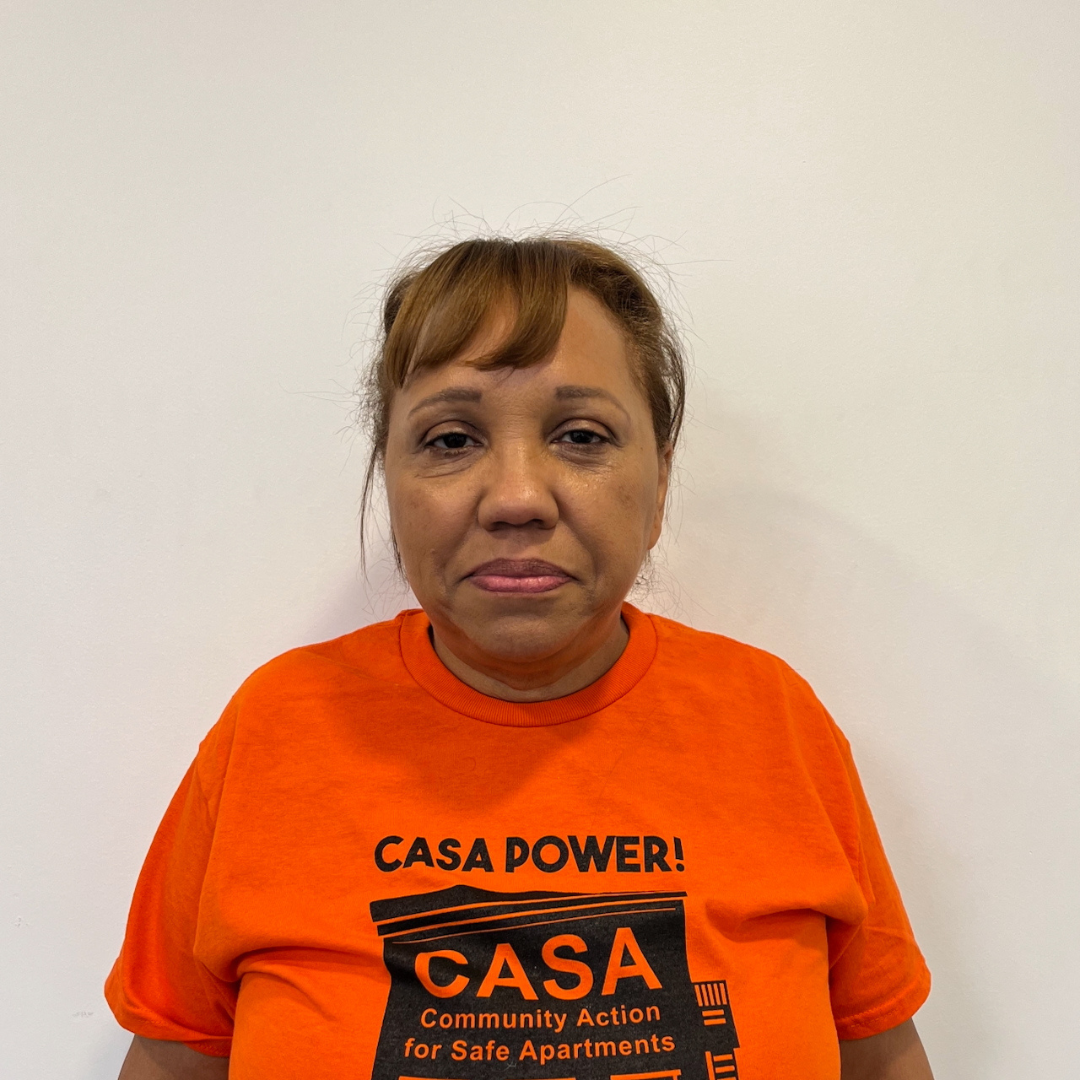
Mercedes Escoto was born in the Dominican Republic and moved as a child to New York City in the early 1970s. After a brief stay in Washington Heights and Queens, Escoto, her mother, and her three siblings settled in a South Bronx then known for its large-scale building fires. Escoto attributes witnessing Bronxites’ struggles at the time as part of the reason why she chose a career in social work. She got married, had her first child at twenty-two years old, and started college. After one year working at a hospital in the Bronx, she took a vacation to the Dominican Republic with her family that resulted in a tragic accident, taking her husband’s life and severely injuring herself. Returning to New York, Escoto was unable to work for months and lost her job at the hospital. By 1997 she had recovered and obtained a job at a mental health clinic for HIV patients in the Bronx where she worked until her retirement.
Escoto’s retirement, however, came earlier than her original plans due to chronic problems with landlord harassment and neglect in her rent-stabilized apartment in the Southwest Bronx. Since 2019, she has struggled with different landlords who have refused to make needed repairs in her apartment (such as fixing a falling ceiling and providing heat and hot water). Instead, they have threatened her with eviction notices and unlawful rent increases. In the interview, Escoto narrates the disorienting, time-consuming, and highly stressful experience of navigating the Bronx Housing Court over years. During a certain period, Escoto’s mother, two sons, and a grandson all lived in her apartment and relied on her as the main breadwinner. She details the toll that housing precarity and instability have taken on her physical and mental health (including a panic attack and a stroke) as well as on her work performance. Before deciding to retire early due to health conditions she attributes to her housing struggles, Escoto had to miss multiple days of work and change her schedule to try to attend court hearings.
CASA came to Escoto’s building while she and her neighbors were trying to make sense of a notification from the landlord announcing a rent increase that turned out to be unlawful. CASA organizer Hal Bergold approached her building’s tenants and supported their organization into a tenant association (TA) to take the landlord to court and contest his announced rent hike. Escoto became an energetic TA member and eventually a CASA leader, educating herself about tenant’s rights and taking part in multiple meetings, workshops, and rallies for housing justice.
Escoto especially recalls her participation through CASA in the 2022 campaign with the Rent Guidelines Board. In her testimony, she directly confronted board members to denounce their lack of concern for tenants’ wellbeing and claim for the creation of a board that’s representative of tenants’ interests. With CASA’s support, her building’s TA successfully contested in court the landlord’s announced rent increase, but Escoto’s vision aims higher. At different points of the interview, she explains her belief that landlords who are systematically neglectful should have their properties sold to the tenants for a symbolic amount. Escoto presents herself as someone driven by the search for solutions, and she believes this would be a great strategy to combat the housing injustices she has faced for years. As she put it, “My personal opinion is that we take the building. […] If you [the landlord] have three complaints that you're not fixing, that you’re not painting, that you're not giving heat, water, or there's no elevator. Three complaints and they should take the building away from you. Because we pay. We are hardworking people. Then sell those apartments to us for one dollar. That was my answer.”
Covid-19 pandemic
Door-knocking
Eviction
Housing court
Immigration
Landlord neglect and harassment
Press conferences
Rent-stabilized apartments
Right to Counsel
Social work
Tenant associations
The Bronx fires
Adriana Alvarez
Hal Bergold
Latoya Joyner
Sheila Garcia
Bronx Legal Services
J-51 Tax Incentive
Narco Freedom
One Shot Deal
RGB (Rent Guidelines Board)
Dominican Republic
Hostos Community College
Jerome Avenue, the Bronx
Lincoln Hospital
Morris High School, the Bronx
The Bronx Housing Court
The College of New Rochelle
Washington Heights, Manhattan
Rent Guidelines Board campaigns
| time | description |
|---|
00:00:32 | Escoto recounts that she was born in the Dominican Republic and moved to New York City as a child in the early 1970s to join her mother and siblings. Relates how they first lived in Washington Heights and Queens before relocating to the Bronx.
00:03:24 | Describes the Bronx in the 1970s, highlighting how the borough was going through deep deterioration with many burned out buildings and problems with substance abuse and lack of public safety.
00:06:10 | Recounts how her early experiences seeing people struggling in the Bronx and helping translate documents for her monolingual Spanish-speaking neighbors informed her decision to become a social worker.
00:07:14 | Relates graduating from high school, getting married, having her first child at twenty-two years old, and then starting college. Describes working in a methadone program for a couple of years before taking up a position at Lincoln Hospital.
00:09:47 | Escoto explains how, during a vacation in the Dominican Republic, her family was involved in a tragic accident that took her husband’s life and injured herself and her son. Describes how she was unable to work for months because of the accident, which led her to lose her job at the hospital and apply for social benefits.
00:12:07 | Recounts her gradual recovery process until finding a job as a social worker at a mental health clinic for HIV patients in the Bronx in the late 1990s.
00:17:27 | Escoto introduces how dealing with housing issues (mainly landlord harassment and neglect) have impacted her health since 2019 and led her to early retirement. Explains that her building’s management took her to court that year while repeatedly refusing to make needed repairs in her apartment.
00:18:46 | Describes her disorienting experiences at the Bronx Housing Court and being pressured by the landlord’s attorney to sign a stipulation. Narrates how her repeated appearances at housing court and accumulated stress impacted her work performance and ability to provide for her family.
00:23:39 | Explains how the lack of repairs persisted after her building was bought by a new landlord. Relates how she decided to stop paying rent to pressure for repairs, but the new landlord instead took her back to housing court. Narrates trying different avenues to keep her apartment, including applying for a One Shot Deal and reaching out to Bronx Legal Services.
00:31:41 | Reports on how her landlord managed to evict her and her family for a weekend because she had forgotten to present her paystub to housing court. Explains how, thanks to her son’s financial support, they managed to move back into the apartment. Highlights how still the apartment was in precarious and unsafe conditions that the landlord refused to fix.
00:36:46 | Escoto recounts how she came in contact with CASA once an organizer, Hal Bergold, knocked on her building and helped her and her neighbors form a tenant association (TA) to fight the landlord’s attempt to raise their rent. Describes how she led the TA and tried to organize them to not only sue the landlord but also get to buy his building for a symbolic price given his systematic neglect.
00:40:46 | Explains how, with CASA’s support, her TA managed to stop the landlord’s attempt to raise their rent. But Escoto emphasizes that the lack of repairs nonetheless persisted, including a lack of heat and hot water. Mentions some of her efforts to combat this situation, including by denouncing the building’s condition in different TV channels.
00:44:58 | Recounts her participation through CASA in the 2022 campaign with the Rent Guidelines Board to press against rent increases for rent-stabilized apartments.
00:49:07 | Affirms her commitment to CASA, to educating herself about her rights, and taking part in initiatives that seek to find a solution to the housing crisis.
00:53:43 | Emphasizes how the accumulated stress of dealing with housing precarity and instability for years have taken a toll on her health, including a work accident and a stroke, leading to her early retirement.
00:56:10 | Reflects on how housing is not upheld as a human right and how drastic solutions are needed, including allowing tenants to buy apartments with systemic violations for the symbolic price of one dollar, dismantling housing court, and creating a new RGB representing tenants’ interests. Escoto criticizes how tenants’ right to counsel, though enshrined in law since 2017, is not implemented.
01:07:32 | Reaffirms her hope that one day her TA will be able to buy her building for a symbolic value, relates the importance of her religion as a source of strength, and reflects on the administrative future of CASA.
Escoto: Hi, thank you for having me. With pleasure. My name is Mercedes Escoto, I'm a CASA leader, and I'm here just to give you some information about my process in CASA. I was born in Dominican Republic, it's a Caribbean Island and I had a good childhood, you can say. We have the basic food and shelter, but we were poor. We were very poor. My mother immigrated to United States when she was eighteen, and she left the four of us in the Dominican Republic. Once she found a permanent job and she had enough money to rent an apartment—because she was subletting from somebody else, her sister's apartment. So, she brought us here. She brought the two oldest one. She brought them first and then me and my brother.
That was in 1973. And as soon as we came to register me for junior high school. They gave me a test. They started me on the eighth grade. I was like eleven or twelve. They put that from sixth grade in my country; they jumped me to the eighth grade. I was one year there and then at nineth grade. I passed through the nineth grade. That's when we moved to the Bronx. We moved to—I remember, 1055 Jerome Avenue. Here in the Bronx. I attended–no before that, I'm sorry, in Manhattan–before that, I went to the nineth grade. I went to Inwood, 52 in Washington Heights. From there, I went to high school at Washington Heights High School. I was there for one year. And then after that, my mother moved to the Bronx. That's when she moved to the Bronx.
And when we came here, she registered me at Morris High School in the Bronx, 166 Boston Post Road. I was there until I graduated. I was having problems there, because they wanted to put me in a bilingual class and I didn't like that. That's when the bilingual classes started back in those days. I resented it. I didn't want to go, because I was so used to, you know—my English was not that good, but I understood, and I like to be with English speaking. They were giving me classes in Spanish and English, and then I graduated from there.
And after that, we moved—my mother was a gypsy; she loved to move. She moved to Queens, from Queens, we were coming to the Bronx. Still, but the Bronx, back in those days, it was it was horrible. Like a house of horrors. Most of the buildings were burned. There was a lot of substance abusers right in the middle of the street. Most of the time you have to ask them for permission for them to give you pass to walk. I remember one day that I was coming from Morris High School, and there was these two African American, a female and a male, talking. We were passing in front of the building, me and my friend, and they kept looking at us. They were smoking pot. They kept looking at us. And then all of a sudden, they started running after that. We were very scared. We thought they were going to do some harm to us. But luckily for us, that the bus was right there in the corner. We knew the busman. At that time, we used to know him. That was the time that he passed by, and we were screaming, “Can you please stop? They’re following us!'' [laughs]. He said, “No, come, come.” As soon as we got in the bus, he closed the door. But that was my first bad experience here in the Bronx.
Also in the school, they also stole my coat. When the school pictures came, my mother had given me the money. I was standing in line trying pay for my picture. They took my coat, and they took the money and everything. And I was so mad, because it was a brand new coat. For the summer, I used to like to walk to school. The buildings were all burned out. The houses, it was horrible. CASA the other day was playing a video, back in those days. And I told them, “It was like that.” I remember when I was young, but we like to go and pass by and see. I don't know why. And look at all the debris on the floor. It was also Third Avenue, and it was completely full of drug addicts. Everywhere. It was an ugly picture of the Bronx. They always had music, they were drunk, they were doing drugs. I think sometimes that probably helped me decide the profession. I became a social worker.
My mother was always lending my services to the neighbors [laughs]. The neighbors don't speak English, so most of the time when they were having an issue with welfare cases, my mother used to let me serve to them as an interpreter to read their letters. So that kind of situation and the fact that I was looking at those people that I wanted to disappear. It was like, “Why would we have this burned out buildings? Why we have all these people in the middle of the streets?” Because Manhattan–I was making the comparison with Manhattan–Manhattan was never like that. Manhattan was nice. We came from Manhattan, a nice area, to the Bronx in that area. The South Bronx had a bad reputation back in those days. It wasn't easy cause my mother was always afraid that something would happen to us. That's why, I said, she moved to Queens. But when she moved to Queens, it took us maybe two hours to come to school and two hours to go home.
So my sister was attending college. I remember Hostos Community College, back in those days. I had come from Morris, from my high school, to wait for her, until she finished around five or four thirty, taking her classes. From there, we’d go together to Queens. But it was a long, long travel and then it was so cold. It was like, “Wow.” But we did it until I graduated. Then after that, we were here [in the Bronx]. We were teenagers. I married. My sister got married too. My brothers, they also got married. I have my child, my first born, when I was twenty-two.
After that, I started college, the College of New Rochelle. I went to college later. After I finished high school, I wanted to take some time. Then I started going out to party right here in the Bronx or sometimes Manhattan. Then when I decided to come to college, I already had my first child. It was also difficult because my husband used to go out work, and then my son, I used to leave him with the babysitter or the daycare. Then I found a job right there, by 149 Street and Third Avenue. It was Narco Freedom, it was a methadone program. Everything tends to follow an order. I was like, “Okay.” From seeing all these drug addicts, I just wanted to get out of that area. My first child—No, before that, when I was a teenager, we used to work every summer in one of those dry cleaners, it was like factory dry cleaners. Cleaning the hospital, the blankets and all of that. Every summer we used to do that. But then when I graduated, I went to my first year was at the methadone clinic, 137th, I think it was. Narco Freedom was the name. I was there for two or three years. Then after that, I went to—with the same scenery, I mean the drug addicts, the streets that you couldn't walk, burnt buildings. Then I went to Lincoln Hospital.
I work at Lincoln Hospital only for one year, because when they gave me vacation, I went on vacation. I went with my husband to Dominican Republic for vacation and I had a huge accident, where he died and I broke my hand, four ribs. It was a very nasty accident. My son also, one arm. So, I had a huge loss. And then I also lost my job. I was there in his family's house. I didn't know them very well, because I got to meet them when I went to DR. I couldn't walk because I broke my pelvis in five different places, also my limp. I was there like for four months. I was calling Lincoln to please keep my job, but to no avail. They told me, you have, “Whenever you come back, we talk.” That's what they told me. When I came back, I couldn't walk, I couldn't write. Because back in the days, we didn't have a computer. I had this bone [gestures], sticking out like that. I had to go to public assistant. I had to stay there for two years. I remember crying like a child, because I wasn't expecting to go through all of that. Went on vacation, and that's what happened. So, when I'm there, my mother came with me. The lady on the registration, she was, “Why are you here?”
My mother was like, “Well, she was to apply for benefits.” And I'm like, “Yes, I need to apply because I cannot work. Look at my hand, I have to write with [my left hand]. I’m right handed.” Giving them all the explanation. They say “Okay.” But they gave me a hard time. I couldn't believe it. I explained to them, “You see how I am.” I explain to them that I had the accident, this, that, and the other. But anyway, it took me some time. I felt sorry for my mother, that she has to come home and bathe me, cook for me, and take care of me and my son. A good thing that I had my apartment. My family was paying for my apartment while I was there in the DR.
When I recovered, it took me two, two years and half. I was working off the books. As soon as I stand up, I went to my therapy, I started working off the books. I couldn't support us. What was it? One hundred and fourteen dollars a month and food stamp of $200. I was used to have a better life. So, I was working in a Zabar’s in downtown, Manhattan, because I had a friend that used to be a cashier, so she got me that position. I really appreciated it, because it's also working off the book over there. There was so many things that I needed to get for my children and for me. They were attending Catholic school, imagine. I didn't want to take them out of Catholic school because I knew everything that I went through in Morris. There was always a battle between the Dominicans, Puerto Ricans, and Afro-Americans. There was always a fight. And I remember, machete, with guns, and with bats. There was always a huge thing. I didn’t want my children to—so I had them in Catholic school. I had to take that off-the-book job so I can pay for the schooling. So, I made it. Sometimes I didn’t have no food to eat. I used to pray a lot. But I made it, I made it. My family was resenting the fact that I didn’t take them out of Catholic school. I told them, “You know, the best thing I can do for them is give them a good education.” So that's what I did. That was my belief back then.
So after that, I was alone. I was studying, having fun, working. I kept looking for jobs and I couldn't find nothing after I completely recuperated. I went to Morrisania 167 and Jerome Avenue, and I left a resume. I went back to Lincoln [Hospital]. Lincoln said that had no positions available. I was waiting; I didn't get no money from them, nothing whatsoever. I only lasted there one year before I had the accident. So, when I came to Morrisania, I left the resume there, but they didn't call me either. I went across the street. My best friend had a beauty salon, across the street from Morrisania on Walton [Avenue]. I went there. I came from an interview, a job interview, and I was telling my best friend how it went. She was doing this lady [‘s hair]—God always works in a mysterious way–she was a director of the mental health clinic in Morrisania.
I was telling my friend, I was like, “Oh, listen, I went to this interview, this lady was asking me, a young woman, [she told me] that I didn't fit for the position because I had too many experiences, or I have less experience.” Something like that, she told me. I was very upset. When I was there talking to my friend, she said, “Oh, listen, we need somebody in Morrisania for the mental health clinic with HIV patients.” I told her, “Yes, I have experience because I worked at the methadone program in Narco Freedom. I was there for three years.” Back in those days, HIV was the big thing. She told me, “Oh, yes. We need you. We need you. I'm going to give you a number who to call.” She told me, “Call Dr. Howard Marcus” I called him that same day, and he gave me an appointment for May fifth. I remember like now cause I told them, “Okay, that's my son's birthday. I'm gonna come in the morning and leave, because I want to go to his school and bring him a cake like every year. So there's no problem.”
Zacca Thomaz: Do you remember which year that was?
Escoto: It was 1997. I remember that's when they hired me in Morrisania, 1997. I did the interview, a very nice lady, my supervisor, Lucy Hernandez. Dr. Howard Marcus, who's the doctor, and Lucy was the social worker for that clinic. The interview went well. They did agree to let me go that day and come back the next day, because they really needed the social worker to stay in the group with the patients. So that was like, “Oh my God.” But the only thing I didn't like that I was making $25,000 a year, at the methadone program at Lincoln, and they reduced me to $22,000. I didn’t like that. I didn't like that. I don't see I was trying to support myself because I had my experience, but I haven't been working for past three years. What’s up with that? But they said, “Oh no, you have good benefits. We have this, we have that, a 401(k).” And I said, “Okay, I really need to do the job.” So, I agree to it. They hire me and I was there for thirty years.
I had to retire because my 401(k) was until fifty-nine, but I left at sixty-three because I felt the stress. I was under so much stress with my housing situation. While I was at Morrisania, in 2019, the management in my building, they sent me to court. I kept telling them, “Listen, I need theses repairs, this, that, and the other.” They never did it. I had moved from 1590 on Clifford Avenue. I moved to now 1187 Nelson Avenue because it was close to work. See, I'm getting older, I want to make things easier for me, because I have the children. I moved there and then the management office took me to court in 2019. I told them, “Listen, it's because I need the repair. You didn't do any repairs. I have to put it out-of-pocket. So why don't you fix it instead of taking me to court? Fix my repairs and I will pay you. That's all I need.” No. We submitted the papers, so I went to court. In court, I didn't love that. I didn't like it at all.
The panorama was horrible. It was a lot of people. Extremely disoriented, I was, because I didn't know where to go. I used to send the patients [to housing court], poor them. One of my jobs is to refer them. All the paperwork I used to do, papers that they receive from public assistance, all the papers for citizenship, everything I used to do for them. I told them, “As soon as you receive a housing court paper of eviction, you bring it to me, and you go directly to housing court.” So, I was there, and I was like, “Why am I here?”
I felt embarrassed. I felt vulnerable. I was afraid. Because I'm so resourceful for my patients and look for me, I cannot even—I was tricked by the landlord. When they judge called my name, the landlord right away called me. The landlord's attorney, he made me sign some papers for an agreement. I didn't know. He said, “No, if you pay the rent—” That's what I wanted to do before I got a court with the landlord. But no, you had it done with the lawyer. “No, we give you a month. If you pay your rent, then we'll come and do the repairs.” [That happened] several times. No avail.
In the meantime, I was losing time from work. I also had my mother, because in 2019 I had to bring my mother from Orlando because she got very sick. She couldn't stay alone in the house. So, I had my mother with another strain for me. Also in 2019, my two children, they separated from their wives, and they came to the house. The little one with his son. So, it was the three of them, my mother, and I. Nobody else was working but me. I was losing time from work because I was in housing [court]. I was like, “Oh no, this is not happening.” In the meantime, the stress was extremely huge. I told my supervisor what was going on, because she started saying, “Mercedes, why are you missing so much days?” And I'm telling her what's going on. I don't like to tell my supervisor exactly because they take that against you. But I'm the type of person, I don't like to lie. If I have to tell you what it is, it is what it is. There's nothing I can do. I have to deal with the situation. So, I told her, but then she told me—when I started missing so much from work—she told me she was going to report me. I'm like, “Let's work something out. I can come to stay late. I can come during the weekend.” She said, “No. That's the time that you got. That's when we need you.”
But at the beginning she did it for me. I started at twelve, leaving at eight. I liked that from her, because we were friends. So, I had time in the morning to go to court. I spent that whole year almost in court. I was using my union. And my union was like “Oh no, these people look very raggedly, like they were alcoholic or drug addicts.” And they didn’t, no—They were working also for the landlord. That was the way I saw that situation. Because they were talking a lot with their lawyer. Three or four times, and then they changed my landlord. My landlord sold the building to the one that we have now. He also sent me to court. I kept the same situation: I was paying and paying and there was no repairs at all. Absolutely nothing. I kept going back and forth to court and that was stressing me out. My health was deteriorating because I was feeling so hopeless and angry and irritable. During the winter, with this horrible cold, standing back in that line, because I was standing there early, so I wouldn’t miss work. It was too stressful for me and my health. I only had asthma, back in those days one of those visits to court. I had an asthma, an anxiety attack. They took me to the ER; they took me to Montefiore [Hospital]. I had never had an attack like that one. That was my first time having an attack. I said, “I don't like that.” Horrible. I couldn't breathe; it was horrendous. So that's how my health started depleting.
They sold the building. Then one week, I kept telling the landlord, “I paid off my rent. The old landlord used to go to the court. They keep telling the lawyer to do the repairs and the landlord wasn't obeying.” He's thinking that the judge is a fool. Nothing has been done. Nothing was done. I kept paying the rent. Then one day I got tired. I said, “I'm not going to pay no more.” I told the lawyer. I left; I went home. Because I also told the people from the union, “You know what? I don’t need you. Because what I need, I'm not getting here.” So let me just leave this as it is. My rent is paid. Next month I'm not gonna pay until the repairs are done. If he takes me to court, I don't care.’
So, he took me to court again. At that time, I had a lot of problems with my supervisor. That continued. Because I was still with my union coming to represent me. I had to be in person, there with them. One day, I don't know how did I discover, another lawyer across the street from housing court. I forgot the name of the program, but it's right in front in that corner. And I went there, I signed in, and this lady, she helped me. One of the attorneys, and she said, “Mercedes, no, you don't have to use a union. We can represent you with the City.” I'm like, “Oh my God, good.” “You don't have to lose another day at work.” But my supervisor, she had a whole record of “missing in action,” like she used to call it. They almost fired me. I was under a lot of stress, because I don't want to lose my job. She was telling me, “We have to take extreme measures with you, because this, that, and the other.” Also, I was depressed. I was stressed out. The maximum with my mother too, because in my house, I need to have home attendant. My mother had covid in 2020.
I had an apartment for her when she came, but then she couldn't stay in the apartment, because it was a private house, and they used to have like cadenas and a huge lock. So, it was a high risk for her to get out of the building, just in case. She was bed-bound. I said, “You know what? We're going to leave this apartment and you’re going to come to my apartment. Because also, I’m paying two rents! They one in her apartment—with her money, it wasn’t enough–and my apartment. “You know what? Let's do this.” She was getting food stamps. She was getting her pensions. I said, “Let's move in.” I had, in that day, 2020, I couldn't find a U-Haul. It was me and my sister and her husband and my children. The good thing [is that] it was like three blocks from my house. It was horrible. It was like only the five or six of us, bringing everything from one house to the other [laughs]. We couldn't find anybody to do the moving, not even paying. So, we did that and my apartment, it looks like a storage. Full of her furniture, my furniture. I was like, “Wow.”
So, again, the thing with the landlord. He was giving me a dispossess. Whenever I went back to the judge, I went by myself and I told the judge, “Listen, how come whenever you tell these people to fix the apartment, they come and promise you this, that, and the other and they don’t do it? But when it comes to an eviction, right away you sign the papers?” Because that's what I went there to do, with the eviction papers. “No, we gonna give him thirty days. In thirty days he is going to do repair, and then you pay the rent.” I said, “For the last time.” She sounded so convincing, the judge, I thought, “Finally, my apartment is going to be repaired and we’re all going to be comfortable.” It didn't happen. When I went back after thirty days, nothing had happened. The same thing. And I say, “You know what?” I didn't pay it. So that was in 2020. [When] all of that happened, I heard of ERAP [New York State Emergency Rental Assistance Program]—or no, I took a loan. I took a One Shot Deal, okay?
For the first time I went, and the lawyer advised, “Get the One Shot Deal, so they can pay for your rent.” I went and got it. I was approved. They were garnishing my check, so they were taking the money out of my salary. I was like, “Oh my God” [laughs]. The remedy was worse than the problem. See, I was having less money now. I'm in same thing: I couldn't pay the rent this time. Because nobody else was working at the time. My mother was getting like $200 food stamp, $150 a month, $170 or something. No, it was $700 and $200 in food stamps that she was getting, plus what I was getting, it was like $702. So, imagine, for six people it was not enough. Five people, plus the home attendant. I was there and my mother had twenty-four hours home attendant because she couldn't walk. I have all those mouths to feed. That's when I went, I couldn't take anyone, I was crying and crying.
I went to Latoya Joyner [New York State representative at the time] to see if she can help me. That's when she sent me to Bronx Legal Services. At Bronx Legal Services, the lady, she helped me big time, Adriana Alvarez. She was a sweetheart. She did everything for me. I didn't have to go to court. But still, my supervisor was on my neck. I was the only social worker in the medicine clinic. I was extremely busy from as soon as I came in until the time I get out. Sometimes I didn't even got a lunch, because I was too busy. But then, when covid hit, my schedule was removed. Because I was from twelve to eight, so they close at night. I was back again from nine to five. So, I was having the same issues again, that I couldn't attend the housing court at 9:00 a.m. I was coming in [to housing court] during my lunch hour and I couldn't stay. I could [stay] one hour only, because my job is not too far from housing court. But I couldn't make it. Sometimes, I used to just leave, and I didn't see the judge. It was extremely complicated back in those days.
When my mother had covid had a stay back in that year. It was two weeks in my job that I couldn't go back to work if I was exposed. I was being exposed to covid by the patients, because most of the time when the doctor see the patient, they didn't know the patient had covid. Once they tested, the patient was positive, but they were already in my office. It was a mess. I had a stay two weeks with my mother at home, because she tested the positive. She was in the hospital and then she was discharged to the house. I was like dealing with all of that. I didn't have a home attendant because the home attendant couldn't come because, she was positive. I was taking care of my mother in bed. My children, by that time, they went back to their partners. My grandson was with his other grandma because I couldn't take care of him. I had to take him to Manhattan to school. It was too much for me. I was like, ‘Oh my God.” Sometimes I’m just crying and crying. I didn't want to cry in front of my mother because she was very ill. I thought she was going to die. So, it was horrendous. That year was extremely hard for me.
So then after that, this new landlord took me to court. He evicted me one weekend and I was like, “Oh, no, he didn't.” One day, I told my son to go instead of me to the housing court. They told him that they needed my paystub. He told me that we needed that, and I forgot. I did not give it to him. So here comes the marshal knocking on my door. It was a Friday, so they got us out. I cried like a baby. I was like, “Oh my God.” I never went through this before. I started feeling depressed. The system has failed me. What am I going to do now? What am I going to do? Good thing is that it was only that weekend, because on Monday I got the paystub. But I had to wait until Monday to go to court and show them my pay stub. So, I went, and I did back that. Monday night after work, I went. Now we’re all back in the apartment. It was only for that weekend. But still, that took a toll on my health.
My son was the one who told me, “Oh, mama—" And my son, he had to pay. He pay like $10,000. He borrowed it. He had started a new job, so he was paying. Good thing he paid it. He didn’t ask me for the money. And I was like, “Oh my God. Thank God for that.” I couldn't afford it anyway. He paid that. We went back in the apartment. The same things kept happening. My apartment needed painting. The ceiling fell from the bathroom ceiling. We needed to use an umbrella, because it was leaking. You couldn't sit on the toilet, because the water from the toilet on top. I was like, “No, this is not happening.” Painting, falling on us. Water, dirty water. I couldn't open the windows; the window is extremely tight. My son sometimes couldn't even open it. This is a risk. Imagine if there's a fire, we cannot even open the window for the fire escape. Until this day, I'm still having the same problem. Oh, and then bed bugs. Back in 2021, we had an epidemic of bed bugs, and I told the landlord.
Never answered me back. I told the super, nobody answer me. I called an exterminator, and they came. They charged me $700. The landlord was never there to do any type of repair, to me or anybody in the building, for that matter. When my refrigerator broke, he didn't fix it. He didn't give me a new one. I had to take a credit card. I applied for credit card, and I had to buy a new one for $700. Back in those days, the washing machine room was closed for a year. My mother, I have to clean her clothes. If it was only me, no matter. I took another credit card. I bought a washer machine and a dryer machine. That's how I handle all of that.
My apartment is very small. It's only two bedroom. My mother is in one bedroom and I'm in the other bedroom. When my kids were there, the living room was full, because there were three of them. My two sons and my grandson. So, seeing all of that picture, I felt, “My God, do I deserve this? Of course not.” Also, the fact that none of them went to college. I also resented the fact that after I pay all the money, I went through all of that, Catholic school money. I kept telling them, “You know what? If I would have not used that money to pay for Catholic school, I would have a beautiful house.” I resented the fact, and I used to tell them. There was a lot of arguments in the house because of that. I really feel that I have failed them as a mom, because I couldn't do it. I couldn’t motivate them anymore. The fact that I was taking from my mother, housing issue, a supervisor, my health deteriorating. I didn't want to tell part of the family what was going on. They probably knew. But everybody has their own—they were all going about their business. So, I continued surviving just like that.
But CASA came. CASA came into the picture when the new landlord came, one day, and sent all of us a package. A yellow package, something about J-51 law [tax incentive] that he wanted to terminate. There was a law about—but I didn't know, I didn’t know nothing. I didn't even know that it was a [rent] stabilized building. When I came, I signed the papers, I got the key to the apartment, and I paid three months. And I gave the same amount of money to the super. So, CASA came—No, I first noticed that the other tenants came to me because they knew I was a social worker. They came with a package, with the same package, like “Mercedes, what is this? We don't know English.” I said I don't know either because it's legal terms that I don't understand.
So, when CASA came, they were knocking on people's doors. When they knock on my door. It was Hal Bergold that came to my door. And he explained to me, “Listen, this is what's going on. These landlords want to take you of this J-51 law, which is a law for stable housing. If you remove that law, then you'll be, your rents will go up.” I refused to have that. I was like a fighting dog. I said, “No, I'm not going to allow him to do that. We're going to war. We're going to war.” So I started participating. They taught us how to arrange the tenant association. I was one that moved around, because I was still working, but I always find the time after work. Hal was always contacting me to let me know when he needed me to go door-knocking for the other tenants to motivate them to participate. I did that.
It was me and him [Hal] at the beginning, because most of them [the neighbors] couldn't come. They couldn't come to the majority of the meetings. Some of them have two other jobs. They come very late. I used to tell them, “We will arrange their meetings when you have time. If it's on a Saturday, you let us know.” I was very energetic. I told them from the beginning, “Listen, this is my plan. Because of all the complaints that this landlord have, we can buy this building at an extremely low cost–I said it from the beginning–a dollar. He can sell us this apartment for a dollar each. Then we set off a life. And that's exactly what we deserve after all our pain and suffering, that's exactly what we deserve.” Because see, we have been giving him our money, our money from our effort. So, for him to put it in his bank and no repair no apartment. The lease is a contract, and he has failed to follow with the contract. They believe it because they believe me. They say yes. They did agree.
And I told them, save your money, save your tax money, do some savings. Because I had all my hope on high. And I really believe that we're going to end up getting those apartments. I told them, if we are the tenant associations, whoever doesn't want to buy it, is up to them. But I'm going to make sure that the judge, the court, give us the buildings for the ones who want to buy it. Oh! They all started coming. That was like, they say, “Oh my God, Mercedes, that was a great idea. If that happened, we good to go.” And I'm like, “Okay, so let's move it. Let's participate. If you don't come, you will never know. We will never get it.” I motivated them that way.
So one day the attorney general–the case was taken to court with CASA, with CASA’s help–they got the attorney from Bronx Legal Services. They represented us and we won the case for the J-51 law. We still have that law, but we still having the problem of no repairs whatsoever. Sometimes there was no heat, no hot water. Con Edison was sending a letter saying that he was not paying the money for the community area bill. So that was another issue. There was always something going with that landlord. I kept motivating the tenants. We keep door-knocking. We keep bringing flyers. Also, CASA got me interviews with the media, especially the Latino ones: 41, 47, Channel 1, Channel 11, Channel 12. I did interview with all these people, and I sounded already like a broken record. Because I was repeating. I know that that's not beneficial for my health, because see, every time, I was telling you, I get emotional and started crying.
But at least we were getting somewhere. This one, the attorney general, Vanessa—I forgot her name. The attorney general. It came to her attention, by one of her staff of what was going on with the landlord in our building. She said they had some money. They gave us $50,000. Right away, when I heard that, I told the tenants, “Let's save that money [laughs] to buy the apartments.” The landlord has six buildings [laughs]. I told them, “Okay, let's invest it. Let's invest in a parking lot.” There's a lot of parking lot. We can buy one parking lot and we ourselves can attend it. We take turns. But the president of CASA, she told us, “No, that we cannot do that, that the money was for them and this, that, and the other.” And I said, “It wasn't too clear about that.” First Hal told us that it was given to the tenants from our building. Then she came and she said, ‘No. It was for the tenants of the six building.” Then the supervisor came, he said the money was for CASA.
And I say, “You know what?” She explained to us that it was for all the people that couldn't afford to pay their rent. You know, there was a time that a lot of people was being evicted in the winter. I was like, when I heard the word “winter,” I was like, “oh my God. It's true.” So I told the tenants, “No, that money—let them, because there are people that's worse than us, especially those undocumented people.” I'm like, “No, they have it worse than us.” So we agree. They kept the money.
I've been going to CASA even Saturdays. To educate myself. I'm the type of person that I always think that I don't like to be a part of the problem. I always like to be a part of the solution. I keep telling them from the beginning, I keep telling Hal, “Hal, listen, how come this don't work? We getting the building for the tenants. This building has the most citations than any other building that I know.” He said, “It's a long process, and this, that, and the other.” I told them, “We can start a big process and continue to do what we're doing.” So, we have a plan A and a plan B. I don't know, for some reason they prefer to—I mean, they don't have the staff lately. Two months ago, the staff, the ladies that were directing the program, they resigned. There's being a lot of ups and downs in the program, a little bit of a crisis. That's what Sheila [Garcia, then director of organizing at New Settlement] told us.
Then also the other thing, with the RGB [Rent Guidelines Board]—I went last year to Hostos Community College—they’re raising the rent. I stand up to these people. There are seven of them in these tables. I prefer to talk in Spanish, because they're giving you more time to talk if you have the translator [laughs]. So, I say, “You know what? [laughs] I’m gonna use it.” I had a stroke when I fell at work, so my English is deteriorating more. I don't know why. I cannot speak it fluently like before. I feel that I’m not like before. I blamed that on them, because I haven’t been the same.
So I went—where was I?
Zacca Thomaz: The RGB.
Escoto: Oh, the RGB. I’m right in from these people. One [of the board members] is on the phone, the other one is looking over there, the other one I know is texting on the phone. I’m like, “No you didn’t. You guys don't do this to us. We are here. We are being through thick and thin with this. It’s not getting better. What is up with you people?” I was extremely ghetto. I couldn't take it. I didn’t like the fact that we were being treated like shit. I told them, “Listen.” I stopped talking. I said, “We don't need you guys. We don't need you.” I turn my back to them; I put my front to the audience. I told them, “Listen, we are very hardworking people. We’re smart. We're intelligent. We can do better than these people. You see, these people don’t care for us at all. These people only care for themselves. So, what we can do is create our own RGB.”
Oh! Everybody was applauding, but I didn't know if it's possible to do. I mean, that occurred to me when I was talking to them. I was so angry. When we need the politicians, they're not there for us. It was like horrendous. So even the Bronx Borough President came and talk. The other guy from—I forgot his name, the one that has a moving problem, I forgot his name. They both came and some other politicians came. Fernando Ferrer, I think the son came. They all talk. Well, they read from a piece of paper and then they left. I was so disappointed.
This is the kind of representation that we have? We’re voting for these people, and this is what we get? It’s not fair. Whenever we would try to get them to talk to us, to support us, same thing. Then they said that we're going to follow up, it never happened. I'm like, “You know what? This have to change. Really.” I was so disappointed. Then I went to Hal. We had a tenant meeting. I told, “Hal, what was the purpose of that?” I mean, they raised the rent. It was like four to five or six [percent], something like that. I’m like, “No.” It didn't work for us. It was a huge disappointment.
Zacca Thomaz: This was last year?
Escoto: Last year, 2022. When I went back home, I was crying, because I said, “They're raising the rent.” I cannot afford to pay because now I’m retired. I only receiving one check a month. No food stamp, no nothing. My mother, I had to send her to my brother, because I couldn't afford it. I couldn't. And I had bed bugs again in the apartment. The home attendant case was also—The agency was calling. “If you don’t have that type of pay, we cannot have the home attendant there.” I'm crying, but I had to call my brother: “You need to take our mother with you. There’s no heat. There’s no hot water. I have bed bugs. I can’t have my mother here.” So, he took her. Now it's only me in the apartment. I can take that because I'm a warrior. But God is always with me.
I kept fighting. I kept going to rallies. I kept doing presentations. I kept going to CASA. I kept getting information. I was educating myself because I didn't know about the nitty-gritty, or the rules, or the origins of CASA. I know I used to refer a lot of patients to CASA for my job, whenever they had a housing problem, but I didn't know exactly what they would do. They do an excellent job. I like it. They do an excellent job. They give you food when you go to the meetings, they provide babysitting, the transportation. They gave you the Metrocard. I finally felt so good. I felt I was being supported by my community. Because I always give to my community. By giving, I mean my job! Sometimes I used to work more hours. Sometimes I used to get out at midnight. See, they have the daytime and the evening time. When there were patients that were in a crisis, I used to stay with them until midnight, I didn’t care. So, due to the fact that I'm there for my community and I'm always voting for my elective politicians. And then fact that they’re not there for us, that broke my heart. I say, “You know what? Something have to change.”
Then the last meeting that I went, Yeraldi [Perez, then CASA director] send me. I'm over there—It was a panel of three. There was three of us or four. ACS [Administration for Children’s Services] was there. I don't remember the other programs what they were. But I was the only one that was a client. I was not from an agency. I was struck by the fact that they asked the question–I think that was the last question–the monitor, he said, “How do you think we can solve this problem, housing crisis?” I'm like, “It's right there in front of us. The solution is right there, okay? This part is that you guys don't want to see it. Open your eyes, it's right there.” We have gone around like a dog behind his tail. Oh, because some of the people that went around me, from the other agency was saying, “Oh, we created program for this. We created a program for that.” We've been doing that since the earth began. Creating programs. Has that resolved that issue? It hasn't!
On the contrary, it's worsened now because they’re evicting people. Whole families, during the winter. Do you know how hard the winter is right here in the city? Horrible, horrible. I was like, “That cannot continue to happen.” They want my opinion? I said, “My personal opinion is that we take the building. Three strikes and you're out. If you have three complaints that you're not fixing, that you’re not painting, that you're not giving heat, water, or there's no elevator. Three complaints and they should take the building away from you. Because we pay. We are hardworking people. Then sell those apartments to us for one dollar.” That was my answer. I’m not being a smart-ass or none of that.
The thing that the landlord is saying in court, that he also went through hardship. That’s what I told the lawyer, that the lawyers told me is they're going to hardship too, because of covid. But how can that be? When the attorney general came to my building, there was three apartments that were rented, that were new. They were new from top to bottom. They even had dryer machine, washing machine, dishwashing machine. When I came to the building, you cannot even have a washing machine. I had to go out and do the laundry outside. That's when I decided, no, that I was going to get mine and I did it. I bought it. Then how can that be [that the landlords have hardship]? My apartment is well-kept because I work, and I pay for it to be painted. I pay for the repairs. I had to pay Mexican people that are undocumented to help them, to help me. It's extremely unfair.
I continue to—my attorney from Bronx Legal Services, going to court to fight my case. “What was wrong with that picture?” And I turned the question back at them and nobody responded. Then Hal was the one who told me, because I really thought that it was only attorneys that were there. He told me no, also George is. I said, “How come none of them responded? They know what they're doing.” I told them, “In my opinion–that's my favorite word: mafia. The system is extremely corrupted and they're killing us.” You see I'm a product of that situation. I don't have my health a hundred percent, because of everything that I went through. Because that situation stressed me out to the maximum that I lost my health. It was because of that. My health started deteriorating because of all that stress. I couldn’t take it. When I fell at work, I wasn't eating well, I was too stressed, probably all of that. I fell because of a rug or something, but I couldn't stop, and I fell. I broke my cheek, and I had a–what do you call that–a clot in my brain? I had a stroke.
So that's when I decided to leave. I said, “No, I cannot work like this.” Before I used to know my patient's medical record number; I used to tell you like that [snaps fingers] when the doctor was—My memory was excellent. After that, I couldn't even remember my phone number. I was like, “What?” No, I can't. I was planning to get better. I waited a year. After that year, I said “I’m not coming back.” I’m gonna retire. I was planning for my retirement at sixty-six and a half to get my little money, to get a leave where I was. Maybe I was going to get two thousand dollars. It didn't happen. I applied for disability and still to this day, it that hasn't been approved. I’m still going to see doctors. I applied for my retirement the other day. They sent me the money, but they’re not giving me my full retirement, because I had to wait until sixty-six and a half. I'm losing three hundred dollars. They only give me almost $1,700. If I didn't, I was going to get my two thousand dollars if I retired at sixty-six and a half. But I said, “You know what?” I needed the money, because I was only having one income, even though it's me alone.
I'm paying rent. I told Bronx Legal Services, we went on rent strike, which was good. We also told them, “Listen, we need to do something drastic.” So, they organized us. Bronx Legal Services comes every month to get the money, the rent money. I told them, “I have nothing. My mother moved, I don't have her benefit anymore. I get $1,500 a month. I have to eat. I have to pay my other bills. I have to pay—No, I cannot afford it.” I told them. They say, “Okay, Mercedes.” I have my 401(k). They're supposed to send me a lump sum, but it takes ninety days, and ninety days haven't been over yet. So, I'm waiting for that money to cover for the rent since December, because ERAP pay for the other one. I continue to be stressed out about the same situation. It’s nonstop.
What I want to see happen, not only for me, for my community, for everybody: they have to stop. Housing is a human right and we’re all human. What is wrong with that picture? Family is the base of society. Why are you throwing your family to the streets? That's unacceptable. The other day I was listening to Joe Biden: “This is the land of opportunity.” So, what's the opportunity for us, the middle class or the poor people? What's that opportunity?’ It's extremely unfair, why are they doing that to us? Nothing seems to be working. Whenever you propose—You know, the one lady from the panel, she said, “Oh, Mercedes, they already have established that law: that when the landlord has so many complaints that they do give the [building to the tenants].” I have heard that before. I’m on top of CASA telling Hal, “If there's a probability that we can get this building, let's do it. Let's do it!” I keep pushing him. But he said “Yes, one day.” Then when he comes with the agenda for us to go over it, we have other immediate things that we need to take care of. The fact that these two staff have left. Also, that they were the coordinator, and the other coordinator.
So I know that they've been having a lot of problems now. I'm in the CASA leadership too, and they’re having meetings with the hiring another program director. It's a constant battle. I keep telling the leaders, “Listen, we're working. This is not the way that we should be dealing with this thing. We should work with a solution and not with the problem.” I keep telling that. Because every time I get out of there, my head hurts. People complaining about what's going on. Same thing all over and over again. Nothing happens, nothing changes. I keep repeating myself: “Let's work with the solution. What is the solution for the situation that we having?” I told them that we need to create an RGB. All those people [board members] have to be let go. We need an RGB that is supportive to the tenants.
Housing court, also, in my opinion, has to be dismantled completely. Housing court–if I heard correctly from CASA–it was created by the tenants. So, you see, what's wrong with that picture? It was a good thing. It was created by the tenants, but now the landlord is using his technique to make it work for his benefit. It's not a support for the tenants. It's a support for the landlords to do whatever he's doing to get his money and to steal our life and our life savings and our health. That’s exactly what they're doing to me. And I say “No, that cannot continue to happen.” We have to be aggressive. We have to think ahead of the landlord. So, if we do this, you see, I told the attorney to tell the judge, the last time she went, I told her about the new apartment, and she asked me how come I didn't take a video. I mean, the men moved there four months ago. I didn't feel that comfortable. I told the attorney general, the person that came, “Bring this to the attorney general.”
See, this is what I want. I asked my attorney. I want $100,000 dollars plus I want my apartment like this. Because of all my pain and suffering, this is what I really deserve. I had to go to the hospital several times. The bed bugs. I'm taking medicine. I didn’t deserve this type of situation. You know who's to blame? The landlord, because he broke the deal. He broke the lease. He's not obeying the judge; he's doing whatever he wants. He's managing the situation. It's not fair. When I told the attorney that he's going through and saying, “How can he afford to make this apartment better than one apartment in downtown Manhattan?” That apartment looks beautiful. The painting, the ceiling has light incrusted inside. My apartment has no light on top, not even in the bedroom. Everything looks nice and clean. When I ask a person there, “What is the problem that you have?” So, we can call 311. [The person says,] “All I have is my oven and it's not working. I need a new one.” I'm like, “What? I need the basic in my apartment, and you’re telling me that you need your oven repaired? Your microwave repaired? That's a luxury.” I felt so bad. I mean, he's paying two thousand dollars, and my rent is two thousand dollars. What's wrong with this picture? Every time I hear things like that, I get so aggravated. I cannot go through this, because that can give me another heart attack.
You know, my memory sometimes fail me, because of the stroke. I have to keep myself down, not to get stressed. I cannot help it. Sometimes it's like, “What are we going to do?” Sometimes I cannot even sleep. I’m the type that thinks what goes around comes around. If I get a little money and I can buy a house or I can rent it. I don't want the same thing to happen to me, but I would not be like my landlord! I will pay attention to my responsibility, which is: if I sign you a contract, I have to have that apartment in shape. I cannot leave it without gas and water. I cannot leave you without light. You have to be responsible for your action. Every action brings a reaction. One of the home attendants also. Whenever he [the landlord] come to me harassing me for money, I used to tell him, “You took me to court, go to speak with my attorney.” “Oh, but you don't have something that you can give me?’ He was begging for money. Then the home attendant told me, “Mercedes, that landlord is the one that bought my building three weeks ago.” I’m like, “You see? What crisis is he going through? He keeps buying buildings.” They keep renovating apartments in the building. So where is this crisis?
Now me? We have a crisis. Whenever one of the other tenants from the building come and the tenant members says, “What is going on with me?” And I read their letters, that they going to be evicted, it breaks my heart. I had to go to court. Because we monitor that, when the tenants are—because they were trying to get them an attorney, which is another joke. We have the Right to Counsel, but we don't have it! What is wrong with that picture? It’s a clear picture. I can see clearly. Politicians and the mafia, the landlord, they don't want to see it, because they're going to lose money. But I see it clearly. They take it every month, they making the all the business, they were getting rich with our money and killing us in that way. Ad we're letting it happen. We're not doing anything. Whenever I see the tenants in my building saying that “Oh no, my apartment, I don’t have no complaints.” I’m like, “What? Everything is fixed?” The main door in the lobby doesn’t work. It hasn't been working. We have like a gang in the building, smoking reefer and alcohol and music loud and every time. They live there in the stairs. People are afraid to get out of the building. I told the landlord, “You need to put–what do you call it?–a door in the front. An iron door in the front so they will not be loitering in the front of the building.” Oh no, he didn't want to hear that.
I went to the police several times. I made a complaint of them and I call. Whenever they come, they go to the patio, they go to back of the building. They see the exit at the back of the building, and they leave, so they don't see them. But they see the smoke, the marijuana cigarettes on the floor, they see all the food. That's why they're like. Our building is rat-infected. I can hear at night. When I first move in, you can hear them inside the wall. So, to resolve a problem, I used to—because I couldn't sleep, I used to take my phone, go to YouTube and play the “meow, meow,” cats meowing. So that's the only way I have been able to stop that, because they think there's a cat in the house. I cannot have a cat at home because I'm asthmatic. So, whenever I hear them, I play the music, which almost every night. I ask myself, “Why am I living like this? Why are we taking all of this? It's not fair.” We have to do something drastic, which brings me back to CASA. Because CASA is going through that crisis now. There's always something happening. Always. There was first covid. We had to take immediate action and all the stuff. From the beginning I told CASA, “This is what I want, and I thought the tenants and the tenants agree. The tenant association, they agree with me. They all agree that we want the buildings. We want to buy our apartments. Once they do that, you'll see that they will not be—and, you know, make it public.” So the other landlords can see that we have taken this guy as an example, so they will not do that. I will finish up with everything. I know they want money to create another program. How many programs are you going to create them? They're going more program than people in their house, So, what are you doing?”
But I’m hopeful. I have all my hope held up high that we're going to win that. We, the tenant association, are going to buy our apartment for one dollar, no more than that. I see that. I dream with that. I'm working very hard to get that. See, we deserve a better life. We deserve all of that. We’re hardworking, smart people. We deserve that. In God’s name. I believe in God. I always think that when Jesus came to earth, he was the one who taught me. You know, when he used to tell the sick, “You want to be cured? You're cured.” Start by the solution, you're cured. You believe that you’re cured, that's it. I really believe that that building is ours and that I'm going to have my apartment remodeled, and that I'm going to have my $100,000 in my bank account. And that’s it [laughs].
Zacca Thomaz: Are you Catholic?
Escoto: Yeah, I was going to Catholic Church, but then I discovered the Christian Church. This guy, he's a psychologist by profession. Whenever you go to the service, it's like you are seeing a psychiatrist. He's very good. There's a lot of young people, a lot of children. I'm not going because it's far. I have my car. That's another expense. I cannot afford the gasoline. So, I look at the service online on YouTube. The other day he was talking about life management, and I started crying. I have managed my life so well, I was doing well, until I moved to that building. Because the other building didn’t have a problem. I just moved there because I was closer to work, ten minutes walking. But God works a mysterious way. Maybe God have placed me there so I can deal with that situation. I always look for the positive side of things. I really believe that that's what I'm there for, because otherwise those tenants in that building, they would not fight for their rights. They would not do nothing. It takes for me to invite them to my house, to let them know, “Listen, this is what we're going to do.” We have motivation, total motivation, and still—but I can't blame them, because they're working. I have to work with them, you know, with the free time that they have available. It is a challenge. But somebody have to do it [laughs], and why not me? I’m home. I'm taking care of my health, even though I still have a case in court, I am there. I'm there. And I'm not going to stop until we get what we deserve. The building, the apartment, and the money. I wish that after that happened. Well, I wish, no—No more landlords are going to have that problem, because they're going to be afraid of losing their building. They will not have time to be paying the judge or paying the attorneys. They’re going to lose their building. To make that law. According to one lady from the panel, she said that that law is already established, then it's like the Right to Counsel. They’re not executing that law, at all.
I went to court, and I saw this Dominican young guy, unemployed, he was into unemployment after covid. He was crying like a baby. He was forty years old? I was there when the judge was telling him—he didn't speak English—that he needed to go to the program next door, because they were going to have to give him the benefits to get an attorney. She sent him. So, I grabbed him by the hand, I said, “Listen. CASA is outside. Let me register so they can see you. They saw him the same day at twelve.”
Zacca Thomaz: Based on all that story, all your experiences living here, battling so many different issues in the neighborhood, participating in CASA. When you think about the future, of CASA and the Bronx, what are your main concerns and what are your main hopes?
Escoto: They have to rearrange CASA. The leaders, they’re asking my opinion for too much. I'm one of the new leaders. They have all leaders there, they're teaching us, which is good, because they're planning to retire. They’re planning to leave CASA because, you know, they planning probably to leave the Bronx, but they're teaching that. But they want us now to participate in the interview of the new CASA director. According to them, that process is a lengthy process and none of them will be available, according to Sheila. It’s three steps and you have to be in the three steps. If they take you to interview that person, you have to be there in the three different stages and the three different times. And they will not be available. They all work; the majority of them work. I’m one of the few that don't work. I really believe that they are asking for too much, but you know, they don't want the new leaders to be that opinionated, because we knew. But the other day I told them, “In my opinion, you asking for too much. Let's take it easy, let's let them do the part. Then once they're there, you have three months to be permanent in any job. So, within the three months, we can see how that work.” If we want any changes, Sheila said, now we can change. They cannot [make] the person permanent. But it’s also that they a person to be Afro-American.
What the difference? I don't see it. But according to them, they only have Latino, the person have to be Spanish speaking. That’s the program’s rule. We have an appointment to speak with Sheila, which is the one of the director of New Settlement, which is another issue. I didn't like that. See, we got a program to solve a problem, and now we have a problem with the program? But it is what it is. We’re also dealing with that.
Some of the people, they don't like me. See, I’m very opinionated. Whenever I feel that I disagree with something, I like to give my opinion, because I'm also part of the leadership. But it's been quite a situation. At the beginning, they were asking me wo hired me. Because they didn’t know. “Who told you that you have to be a leader?” I haven't told them that. One of the new leaders was complaining about that, that she was going to leave because several of the old leaders who was asking her, “How come they didn't ask for the—" I’m like, “We have a crisis, a housing crisis.” But it’s them and we have to deal with all of that.
Zacca Thomaz: I think it is always difficult, right, in any organization?
Escoto: Yes, but I didn't know it was gonna be that difficult [laughs]. But it is what it is. Yes.
Zacca Thomaz: Thank you so much Mercedes, I really appreciate your time.
Escoto: Thank you.
Escoto, Mercedes. Oral History Interview conducted by Diana Zacca Thomaz , April 18, 2023, CASA Oral History Project, The New School.