Fitzroy Christian (Interview 2)
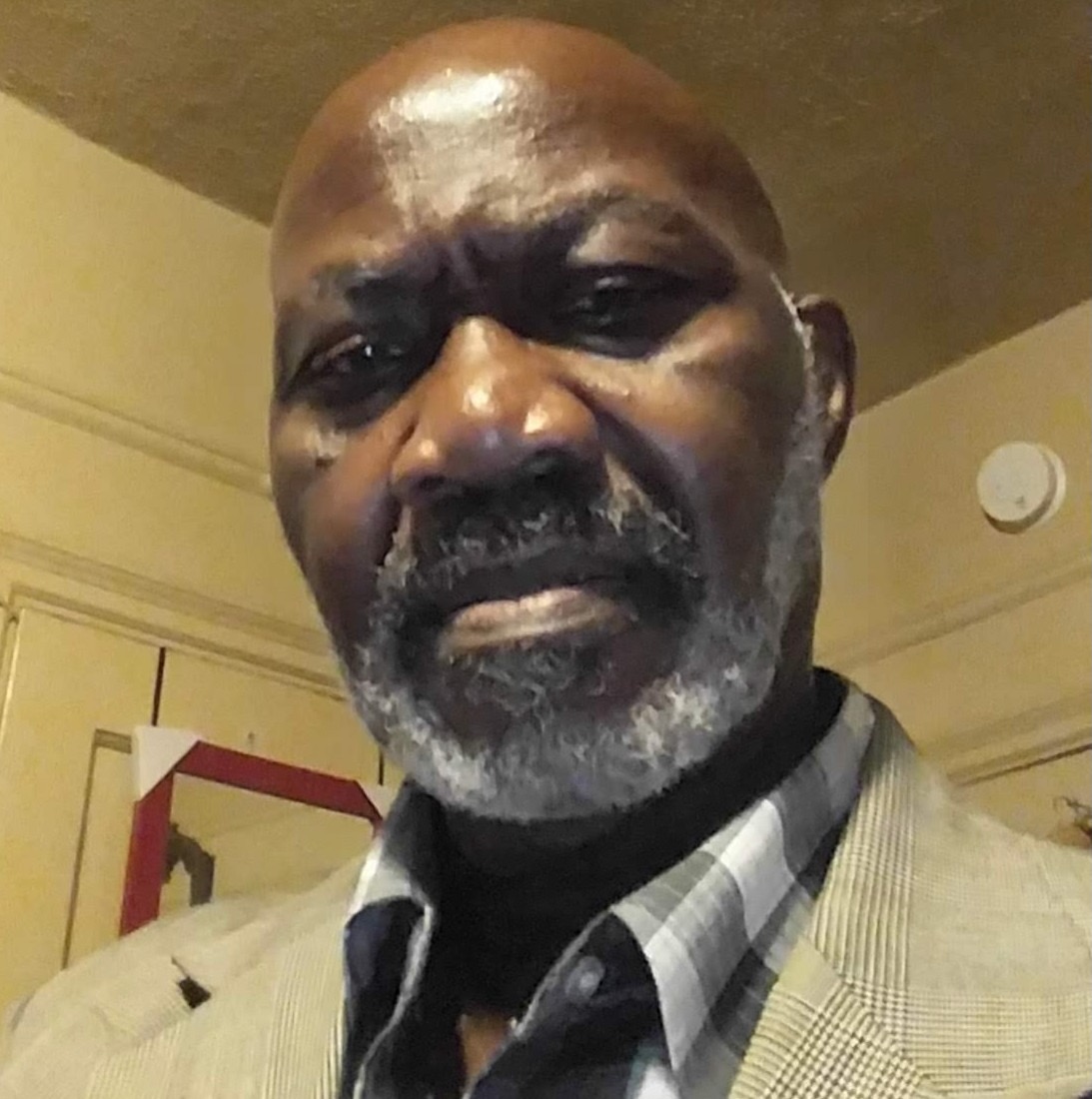
From his youth in an Antigua and Barbuda fighting against colonial domination to his retirement years in a Bronx battling gentrification, Fitzroy Christian has always known which side of the struggle to join. His oral history interviews showcase his lifelong commitment to organizing collectively for social justice. He reached out to CASA for support in 2010, when his building’s tenant association was trying to get the landlord to restore their gas provision. Christian immediately identified with CASA’s democratic model and goal of promoting safe, affordable, and stable housing. In these interviews, he reflects on the multiple campaigns he has joined as a CASA leader, outlining the challenges and promises of community organizing and coalition building. A South Bronx resident since the mid-1970s equipped with the analytical eyes of a political anthropologist and a youthful anticolonial passion, Christian shares a treasure trove of knowledge about the borough, the city, and the possibilities of progressive social change.
During his formative years in the 1960s, Christian became deeply involved in the movement for national liberation in his native Antigua and Barbuda. He drew on the example of his own parents, who had been active in the movement, as well as of prominent African intellectuals and revolutionaries similarly fighting against colonial powers at the time. Christian became one of the founders of the Afro-Caribbean Liberation Movement and helped forge alliances to like-minded groups across the globe. His political protagonism and transnational connections were awarded with a scholarship to study political anthropology at the City College of New York, where he arrived in 1971. Activism took him to New York City; as soon as he landed, he immersed himself in the local activist scene. On campus, he joined a call for the creation of a Black Studies program. Off campus, he closely observed and occasionally contributed to community efforts to rebuild a Bronx afflicted by endemic arson, a landscape of devastation ever since “seared” in his memory.
By 2025, Christian had lived in the same rent-stabilized apartment in the South Bronx for about fifty years. His long-term tenancy can be attributed to his community organizing. In 2010 he and his neighbors had been struggling for months with a cut-off gas supply, an issue that required major refitting works in the building but to which the landlord only responded by offering hot plates. “I decided that I was going to organize my building to form a tenant association [TA], and, as an association, meet with the landlord to get things done and to give us back the dignity we had as families who are paying rent.” Asking council members for a local organization that could assist them, Christian quickly found CASA and just as quickly fell in love with its work. “I loved what I was hearing and the participation of the community members, how they were the ones who were making decisions.” He joined CASA in 2010 and soon became a leader. With CASA’s support, his building’s bilingual TA managed to pressure the landlord to restore the building’s gas provision. Since this win, the association has died out, which Christian partly attributes to the high turnover rates orchestrated by the landlord’s predatory practices. Still, Christian introduces himself to new neighbors and connects all those facing housing issues with CASA for support.
When Christian joined CASA, the initiative was focused on building its base. Once it began organizing major public-facing campaigns in 2012, he got involved in all of them. The first one, targeting injustices in housing court, was prompted by CASA members’ repeated complaints about experiencing abuses and disorientation during their eviction proceedings. Christian details the different steps taken by CASA in orchestrating this campaign, from its initial reaching out to relevant researchers and lawyers, to the carrying out of CASA’s own surveys and observations in the Bronx Housing Court, the consolidation of their main findings in an influential report called Tipping the Scales, to the dissemination, campaigning, and coalition-building efforts based on the report. He stresses how CASA’s work paved the way for housing court reforms facilitating tenants’ understanding of legal procedures and curbing landlords’ attorneys’ chances of manipulating them into signing unfair stipulations. Christian stresses how CASA’s campaign also revitalized a long-term call for low-income tenants’ right to legal representation during eviction proceedings in housing court, commonly referred to as tenants’ right to counsel.
Christian’s narrative gives us a behind-the-scenes view of the efforts undertaken by community organizations that allowed for the 2017 signing of the Universal Access to Legal Services Law by then-Mayor Bill de Blasio. This legislation made New York the first city in the United States to guarantee low-income tenants access to free legal representation in housing court. He explains the struggle behind the terminology of the law itself—what tenants lose by having it be called “universal access” rather than a “right” to counsel—as well as the main arguments CASA deployed for substantiating the legitimacy and necessity of the right. Christian celebrates the success of the law’s initial implementation, which allowed the city to save substantial resources and an estimated eighty percent of represented tenants to stay in their homes. He details how the planned rollout of the law was disrupted by the covid-19 pandemic and the introduction of a series of eviction moratoria until mid-2022. The resulting significant backlog of eviction cases since then has led to a shortage of attorneys, harming tenants’ access to legal representation in the city. CASA’s activism has sought to respond to this problem by targeting the city and the state simultaneously: “We are pushing to strengthen and to preserve the New York City’s Right to Counsel as it is. At the same time, we are pushing for a statewide version, which will supersede the city version, but will bring on with it a lot more rights and powers of funding that we can get for ourselves here in the city.”
Alongside these efforts, Christian outlines how CASA and its coalition partners have been pushing for the Clean Hands Bill and a reform of the Rent Guidelines Board. Both would allow low-income tenants greater housing stability: the former protecting them from eviction cases when their homes are in violation of housing maintenance codes; the latter democratizing an institution that decides on yearly adjustments to the rates of rent-stabilized apartments.
Since the pandemic, CASA has led an influential campaign called Eviction-Free Bronx. Christian lays out the rationale behind and the timing of this call in the interviews. “We always knew that evictions were inhumane, and we were always fighting evictions. […] It is just that with the pandemic, it struck us how poorly we were treating our fellow citizens, our fellow residents in New York City.” He outlines how CASA has joined different coalitions in pressing for eviciton moratoria (during the pandemic and winter months) and an end to the chronic displacement of communities.“Because we're saying eviction is violent. It is very disruptive to the individual, to the family, to the community, and, eventually, to the city and the state. And we think that evictions should be something of the past.” He explains how CASA has been looking at social housing programs in Europe and South America as a possible alternative housing policy that could help abolish evictions in the Bronx, in the city, and beyond.
Christian’s long-term tenancy in the South Bronx and his community engagement have afforded him an encyclopedic and critical perspective on urban development in the borough and New York City. Across the three interviews, he shares glimpses of his panoramic view of the South Bronx’s place in the governing elites’ long-term attempts, from the mid-twentieth century until recently, to realize a “whitening” or “decolorization” of the city. He discusses major urban works, rezonings, and economic restructurings that have, over the decades, pushed low-income communities of color out of their homes and undermined or consistently threatened their ability to flourish and build intergenerational wealth. He situates the rezoning of Jerome Avenue, approved in 2018, in this long-term view. He describes how CASA got together with a wide variety of community organizations (such as trade unions representing local schoolteachers and construction workers) to offer an alternative vision of development that would allow residents to stay and thrive. He acknowledges the difficulties in sustaining a coalition with such varied partners representing often clashing priorities. Still, he upholds coalition-building as essential to combatting displacement. He observes the construction of privately-owned buildings since the approval of the rezoning, and the increasing arrival of whiter, wealthier, and transient young residents demanding greater policing.
Contemplating the future of the South Bronx, Christian sees both danger and promise. He observes how the borough’s low-income community of color has been made “nomadic,” how people’s sense of “hominess” has been systematically threatened over the decades. He laments how currently the community “not even remotely resembles what it what it was twenty, twenty-five years ago.” At the same time, he envisions the possibility of this very community getting together in a Bronx-wide coalition to press for their own wellbeing. This, Christian believes, would require people’s greater political participation, both through publicly-funded grassroots organizations and through a significantly increased turnout during elections. It would also require the fostering of alliances across different groups with different priorities who nonetheless stand for the community’s stability. “That is the future I see. And that is the challenge for us. How can we do those things to make the Bronx a beacon for what is possible, especially for people in marginalized communities that have been pushed aside and ignored?”
Coalition building
Covid-19 pandemic
Eviction
Housing court
Landlord neglect and harassment
Rent-stabilized apartments
Right to Counsel
Tenant associations
Warranty of habitability
Andrew Cuomo
Bill de Blasio
Clean Hands Bill
Civil legal services organizations
Five-minute justice
Office of Civil Justice
Office of Court Administration
Tipping the Scales report
UAC (Universal Access to Counsel)
Upstate Downstate Housing Alliance
Warranty of habitability
Albany, New York
Bronx Housing Court
New York Law School
Columbia School of Law
New York University School of Law
Campaign for justice in housing court
Campaign for Right to Counsel in New York City
Campaign for Right to Counsel in New York State
| time | description |
|---|
00:00:56 | Christian reflects on the value he sees in the oral history project and having a permanent record of CASA’s work for future New Yorkers.
00:02:02 | Explains the origins of the movement for justice in housing court before CASA’s campaigning. Describes historic power imbalances between landlords and tenants as well as the former’s neglect of their obligations in terms of providing adequate housing.
00:07:13 | Describes CASA’s campaign for reforming housing court starting in 2012. Highlights the support from different law schools and details the survey developed by CASA to map out the experiences of tenants in housing court.
00:14:34 | Discusses how CASA’s survey found different ways landlords’ attorneys would mislead and manipulate tenants into signing stipulations that harmed them in housing court and led to their eviction.
00:21:57 | Reports on the material hardship and difficult spending decisions tenants are faced with once they sign unfair stipulations in housing court or the landlord increases the rent.
00:24:08 | Explains how CASA published a report called Tipping the Scales outlining its main findings on housing court’s unfair functioning towards low-income tenants and recommendations for reform. Recounts how the report was used to build a coalition with other community organizations and press authorities for change.
00:27:34 | Reflects on how this broad coalition and mobilization around housing court reform shaped the outlining of a law for the Right to Counsel and the rationale behind it. Details challenges in negotiating the law with the Bill de Blasio administration.
00:34:56 | Christian reflects on the initial rollout of the Right to Counsel legislation, stressing how much money it has saved for the city’s budget.
00:36:39 | Explains what he sees as de Blasio’s political motivations for signing a bill on tenants’ right to an attorney in housing court. Christian outlines what he sees as de Blasio’s rationale for passing a bill literally establishing tenants’ “universal access to counsel” rather than their “right to counsel.”
00:39:24 | Recounts how the covid-19 pandemic impacted the rollout of the Right to Counsel law and led to the push by community organizations for a moratorium on eviction proceedings in housing court during the public health crisis.
00:41:10 | Reports on the shortage of attorneys for low-income tenants qualifying under the Right to Counsel law, a problem persisting since the end of the pandemic’s last moratorium in mid-2022 until the time of the interview.
00:45:54 | Describes the consequences of tenants’ being evicted or self-evicting given the lack of access to legal representation in housing court. Stresses how surveys have indicated that about eighty percent of tenants who have access to an attorney are able to stay in their homes.
00:48:52 | Christian explains why CASA is not only pushing for the effective implementation of the Right to Counsel law in New York City but also for the passing of a law guaranteeing this right at the state level. Delineates what he sees as some of the challenges in garnering support for this statewide bill, given the different housing tenure and ideological profiles of upstate New York compared to New York City.
00:54:57 | Mentions that, in addition to a statewide Right to Counsel, CASA has also been pushing for the Clean Hands Bill.
Zacca Thomaz: Today is April 7th, 2025. This is Diana Zacca Thomaz from the University of Amsterdam. I'm interviewing Fitzroy Christian from CASA on Zoom for the second time. This interview is for the Parsons Housing Justice Lab’s Oral History Project. Fitzroy, thanks again for joining us and continuing the conversation about your work with CASA. Last week, we left off when you were sharing about your experience working for the right to counsel, campaigning for right to counsel. You were telling me about the fight to pass it statewide, the difficulties in implementing the law in New York City. Are there more aspects of the campaign or the fight for right to counsel that you would like to share?
Christian: Yes. But first, I'm glad to be here continuing our conversation because what is happening in New York City and the role that CASA played in some of the benefits that we are receiving today are very important. And it is great that your project, your studies at Parsons, are leading to having a permanent record, so that those who are coming after us—the historians and the people who are actually gonna be living in a better place—will understand how it happened and be able to pay forward, hopefully. So that those who come way beyond us and then have a safe, clean, affordable, permanent home in New York City, that [we] have helped to build.
But to go back to your question, where we left off. There was one thing that I did not add to my discussions to the origins of the movement for housing justice, is that CASA was not the originator of the movement to reform or revisit how housing court is operated in New York City. Before we came to the scene, there were attorneys, judges, other officials. There were professors from universities whose students, in doing surveys of the courts, would report about the horrific conditions that [existed] in the housing court section of the civil court. Because at that time, housing was a part of civil court and not a separate court as it is today. The physical conditions, the environmental conditions, and the atmosphere—the poor conditions and the relationship between court officials, landlords, attorneys, and tenants who were badly underrepresented legally and could not assert their rights. Because they didn't know that they had those rights, and they also did not know how to assert them.
Housing court at that time was considered a five minutes system of justice, where you went in as a tenant and, five minutes later, you were either evicted or you were bullied into signing an egregious stipulation agreement where you waive all of your rights. The landlords’ attorneys will make sure that they had no obligations to do repairs, to do anything to maintain the building or the apartment, to the city and state [building] codes. They ignored the warranty of habitability that states that, in exchange for rent, the landlords were obligated to provide clean, safe, healthy, and habitable conditions to tenants. And they were to all abide by the state and city building codes to make sure that the buildings’ infrastructure and the parts that form the apartments where tenants live had to be free of mold. They had to have heat, running hot water 365 days a year, not less than 120 degrees [Fahrenheit].
That during the heating season—which starts October 1st each year and ends May 31st the following year—that the heat in the apartment would be at the level dictated by the state. I don't want to go through the details because this is kinda complicated depending on what the weather is outside and what the weather would be inside that [apartment]. The tenants didn't know all of that, and so a lot of them were removed, were displaced. And others were paying monies that they should not be paying to the landlords. And some, even though when they were evicted, the stipulation that they signed indicated that they still owe money to the landlord. And the judges will sign off on that, and the tenant, of course, had this double whammy where they had to pay money that they probably did not owe. And they were still being evicted, because they did not pay money that they did not owe.
There were a lot of folks who thought that that was wrong, and they presented papers to the Office of Court Administration, which administers all courts in New York state: the criminal court, civil court, family court, everything. They were also presented to politicians, to legislators, but nothing much was done. There [were] some very superficial, some very minor adjustments made. But no real change was ever implemented legislatively, judicially since it was all the same.
When we began to look into how the courts were operating, based upon the complaints we were getting from our members, we decided that we need to do a survey of our own to find out what actually is happening. We have to see for ourselves. And we began that campaign in 2012. At that time—as I think I mentioned in the prior session we had—we were thinking of reforming the Bronx Housing Court, not realizing that all courts had to operate uniformly. You cannot have any differences between any of the courts. And that the changes, whether they were reforms—whatever changes were being made—had to be authorized [by] the Office of Court Administration, which is an office in Albany. It is headed by the chief justice. Below him was the chief administrative judge, and below the chief administrative judge were a series of judges who would be responsible for different parts of the court. There was an administrative judge responsible, let's say, for family court, for criminal court, for immigration court, for housing court, for parts of civil court that deals with commercial contracts, those that deal with other relationships between businesses that were not necessarily contracts, but we'll take you to civil court because there was a conflict between, let's say, the vendor and the patron.
So, we did have an administrative judge that is responsible for housing court with whom we met several times. And during that period, we were able to get some changes made. She was present when we made presentations to all of the local courts. She herself implemented some reforms. She made some addition to how she thinks the court could be more efficient and more beneficial to tenants and not the one-sided way it was operating at the moment under her jurisdiction. So, we worked with her. And in our presentations to her office and to the local judges and to the supervisor of the local judges who would be the link between the courts themselves and her, as the administrative judge of the civil court and housing court. We will make our presentations. We will visit all the courts.
But let me describe what we did at CASA. We worked with attorneys who were present in housing court every day. These were the civil legal service attorneys, who worked in the court and saw what was going on daily. And they would be doing this for long periods of time. We spoke to professors of law schools, who would’ve seen and would’ve experienced a lot of what is going on. And who would have lots of reports from surveys that their students made, as observing what is going on in the courts as a part of their studies. We worked with them: the New York Law School, Columbia School of Law, New York University School of Law. I can't remember all of them. These are the larger ones. There were some that were a little smaller, but they were still law schools, and the students did go to the court. We worked with the professors from those schools, from all the law schools. We collected as much information from what they had found from their surveys, what the students found.
We created our own survey based on that. Including whether or not the judge took his seat at the bench on time. Whether or not he made certain announcements beneficial to tenants. That if they had different types of notices to [appear in] court, how they would find out where they were supposed to be, and they should go there before they were defaulted. We checked to see whether there were signages in more than one language, which is English, so that those who were non-English speaking would have an idea where to go depending on the type of summons that they had to come to court. We looked to see the relationship between the court officers and tenants. Were they helping them when they came into the court? Was there anybody to say “Hello. Do you know where you're going? Let me see your papers so I could direct you to where you need to go.” No, there was none of that. Was there a kiosk with information that will guide the tenants when they come into court, especially those who come in there for the first time? No, there was not.
Was there any indication where they could go to the second floor for some very minimalist type of help to direct them where they need to go to? No. Tenants found out the hard way sometimes when they were defaulted, because they were running around the court trying to find where to go. They did not answer when their name was called for the first or second time, and they were defaulted. And they had to rush back to court to try to lift that default and get an opportunity to present their defenses. Did the tenants know who to go to when they came to court as respondents? Were the court officials dressed in uniforms that will identify them? Were they wearing their badges with a photo on the badge so that the tenants can know “Okay, I spoke with mister so and so, miss so and so when I came to court. And this person told me this. This person told me that. They sent me here. They sent me there”? No. So, these were a part of the things that we included in our surveys.
We also surveyed the behavior of the landlords’ lawyers when they were speaking with tenants. Did they use misleading narratives to get the tenants to believe that they were the attorneys assigned to them rather than they were their adversary? For instance, the landlord's attorney will have a list of the tenants whom they would be working with that day. The landlord’s attorney would choose to use very vague phrasing to identify himself or herself. “Hello, are you Fitzroy Christian?” “Yes.” “I am the attorney assigned to your case.” [Interruption] So, yes, the tenant would hear, “I am the attorney assigned to your case.” In New York City, all persons accused of criminal activity automatically get a court-appointed attorney until or unless the accused person decided that they will get their own attorney.
Most of New York thought that that privilege also extended to civil court and housing court, which it does not. It's only for criminal court. So, when the attorney [is speaking] to you in housing court saying that “I am the attorney assigned to your case,” almost one hundred percent of the tenants make the assumption that this was a court-appointed attorney, who was here to help [them] with [their] case. So, if you're speaking to your attorney, you're going to unburden yourself: “I am not working. I just lost my job. I'm only working part-time because the business is not doing too well, so my income is reduced. I'm having difficulty paying my rent,” and on and on.
So, thinking that you're giving your attorney information to help you fight your case, you're providing information to your adversary to make it easier for him to evict you. Because not only are you in arrears, but you're now showing that you [don’t] have the ability to pay in the future because you're working less hours; your income is greatly reduced. But your household expenses have not reduced. So, you cannot pay your rent now, and there's no way to pay your back rent except you were to get assistance from the city —a One Shot Deal or some other housing assistance—which you may not get. Because you have no future ability to continue to pay rent. You would be back in the same position six months, a year from now.
So, here you are unburdening yourself to your foe, which makes it easy for them to evict you. Because you are mistaken in believing that they are your attorney because of the way they phrase it. This is part of our observation. When the landlord's attorney is speaking to you, is he speaking to you respectably, or is he bullying you? If he's a male and you're female—which tends to be the case in more than seventy percent of the cases that go to housing court, because New York City, especially, in the nonwhite sections of the city, most of them [households] are women-led. Most of the families are women-led. When you have a woman, especially one who does not speak English—or even if she does speak English, her history is in another country. She may be an immigrant or the child of an immigrant, where she heard stories from her parents, where you do not confront authority.
They have all the power and you have none. When a policeman speaks to you, when a judge speaks with you, when the landlord speaks with you, when anyone in authority speaks with you, they speak, you listen, and you obey. You could be disappeared. Your family could be destroyed. They bring that knowledge and that belief to New York City. So now when they are spoken to by people in authority, they just accept it, because they think they do not have a right or an opportunity to push back against it.
So we look: Are they being bullied into signing egregious stipulations because they are afraid to confront authority? Here's this lawyer in a loud voice, deliberately embarrassing [the tenant] in public by saying, “You owe these hundreds or thousands of dollars in rent. You haven't paid rent for that length of time. When are you gonna pay? How are you gonna pay? If you can't pay, I just have to go and evict you and get somebody who's gonna come in and pay rent. The landlord has to make his money.” You are intimidated and you're embarrassed, because this is taking place in a hallway. This is very public, and here's your business being spread in a public environment. This will be happening fifteen, twenty times in a closed space.
And to hear over each other, because the landlord’s attorneys are raising their voices. There's bedlam in that space. A lot of noise, a lot of confusion, people coming and going. People are bewildered and say, “But I have some money.” “No. You gotta pay all of it. Or if you have more than half, I will take it, and we have an agreement where you're gonna be paying a portion of it plus all of the current rent. You have to stay current plus paying a portion of rent.” So, the tenants have to make a decision at that time. “I have to have a roof over my head, so I'm gonna find a way to do that.”
But then they [the tenants] have to skimp on food. And if you're an elder, you have to skimp on your medication. An example is—as I have found working in the courts or working with tenants. [As an elderly person, you are most likely living on a fixed Social Security income.] You have a co-pay for your medication. Your medication is for thirty days. If you pay your medication, you're dipping into your disposable income. It means that you may cut back on your rent and pay a portion of your rent rather than your full rent; it means you may cut back on your food. And you eat maybe one big meal a day and one light breakfast a day, because you can't have a third meal. Because if you do, you wouldn't be able to pay your rent. If you have a grandchild who may be living with you or another relative, do you eat one meal a day and spend the rest of the money in food for that child?
Do you have enough money to buy tokens or transportation passes for the child to go to school and come back from school? Or do you find a community organization or a city agency that may provide that for your child to go to school? Children grow. The winter coats that they wore last year, have they outgrown it? If you're looking ahead and they bought it a size too big so that they can use it for two years, is it torn? Are you going to have to get a coat so that your child is not abused and mocked for coming to school with a torn-up winter coat, ragged shoes that barely keeps the cold out? These are the things and decisions you have to make with a fixed income where the landlord is looking for an increase in rent.
These are the things we found in our surveys. And so out of that we published a report called Tipping the Scales [about] what is happening in housing court. This [report], we presented to the Office of Court Administration, to the legislature, at the state level and the city level, to the local politicians and said, “This is what is happening. This is what is happening to your constituents. What are you going to do about it?” New York Law School invited CASA and our coalition partners who joined the fight for changes in housing court to use one of their rooms as an unofficial office space where we would meet. We met twice monthly where we discuss the report. Where we discuss what happened and the work that had been done by individual attorneys, judges, law schools, before, social services organizations and why nothing happened.
But because of the coalition that CASA built around the movement and the input of organizations all around New York state—but primarily New York City—we created a movement behind our asks for the reforms. We made presentations to City Council. We made presentations to local politicians in their offices, where we spoke with them one-on-one to explain in greater detail, and [we] brought them information about the demographics in their area and how it was impacting them. We spoke to unions saying, “Look, your members are building apartments all over the city, but they can't afford to live there. And they have no rights that, when the landlords are trying to push them out, nobody to defend them to stay in the homes that they built, that they live in. What are you gonna do?” So, the unions joined.
The teachers’ union joined. Because the teachers were complaining about having to be psychologists, having to be social workers for tenants, for the students who come to school hungry, because their parents cannot afford breakfast—if they’re dependent on coming to school, to have breakfast at schools. But by the time they leave the shelter, to get here, the breakfast is finished, and the child has not gotten a meal for that morning. She has to wait for lunch, or he has to wait for lunch. And there was a lot of traumatic, I would say, not illnesses, but incidents where the child is being mocked because she's sleeping in class or he's sleeping in class as a result of being hungry. Or not sleeping well the night before because of all the noise and the confusion in the shelters where they are.
These are the reports and the things that we spoke to them about. We were able, with the assistance of a lot of lawyers and schools, to come up with the basic outline of a law for the Right to Counsel. Our belief was, if someone committed a crime and he or she was convicted, they are removed from their homes, but they are moved into another type of home. Involuntarily, yes. They don't pay rent. But the incarceration does not deprive them of a roof over their head, of three meals a day, of exercise rooms, of a community room where they have access to TVs, and all the rest of that. They're still housed. They're still getting medical care. They're still getting all of the amenities they would get. All they have lost is their freedom. [But] in the case of a tenant being evicted, they have nowhere to go but on the streets or in the shelter.
Their belongings have been stored in a storage unit that they are paying for, or they have to ask a friend to keep it while they get out of the system. Because there's no room in the shelters for all of the storing: their beds, their closets, and all these things they would have in a normal apartment or in a normal home. So, you have so much to lose when you're evicted from your apartment. And a lot of those tenants have rights because the landlord had not been maintaining the buildings according to this warranty of habitability law. They were in violation of the city statutes defining how the apartment should be maintained, in violation of the State and City building maintenance codes which they had to observe to form the bare minimum levels of an apartment being declared habitable and safe for tenants to live in.
The Right to Counsel would take care of all of that, was our belief. And when then NYC Mayor Bill de Blasio—who first refused to even consider such a bill, such a possibility as a Right to Counsel—when he signed off in 2017, at that time, we celebrated the passage of a Right to Counsel in New York City that would assist tenants in fighting for the right to stay their homes. And at the same time, force landlords to do the type of work they need to do to maintain the apartments to city standards. I just mentioned that Bill de Blasio as mayor at first resisted considering the Right to Counsel in New York City. His first thing was that that is contract law; it does not belong under the housing jurisdiction. It should be in civil court, and it should be handled by the state. It is not a city issue. As we push back, he said “Okay. What I can do: there is a provision where the city is already assisting tenants by providing”—at that time, it was about $10 million for attorneys per year, in the budget for attorneys in civil legal services organizations and to provide legal services in housing court for tenants.
Now the civil legal service attorneys were those who were doing community lawyering. They were the lawyers who decided that “We're gonna form organizations to provide free legal services to the marginalized communities. We're not going to the major firms where we could be making maybe two, three times what we're making here as community lawyers. But this is a need that has to be met, and we are prepared to meet it.” They would provide free services in these marginalized communities.
But $10 million a year for tenants—and New York City is seventy percent renters. Seventy percent renters are in New York City. A lot of them live just about at the federal poverty level. Most of them live below it. So that the federal poverty level for our area of the Bronx includes the super wealthy suburbs of Lower Westchester, Lower Connecticut, where the area median income in those areas are really six and seven figures, depending on how far up you go from the city. The further away you go from the city, the higher your income. But that high six figure, mid-six figure income added to the four or five figure income for the folks living in the Bronx, in the city itself, makes the area median income for that region that the federal government cut out. [That] brings it up to about $80,000 as the area median income.
And the landlords decided to use that number to determine affordability. If you're making $89,000 a year, you can afford to pay $2,000 in rent per month. But that does not mean that seventy percent of those who are supposedly living in that area income do, because a lot of them are making below $30,000 a year for family income. So that was a $50,000 difference between what they actually make and what the federal poverty line is. Those are the people who were not served. And those are the people who the civil legal services organizations decided that they were gonna be helping.
At that time, the first year when it was rolled out, the city made a savings of $325 million, which was what was predicted when we made a presentation to the City Council. We had the city's budget office look at our information. And we had several schools and economists look at the situation and come up with their reports. And they all declared that the city would save hundreds of millions of dollars a year if tenants stayed in their homes rather than—A family of four going to lose their home or going to a shelter, the city will be paying seventy-something thousand dollars a year into the shelter to house them. If they were to provide the means for that family just staying home, it should be costing the city just about $25,000 a year. Now that is a humongous saving, if they were to provide attorneys to keep tenants in their homes rather than to be paying that money into the shelter system.
Also, de Blasio was looking to be reelected as mayor. We had an overwhelming majority of City Council members. As a matter of fact, there are fifty-one council districts in New York City. We had forty-nine of those districts supporting the bill, which could easily override anything that de Blasio may have chosen to do. But he saw it fit to say, “If I roll with that majority, I would look good for tenants, and that will enhance my possibilities of getting more votes to be reelected.” And that was why he decided in 2017 to sign the bill. But he decided that he was not going to call it—and the bill would not be named—the Right to Counsel, because that would commit New York City to continually pay and budget for that right. And that was not what he wanted. So, he called it “universal access to counsel,” the UAC. The mayor then can increase or decrease the budget numbers because it is not a right.
So, they could say, “This year, we're going to be committing $200 million, $500 million.” Next year, the economic conditions of the city may change. They say, “We cannot afford that $400 million, so we are only gonna budget for $200 million.” The universal access is still there, but at a lesser level and accessible to fewer people. With the right, that budget line had to remain the way it is or be increased to provide the services, but de Blasio was not willing to do that. He was able to persuade the City Council to keep the “Universal Access to Counsel” name rather than the “Right to Counsel.” So, even though we insist on calling it the Right to Counsel, to be technical about it, or to be precisely legal, it is not truly a right to counsel. We want a right to counsel. The city of New York provides universal access to counsel, which is a vast difference in both.
We know with the pandemic that took place in 2020, changed all of that, the rollout that we had proposed and that everybody had agreed on. It should have been a five-year rollout to cover the entire city. But with the pandemic and the effects of that pandemic on people's income, a lot of places were closed, or their staff was reduced to a skeleton crew. Many, many, many families were suddenly without income. We were able to persuade the courts, the Office of Civil Justice, Office of Court Administration, to stop all proceedings in housing court except for those where a tenant is bringing a landlord to court, because of the city or state codes not being maintained or the warranty of habitability being violated—in the sense that you have no heat, you have no hot water, there’s mold in your house, there’s mice, rat infestations, bed bugs infestation. And all of those are being ignored by the landlords. So, those cases should go forward, because the law says that the landlord is responsible for maintaining all apartments at these basic levels at a minimum. The courts were closed.
We were able to extend the moratorium, which came in a series of rulings by the governor of New York at that time, Andrew Cuomo. We were able to get a moratorium for six-month periods through June of 2022, when the last one was lifted. So, there were hundreds of thousands of cases in the pipeline during that period that could not move. And then when the last moratorium was lifted, the landlords had already prepared another 200 and more thousands of cases. This avalanche was just dumped on top of the 200-odd thousand that were already in the pipeline. So here we have over 400,000 cases needed to be moved. The city did not add money to the budget to provide for legal services, to increase the legal representation for the tenants who are going to court without attorneys and who all met the criteria for getting free legal services.
So, even today, in 2025, there's a large shortage of lawyers available to tenants. Because there is no money coming from the city and the state to hire attorneys to meet the needs that are current. And the Chief Judge of the State of New York, the head of the entire court system in New York, he is more interested in clearing the calendar than providing services that the law says these tenants need. He wants that 400-plus thousand cases off of his calendars. He is not advising or instructing the lower courts to hold those cases where tenants qualify for legal services but have no lawyers—to hold those cases and move forward with those cases where there are lawyers on both sides, or where the tenants decide to go on unrepresented. And you could clear the calendar by moving forward with the cases where there's legal representation on both sides. And as those are cleared out, the tenants will have an opportunity to wait for lawyers to be freed up so that they could get a chance to get their legal representation. They refused to do that. They refused to think of anything else except the screen in the calendar.
So here we have a huge step backward, getting closer to the good old days of the five-minute justice. Where you go in unrepresented—even though you may be getting advice from us in CASA and other community groups, or you may have had an opportunity to speak to an attorney for fifteen minutes, and they instruct you what to do. You go to court. Your first time probably in court. You're intimidated by the environment in court. And everything that you were told to do, and that you thought you knew how to do, went out the window. So, you're scared. You feel so helpless. You feel so hopeless. And then here comes this attorney saying, “I am the one who was assigned to your case.” And you tell him everything from the bottom of your heart, hoping to get someone now on your side to help you stay in your home.
And you leave after signing an egregious stipulation that gives you absolutely no wiggle room, nothing to negotiate, because you were told what you have to do. And you do it because this is your lawyer telling you what you have to do. The next thing you know, you're evicted. Plus, you're paying money that you don't owe. And you have nothing to do because you don't know you could go back to court with what is called an “order to show cause” to have that stipulation thrown out and have a new hearing, where you're given an opportunity to present your defenses and to have an opportunity to stay in your home.
Other people self-evict. When they get it, they think, “Okay. The landlord is going to evict me anyway in thirty days if I don't do this. Let me start getting out of here.” So, you evict yourself. You're now staying with family and friends. Your things are in storage. Your children are probably in a new school district. Your entire life is uprooted. You have to restructure everything. You have further to commute to your job. The children have further to commute to go to school. The child has to come back home—because you don't want your child in that area so late after school and then having to travel on a city bus or the city train to come back home and get to their home an hour or two later than they normally would. There are so many things happening to you as a tenant. And these are the things that CASA decided and the Right to Counsel [Coalition] decided that if we can implement it, none of this would be happening, or it should be happening on a vastly lower scale. More manageable scales where community organizations could kick in and help those families.
The first year, surveys conducted by several organizations and not by CASA, indicated that more than eighty percent of those tenants who did get legal services were able to stay in their homes, were able to avoid paying these monies that were claimed that they did not owe. And that made a tremendous difference. It also showed that the landlords now began to bring these frivolous cases less often. There was a vast reduction in all of those frivolous cases that the landlords were bringing to court. Because now they were facing off against attorneys and [would] not be able to bully unrepresented tenants. On so many different levels, the Right to Counsel movement was gaining victories and changing the culture and the nature of housing court. Again, that was disrupted because of COVID-19, but it is coming back again now post-June 2022, when all the moratoria had been lifted. So we are back almost where we started because—Earlier, there's a great insufficiency of lawyers. Today, we have a similarly insufficiency of lawyers needed to handle the cases that are there in the system.
And this is where we are pushing for the next level: statewide Right to Counsel. Because we believe on a statewide level, there is a lot more power in the law. Even though the Chief Judge is ignoring the New York City law by not allowing his courts to extend the adjournments to tenants so that they could seek a lawyer, we still have enough power in the state legislature to do things that the city legislation cannot do. The city legislation cannot do anything to affect a state court. The power goes the other way. The state courts dictate what happens in the city and throughout the New York state. So, if we could get a law passed at the state level—where we would include things that we left out because we did not anticipate here in the city level—we would be able to get the courts to do a lot more to [help] tenants all over New York State. That would be a more powerful law. And that is the reason why we are pushing for a statewide Right to Counsel under the name of “Right to Counsel,” not “Universal Access”—but a right that the state legislature will have to keep funding. And that the court, the judiciary, will have to pay more attention to than they would a city law.
That is where we are right now. We are pushing for both of them to strengthen and to preserve the New York City Right to Counsel as it is. And at the same time, pushing for a statewide version, which will supersede the city version, but will bring on with it a lot more rights and powers of funding that we can get for ourselves here in the city. So Right to Counsel statewide is a major initiative we are undertaking. And we are getting more and more support on the state legislatures, especially in mid-state and downstate and some enclaves in upstate New York. But when we look at the reality that, while New York City is a seventy percent renter, mid-state and upstate New York are completely different.
There are no major buildings the way we have in New York, the skyscrapers, twenty-, thirty-story apartment buildings for renters, the ten-, twelve-story buildings for renters. We do not see that much outside of New York City. And upstate, where the population is centered around farming and housing in very small, urbanized areas—central city areas, with malls and other social amenities (the movies, the theaters, the major clubs, cultural centers) are all in this urban area. You find that people own homes, or they live in mobile parks with every mobile home on lands that they pay rent for. So, there's not much of an interest upstate into what is happening in housing, stabilized housing in particular.
A lot of the people upstate are very conservative. I would say mostly conservative. And they do not believe that there should be a cap in what investors should receive for their investment. And that goes for housing. That it should be a market-rate system, and the city should not interfere with capitalism—a system where people invest money in their businesses to make money, and that the city is interfering with that capacity. That is their belief, and so it is very difficult for us to get the upstate legislatures to understand what is happening in the city. And to get them to support the right for the state and the city to look at the effect of rising housing costs on their tenants and the effect it will extend to the economy. Because if these people are moving, they're losing employees. And especially those folks who are underpaying, the employers, where there’s a considerable amount of wage theft.
That they can continue to employ people below the minimum wage levels to make profit. Because the less they pay in operating costs, the more that their profit will increase. So, it's not just a matter of people being unhoused, but it's the effect that these unhoused people have in the economy. The ability to come in to work. And work well, because they're willing to accept—especially the undocumented immigrants—they're willing to accept very low wages, and they can work two or three jobs to try to make up enough money for them to survive in New York City.
These are the issues that we are working with, and this is why we are pushing upstate in the legislature in Albany to have a Right to Counsel statewide. Simultaneously, we are pushing for a law called the Clean Hands Bill.
Zacca Thomaz: Fitzroy, I’m sorry to interrupt you. This is really important, what you started talking about, the Clean Hands Bill. But before we get into that, because of the time, I'll need to ask us to pause for today and resume on that bill for our next session. Just because I'm running out of time. Is that okay with you?
Christian: Yes. You did mention that, and I realize now it's 11:13 a.m. So let me know either now or by email what time Wednesday works for you.
Christian, Fitzroy. Oral History Interview conducted by Diana Zacca Thomaz , April 07, 2025, CASA Oral History Project, The New School.