Fitzroy Christian (Interview 1)
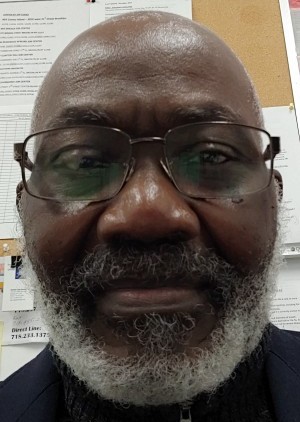
From his youth in an Antigua and Barbuda fighting against colonial domination to his retirement years in a Bronx battling gentrification, Fitzroy Christian has always known which side of the struggle to join. His oral history interviews showcase his lifelong commitment to organizing collectively for social justice. He reached out to CASA for support in 2010, when his building’s tenant association was trying to get the landlord to restore their gas provision. Christian immediately identified with CASA’s democratic model and goal of promoting safe, affordable, and stable housing. In these interviews, he reflects on the multiple campaigns he has joined as a CASA leader, outlining the challenges and promises of community organizing and coalition building. A South Bronx resident since the mid-1970s equipped with the analytical eyes of a political anthropologist and a youthful anticolonial passion, Christian shares a treasure trove of knowledge about the borough, the city, and the possibilities of progressive social change.
During his formative years in the 1960s, Christian became deeply involved in the movement for national liberation in his native Antigua and Barbuda. He drew on the example of his own parents, who had been active in the movement, as well as of prominent African intellectuals and revolutionaries similarly fighting against colonial powers at the time. Christian became one of the founders of the Afro-Caribbean Liberation Movement and helped forge alliances to like-minded groups across the globe. His political protagonism and transnational connections were awarded with a scholarship to study political anthropology at the City College of New York, where he arrived in 1971. Activism took him to New York City; as soon as he landed, he immersed himself in the local activist scene. On campus, he joined a call for the creation of a Black Studies program. Off campus, he closely observed and occasionally contributed to community efforts to rebuild a Bronx afflicted by endemic arson, a landscape of devastation ever since “seared” in his memory.
By 2025, Christian had lived in the same rent-stabilized apartment in the South Bronx for about fifty years. His long-term tenancy can be attributed to his community organizing. In 2010 he and his neighbors had been struggling for months with a cut-off gas supply, an issue that required major refitting works in the building but to which the landlord only responded by offering hot plates. “I decided that I was going to organize my building to form a tenant association [TA], and, as an association, meet with the landlord to get things done and to give us back the dignity we had as families who are paying rent.” Asking council members for a local organization that could assist them, Christian quickly found CASA and just as quickly fell in love with its work. “I loved what I was hearing and the participation of the community members, how they were the ones who were making decisions.” He joined CASA in 2010 and soon became a leader. With CASA’s support, his building’s bilingual TA managed to pressure the landlord to restore the building’s gas provision. Since this win, the association has died out, which Christian partly attributes to the high turnover rates orchestrated by the landlord’s predatory practices. Still, Christian introduces himself to new neighbors and connects all those facing housing issues with CASA for support.
When Christian joined CASA, the initiative was focused on building its base. Once it began organizing major public-facing campaigns in 2012, he got involved in all of them. The first one, targeting injustices in housing court, was prompted by CASA members’ repeated complaints about experiencing abuses and disorientation during their eviction proceedings. Christian details the different steps taken by CASA in orchestrating this campaign, from its initial reaching out to relevant researchers and lawyers, to the carrying out of CASA’s own surveys and observations in the Bronx Housing Court, the consolidation of their main findings in an influential report called Tipping the Scales, to the dissemination, campaigning, and coalition-building efforts based on the report. He stresses how CASA’s work paved the way for housing court reforms facilitating tenants’ understanding of legal procedures and curbing landlords’ attorneys’ chances of manipulating them into signing unfair stipulations. Christian stresses how CASA’s campaign also revitalized a long-term call for low-income tenants’ right to legal representation during eviction proceedings in housing court, commonly referred to as tenants’ right to counsel.
Christian’s narrative gives us a behind-the-scenes view of the efforts undertaken by community organizations that allowed for the 2017 signing of the Universal Access to Legal Services Law by then-Mayor Bill de Blasio. This legislation made New York the first city in the United States to guarantee low-income tenants access to free legal representation in housing court. He explains the struggle behind the terminology of the law itself—what tenants lose by having it be called “universal access” rather than a “right” to counsel—as well as the main arguments CASA deployed for substantiating the legitimacy and necessity of the right. Christian celebrates the success of the law’s initial implementation, which allowed the city to save substantial resources and an estimated eighty percent of represented tenants to stay in their homes. He details how the planned rollout of the law was disrupted by the covid-19 pandemic and the introduction of a series of eviction moratoria until mid-2022. The resulting significant backlog of eviction cases since then has led to a shortage of attorneys, harming tenants’ access to legal representation in the city. CASA’s activism has sought to respond to this problem by targeting the city and the state simultaneously: “We are pushing to strengthen and to preserve the New York City’s Right to Counsel as it is. At the same time, we are pushing for a statewide version, which will supersede the city version, but will bring on with it a lot more rights and powers of funding that we can get for ourselves here in the city.”
Alongside these efforts, Christian outlines how CASA and its coalition partners have been pushing for the Clean Hands Bill and a reform of the Rent Guidelines Board. Both would allow low-income tenants greater housing stability: the former protecting them from eviction cases when their homes are in violation of housing maintenance codes; the latter democratizing an institution that decides on yearly adjustments to the rates of rent-stabilized apartments.
Since the pandemic, CASA has led an influential campaign called Eviction-Free Bronx. Christian lays out the rationale behind and the timing of this call in the interviews. “We always knew that evictions were inhumane, and we were always fighting evictions. […] It is just that with the pandemic, it struck us how poorly we were treating our fellow citizens, our fellow residents in New York City.” He outlines how CASA has joined different coalitions in pressing for eviciton moratoria (during the pandemic and winter months) and an end to the chronic displacement of communities.“Because we're saying eviction is violent. It is very disruptive to the individual, to the family, to the community, and, eventually, to the city and the state. And we think that evictions should be something of the past.” He explains how CASA has been looking at social housing programs in Europe and South America as a possible alternative housing policy that could help abolish evictions in the Bronx, in the city, and beyond.
Christian’s long-term tenancy in the South Bronx and his community engagement have afforded him an encyclopedic and critical perspective on urban development in the borough and New York City. Across the three interviews, he shares glimpses of his panoramic view of the South Bronx’s place in the governing elites’ long-term attempts, from the mid-twentieth century until recently, to realize a “whitening” or “decolorization” of the city. He discusses major urban works, rezonings, and economic restructurings that have, over the decades, pushed low-income communities of color out of their homes and undermined or consistently threatened their ability to flourish and build intergenerational wealth. He situates the rezoning of Jerome Avenue, approved in 2018, in this long-term view. He describes how CASA got together with a wide variety of community organizations (such as trade unions representing local schoolteachers and construction workers) to offer an alternative vision of development that would allow residents to stay and thrive. He acknowledges the difficulties in sustaining a coalition with such varied partners representing often clashing priorities. Still, he upholds coalition-building as essential to combatting displacement. He observes the construction of privately-owned buildings since the approval of the rezoning, and the increasing arrival of whiter, wealthier, and transient young residents demanding greater policing.
Contemplating the future of the South Bronx, Christian sees both danger and promise. He observes how the borough’s low-income community of color has been made “nomadic,” how people’s sense of “hominess” has been systematically threatened over the decades. He laments how currently the community “not even remotely resembles what it what it was twenty, twenty-five years ago.” At the same time, he envisions the possibility of this very community getting together in a Bronx-wide coalition to press for their own wellbeing. This, Christian believes, would require people’s greater political participation, both through publicly-funded grassroots organizations and through a significantly increased turnout during elections. It would also require the fostering of alliances across different groups with different priorities who nonetheless stand for the community’s stability. “That is the future I see. And that is the challenge for us. How can we do those things to make the Bronx a beacon for what is possible, especially for people in marginalized communities that have been pushed aside and ignored?”
Coalition building
Community organizing
Covid-19 pandemic
Eviction
Gentrification
Homelessness
Housing court
Landlord neglect and harassment
Movements for national liberation
Rent strike
Rent-stabilized apartments
Residential segregation
Rezoning
Right to Counsel
Social housing
Student activism
Tenant associations
The Bronx fires
Andrew Cuomo
Bill de Blasio
Daniel Patrick Moynihan
Afro-Caribbean Liberation Movement
Bronx Coalition for a Community Vision
Clean Hands Bill
ERAP (New York State Emergency Rental Assistance Program)
Housing Justice for All coalition
HSTPA (Housing Stability and Tenant Protection Act**)**
MCI (Major Capital Improvement)
Northwest Bronx Community and Clergy Coalition
Office of Court Administration
Rent Justice Coalition
Rezoning of Jerome Avenue
RGB (Rent Guidelines Board)
Right to Counsel New York City Coalition
_Tipping the Scales _report
UAC (Universal Access to Counsel)
Upstate Downstate Housing Alliance
Warranty of habitability
Antigua and Barbuda
City College of New York
Cross Bronx Expressway
Harlem, Manhattan
Jerome Avenue, the Bronx
Campaign for a winter eviction moratorium
Campaign for justice in housing court
Campaign for Right to Counsel in New York state
Campaign for Right to Counsel in New York City
Campaign for the participatory rezoning of Jerome Avenue
Eviction-Free Bronx
Rent Guidelines Board campaigns
| time | description |
|---|
00:00:57 | Christian reflects on his formative years in Antigua and Barbuda in the 1960s. Stresses his and his parents’ involvement in the movement for national liberation and its connections with decolonial, civil, and human rights movements in other countries.
00:06:29 | Explains how he migrated to New York City in 1971 to pursue a bachelor's program in political anthropology at the City College of New York. Christian recounts how he received a scholarship funded by an international alliance supporting movements for national liberation. Relates how he immediately joined a movement for the creation of a Black Studies program at City College.
00:09:00 | Reports on the gap between his pre-migration expectations of a city taken over by marches and radical activism and the more tranquil everyday reality he found in New York.
00:12:04 | Christian introduces the context of deliberate abandonment and burning of the Bronx in the 1970s and his initial and partial involvement in efforts to rebuild the borough. Attributes to this experience his introduction to community organizing in the city.
00:17:37 | Describes how he first lived in Harlem with an older relative and moved in 1975 to live with friends in the Bronx. Mentions how a year later, in 1976, he moved into the apartment where he still lived at the time of the interview.
00:20:15 | Reports on the conditions of the South Bronx in the mid-1970s and people’s efforts to rebuild apartments and buildings affected by the fires. Stresses the deliberate shutting down of firehouses in the Bronx. Reflects on how he later came to see the Bronx fires as a part of a plan to displace low-income people of color from the borough and the city altogether.
00:25:25 | Christian further reflects on community initiatives to rebuild the Bronx in the mid-1970s and his observations and occasional participation in local efforts.
00:29:42 | Recounts his historical vision of the transformation the Bronx and New York City from suburbanization in the mid-twentieth century to recent rezoning plans, including of Jerome Avenue, in the Bronx. Situates this rezoning in a history of urban policies designed to disrupt the economic base of the city and borough and thereby displace communities of color.
00:47:23 | Describes how he sees the recent arrival of whiter, wealthier, and young residents to the South Bronx as having increased local policing and harming the community’s opportunities to get together in public space. Depicts these changes as undermining the area’s sense of togetherness and its cultural diversity.
00:52:14 | Reflects on the campaign for the participatory rezoning of Jerome Avenue, in which CASA played a central role. Highlights their efforts to build a broad coalition in the area with different organizations and how the coalition successfully pushed for important wins, most notably the passing of the Right to Counsel bill.
00:58:24 | Christian discusses the construction that has taken place in the neighborhood since the approval of the rezoning plan in 2018. Describes the construction as mostly privately funded until the time of the interview, over which civil society groups have limited leverage.
01:00:56 | Reports on the housing issues that ultimately led him to join CASA in 2010. Narrates how the gas supply was cut off in a section of Jerome Avenue in late 2009 and how landlords responded by providing hot plates to tenants. Chronicles how he organized a tenant association (TA) in response and sought the support of a local organization who could support them. Stresses how he immediately appreciated CASA’s community-based and democratic model. Expresses his commitment to CASA since 2010.
01:09:13 | Christian details how, with CASA’s support, his building’s bilingual TA successfully pressured the landlord to restore the building’s gas provision. Laments the TA’s dissolution after they obtained this initial victory and how the high turnover of residents undermines their mobilization.
01:19:17 | Explains how CASA was focused on building a base when he joined it in 2010. Recollects how in 2012 CASA began its first major campaign targeting abuses its members reported suffering in housing court. Details different components of this campaign, from conducting surveys at the Bronx Housing Court to the publication of a report (Tipping the Scales) with key demands.
01:24:38 | Discusses how the research carried out for the report inspired CASA’s push for low-income tenants’ right to an attorney in housing court when facing eviction proceedings. Explains the rationale behind this demand for tenants’ right to counsel by comparing it to the right to legal representation in criminal court. Reports on studies showing how the municipal government would save resources by implementing tenants’ right to counsel.
01:30:18 | Describes how the covid-19 pandemic impacted the rollout of the Right to Counsel law (passed in 2017) and the shortage of attorneys in the aftermath of this public health crisis. Stresses the organizing work of the Right to Counsel New York City Coalition to enforce this right in the city and to push for a statewide Right to Counsel bill.
Zacca Thomaz: Today is April 4th, 2025. This is Diana Zacca Thomaz from the University of Amsterdam. I'm interviewing Fitzroy Christian from CASA on Zoom. This interview is for the Parsons Housing Justice Lab’s Oral History Project. Fitzroy, thank you so much for your time and interest in participating in the project.
Christian: And thank you for having me here with you.
Zacca Thomaz: My pleasure. To get us started, I wanted to ask you to share a little bit about your personal background. Can you tell me about where you were born and raised?
Christian: Yes, I was born in the Caribbean, in the [state] of Antigua and Barbuda. Two relatively small islands, in [constitutional] federation that have become one state known as Antigua and Barbuda. As far as my history and my early beginnings, I was born in the 1940s, in 1946, and so my formative years were in the early 1960s. That was a time when there was a worldwide movement for independence in Africa, in Asia, [in the Caribbean], and the human rights and civil rights movement in the United States. So that was what I grew up hearing and seeing and learning about. My parents were also activists. At that time, we didn't have these names, “organizers,” “activists,” and so on, as we have today. But they were also involved in the struggle for independence in Antigua and Barbuda as were [masses of folks] in other islands in the Caribbean. So, I grew up in a family and in a world of activism, and that gave me a kind of a footstep into the work that I'm doing today for CASA and for the coalition movement here in New York and around the United States [as both organizer and legal advocate to and for tenants in New York].
Zacca Thomaz: Do you have a specific memory from that time when you were surrounded by activism back home that was particularly important to you or formative?
Christian: Yes. Because I became involved in my mid- to late teens [with the local activist pro-independence movement], [which led me to become] one of the founders of an organization in Antigua called the Afro-Caribbean Liberation Movement based on what was happening around the world. Our heroes were people like Kwame Nkrumah, Julius Nyerere, and Jomo Kenyatta, the people who were fighting for independence in Africa. And several of us who graduated school together decided to come together and form our group with alliances [locally and regionally as well as to organizations in] the [freedom] movement around the world for independence [and human rights]. We were all a part of the British Commonwealth, as they called it, and breaking away from the status of colonialism into a new phase of independence was something that all of us said that we need to do. We needed to be a part of that struggle. We started this group, the Afro-Caribbean Liberation Movement. We issued a monthly magazine that we called Outlet, where we [republished] information from what was happening in the United States, in Europe, in Africa, in Asia, so that our people in Antigua and Barbuda and the Caribbean would have information about what was happening around the world, our role in that, and the roles that we can play to make sure that we become an independent people and not just folks under the colonial rule of the European powers.
That was, I think, one of the major things that struck me and stayed with me in terms of my memories of what we were doing. And that movement led to a new political organization being formed, a kind of a branch of the Afro-Caribbean Liberation Movement that challenged the traditional political parties there, in Antigua and Barbuda, and brought a new view and a more radical look at the politics. And that transformed Antigua and Barbuda to some extent. And those, I think, are the two biggest things that stayed with me. I will always remember my role in that and the role that the organization played in leading Antigua towards independence in 1981.
Zacca Thomaz: Were you there when Antigua became independent in 1981?
Christian: No. I was here in New York. I was [still] in school, but I went home [in 1982] for the [first anniversary] celebration.
Zacca Thomaz: Oh, amazing. So, tell me about how you ended up in New York from Antigua.
Christian: [Some of] the alliances that we formed starting in the late 1960s were international, and there were different groups that supported what we were doing in the Caribbean. And some of them offered scholarships to the folks who were involved in the liberation movement, as we call it, that was sweeping the world at that time. I was fortunate enough to get one of the scholarships for international studies. And that led me to come to New York, to the City College of New York, where I did my bachelor's in political anthropology.
And that that led me here to New York. Fortunately for me, it was a time when there was a big move on for independent studies in African history. There in City College, I arrived at a time when they were fighting for Afro-American history and African history to be independent studies rather than being a part of sociology or western history. I jumped right into the fight for that to happen. So, I left organizing, as we call it today, in Antigua and fell right into organizing at City College for Black studies as an independent course. And for me, it felt as if I was home, doing the same things only here in New York, at City College instead of being in the streets of Antigua and Barbuda fighting for independence.
Zacca Thomaz: And how was that transition for you? You had the activism, the organizing in common, but what was it like when you arrived in New York City? What were your first impressions?
Christian: That the movement was less radical than I believed it was. That was my first impression. The news only showed the crowds on the streets, the marches, but they did not show what was happening in the background to make those events real. I had the impression that the streets were always swarming with marches, people who were fighting for civil rights and human rights here in New York. We heard about the Young Lords. We heard about the [Black] Panthers. We heard about all of these other groups and what was going on also in the South. So, our impression was that there was always this massive amount of activity going on in all the streets throughout the United States. We didn't get a sense of the normality that was happening at the same time. So when I came in and I saw that, no, life is moving along the way you would expect it. People are still going to school. People are going to work. People are going shopping. People are still hanging out in the streets, and it's not where every street is clogged with marches and activists doing stuff.
That was my first impression and drove home to me how much the media can mislead you because of their sensationalist view of what was happening and what they presented to the world—which is not necessarily what was really happening. That was one of the learning experiences for me when I got here. It did not stop the movement for independent studies or an independent course, a degree course in Black Studies, nor did it stop the people from fighting for equal rights, for civil rights, for human rights here in New York and in the United States overall. But it is not what the TV led us to believe, or the radio led us to believe was happening. There was no real balance. It led us to believe that everything was happening just around these events.
Zacca Thomaz: And this movement at CUNY for Afro-American studies to be a field of studies, was that your main focus of organizing? Or were there other movements?
Christian: Initially, yes. That was it. But then at the same time, there was the abandonment of apartments and areas of New York City in the Bronx, in Manhattan, in Brooklyn. And in the Bronx in particular where there were tremendous amounts of fires, where landlords were [allegedly] paying drug addicts or other people, marginalized people, to burn the buildings. There have been quite a few books, documentaries about the Bronx burning, “The Bronx is on fire.” And there was a call for people to rebuild the Bronx, and I became a part of that in the mid- to late 1970s, in the 1975, 1976 time frame. Where I saw and understood that this was a part of what New York City was doing, as they were reclaiming their land, and they wanted the people of color to be pushed further away from the center of New York City. So, if they could burn the buildings, they have no places to live, they'll have to go elsewhere. Going closer to the suburbs or going back to the South or going to another state, but just to be out of the area, to be out of New York, and to be out of the city in particular. That became a target for me to be a part of that fight to keep people back in their homes, to rebuild the Bronx.
And I was not actually, at that time, a member of any organization. I would join folks who were doing different things. Trying to salvage what we can from some of the buildings that were apartments, see what pieces or what remained in those buildings that can be used in a better building, one with a better structure. I saw and participated, but not really fully as the others were in rebuilding the Bronx and rehabbing some of the old buildings that were not too badly destroyed by the fire and to rebuild them, to make them habitable for people who live in the area. I was probably about eighty percent spectator, twenty percent participant. But that was my true introduction to community organizing, community activism here in New York City.
And, as I started to use my college studies in political anthropology, I began to look to see where I could participate so that it is a part of my learning experience—not only in the classroom, but here I have the tableau where I could be a part of what is actually happening. I could try to figure out at the academic level what it is that is happening here in the community and get a better understanding as I moved along to complete my schoolwork. I became familiar with quite a few organizations that were involved, and I watched how things were developing. I was in the background of the crowds when both [President Jimmy] Carter and [President Ronald] Reagan came to the Bronx to Charlotte Street with their promises about how they were going to renew the Bronx, the city, the urban renewal programs that they spoke about. And to witness the slow redevelopment of the Bronx. I learned a lot from that, which became very helpful for me years later on when I became a member of CASA.
Zacca Thomaz: When you moved to New York City, do you remember what year that was?
Christian: 1971.
Zacca Thomaz: Thinking about your connection to the Bronx and how you learned about this movement to rebuild it after all the fires, how did you end up connecting to the Bronx? Did you live there when you moved to New York City immediately? Was that where you landed?
Christian: No. Initially, I stayed with a relative in Harlem. But I had more friends in the Bronx than in Harlem. My relative was a family elder, and it was not truly convenient. At that time, I was a foreign student. I was not eligible for any of the student grants, and so I had to work. So, I was allowed to—by the program from the school and the immigration department—to work twenty hours per week as a maximum to be able to pay my school fees, most of which came from my parents at that time and from the grants that came from the scholarships that were offered to us. And so working a few hours during the day and then working after my classes in the evenings, it was inconvenient for a seventy-year-old person to be woken up one o’clock in the morning when I'm coming into the house after my shift doing whatever work that I'm doing in the evenings.
I figured it was better for me to stay with friends who were younger and who will be coming home about that same time anyway, rather than to be waking up elders at one thirty, two o’clock in the morning. And then I'm up studying until about four o’clock anyway. So, the lights are on with movement in the house interrupting their sleep and their rest. So, I moved in 1975 to the Bronx, stayed with some friends while I was searching for an apartment for myself. And then in 1976, I moved into the apartment where I still am today.
Zacca Thomaz: Really? Since 1976?
Christian: Yep.
Zacca Thomaz: Wow! Alright. You've seen so much change over all these decades. Can you describe a little bit to me what the area was like when you first arrived, when you first moved into this apartment?
Christian: Yes. There was still a lot of fires that were taking place. And amidst all of that, there was the rebuilding, where, as I said earlier, people were scavenging all the walls of the buildings to see what they could find, what is usable, and they will be taking, let's say, bathtubs from an old, or the rest of the buildings. And here you will see eight or ten young men moving that bathtub from one building to bring it into another building with better structure as they rebuilt it. You will see them bring in parts, could be plumbing parts, electrical parts. You will see them bringing maybe cabinets from kitchens that were not burnt out completely. And these were the pieces that they were using to rebuild apartments in the buildings that were not so badly destroyed by the fire.
There was a lot of rubble as the city and the landlords used bulldozers to break down some of the buildings. You will all have a whole lot of bricks, stone, and masonry as well as the lumber hanging all over the place. And you will see a lot of people who were scavenging those rubble to see what was usable, what could be used to rebuild apartments, how could they rehab buildings, apartments using what was being destroyed or what was being carted away as garbage. That was a part of the scenery that was there every day.
We also saw where the city began to close down the firehouses here in the Bronx and move them to Manhattan to protect Manhattan rather than to have the firehouses available to attend and to respond to the fires here in the Bronx. They allowed the Bronx to burn. But they opened more firehouses in Manhattan, especially in central Manhattan, lower Manhattan so that they will have more immediate responses in case the fires and the riots got to Manhattan. So, we were left to burn while they were protecting Manhattan.
Sometimes when the fire started, we would have to wait for almost an hour for a truck to come from Brooklyn or from Staten Island or from Queens because we have fewer stations and firehouses open. And most of them were busy anyway, so there was nobody left, no station left to attend to the fires that renewed or that propped up or where it's expanded, and there was a need for more people to be on hand. We will have to wait almost an hour for trucks to come from the far reaches of the city to come to the Bronx to help to put the fires out.
That’s seared in my memory. That is burnt in my memory forever. The way they abandoned the Bronx to allow it to burn so that they could rebuild it and make it habitable for the people they wanted to replace. Because I understood later, maybe in the 1990s coming into the early 2000s, that it was a part of their gentrification of the Bronx. They burned the people out who were here, who built the Bronx, and they intended to rebuild it in a way for the folks who they needed to be here, who were working in Madison Avenue, Park Avenue, Fifth Avenue, or even further downtown in the Financial District. Bringing the people back from the suburbs into closer proximity to their workplaces.
So, they needed this space, so they needed the people who were occupying that space to be out of the area so that they could bring in the people they needed to keep their society, the one that they envision, which excludes people of color. They needed to have that in place. So, they had to move the people of color out to bring the white folks in in this new vision of New York City that they wanted to implement.
Zacca Thomaz: And you said earlier that as part of this movement to rebuild the Bronx that local communities were organizing, you were twenty percent participant. Can you tell me about your participation in it?
Christian: Yes. As I mentioned, I was using what I was learning in school to understand what was happening here in front of me. I was an observer because I wanted to connect the classroom with the community, what is going on. Observing how leaders evolved, how they emerged—natural leaders, if you want to say, emerge from that struggle, how the community related to them, the input from the community, where mainly women folk began to think about the greening of the Bronx and the area. And where there were empty spaces, they turned them into gardens where they were growing food, fruits, and vegetables. And the Caribbean people and the people from the southern states, as I said, mainly the women folk, where there was a space, they went there, and they did their work to transform that space, removing stones, syringes from the drug users, bottles from those who would throw garbage, including bottles, into these empty spaces.
To see them clean it out and transform them into gardens where watermelons were grown, cabbage was grown. Little food trees, tomato trees. They began to plant foods for the community's use, and that was going alongside the actual rehabbing of the buildings. Also, there were quite a few organizations that were formed: the Bronx Desperadoes, SEBCO, who were organized and got contracts with the city and state to build homes for the people. There was some funding that was made available to these groups who actually built new homes. Some of them were large apartment buildings, some were individual homes, and some were six- to ten-unit, smaller units but individually owned homes for people who moved into the area or who stayed in the area. So, while I was around a lot, I was observing and learning and only pitched in here and there, just for the experience of being a part of it. It's not that I was a part of any of those organizations. No, I was not. But being in the area, I participated to some extent in the actual work, but at a very small, small level. I don't know if that answers your question.
Zacca Thomaz: It does, yeah. Absolutely. You were describing to me a bit of the changes over the decades that you've witnessed in the Bronx from the fires in the 1970s and you were explaining this vision to drive people of color out of New York City, to allow white folks, wealthier people to move into the Bronx through gentrification in 1990s and 2000s. Can you tell me more about how you see that chronology from the seventies to the nineties to now? How you see the history of the borough changing or the Southwest Bronx specifically changing?
Christian: Yes. In the 1930s, 1940s, and 1950s there were plans at the three levels of government (federal, state, and municipal) to develop areas close to the city, the inner city, in the suburbs, to build out the suburbs so that families—and here we're talking about white families—can be fairly close to the city without being directly into the city. So new highways were built. The Cross Bronx Expressway is a typical example that led to, let's say, the recreation of suburbs that were closer to the city, rather than to be so far out that they were almost rural. They began to build it so that each home that was built had its own land around it, maybe a quarter acre of land around it. They were all independent houses. They were not attached as they were in the city. There were no big apartment buildings. They began to build transportation systems. Not only the major highways, but streets that led into the suburbs.
But they found later on that it was becoming too expensive for those folks to continue living in the suburbs and then having to be commuting to the city every day. So, they began to look at how they could get these people closer. That is when they began this vision of bringing the people directly back into the city, and, if necessary, putting the people of color out into the suburbs. It was like a switch. While earlier, they intended to have these suburban communities close to the city, to enable them to come to the city—to do what they have to do, do their work, whatever work they were doing, whether they were doctors, teachers, whatever. And then in the evenings, they will go back home away from the inner city, from the ghetto, as it were, as they called it. But the commuting became too expensive. The taxes and homes became too much.
So, they kinda switched it. Even though, at first, no people of color were allowed into the suburbs. They would not get a loan from a bank. They would not get any financing from any city or state agency to allow them to move over there. Except the very wealthy ones who were being used as examples: “It can happen that you can come here if you were to work hard enough. If you were to be diligent, then you could become a middle-class New Yorker, even an upper-middle-class New Yorker, and be able to move out into the suburbs.” Now they're saying it is so easy to come over here, even though the mortgages were really onerous. They were stripping everything away from the people of color to allow them to move into the suburbs, while the white folks were now coming back to the city.
But they had to make room for them, and they did not particularly like the image and the looks of the New York City in Brooklyn and Queens, in the Bronx and upper Manhattan, in Harlem, in Inwood, in Washington Heights. So, they had to find a way to—maybe if you wanted to beautify the area so that the folks who they wanted to come in will see a place that they think that it will be comfortable for them to live in.
And so they began a massive rezoning of New York City, where they gutted the economic foundation of the communities, which were developed, maintained by people of color and a lot of immigrants. They closed the ports. New York was once one of the major shipping ports in the world. But they closed them because there were too many Puerto Ricans, Dominicans, Caribbean people, Black people from the southern United States who were working. And they were making enough money that they could afford to live in Fifth Avenue and Park Avenue and Third Avenue and Lexington Avenue. And a lot of people found that to be unnatural, that you have so many people of color who are living, as is said, cheek by jowl with the very wealthy.
You live in the same building. You live in the same street. You live in the same neighborhood. And so, they had to get them out of the area. What they did was to remove all or as much of the manual and factory-oriented economic programs, for lack of a better word. Close it out and so that the people would have no jobs. New Jersey was given most of the ports, so it's now the ports of New Jersey and no longer the ports of New York. People had to move from New York City to New Jersey to continue their work in the ports. They closed the sugar factories. They closed the sweet factories. They closed the piano factories so that people had to move. The milk factories were closed.
Any economic activity that involved people of color were gotten rid of. A lot of them were moved down south, so that people had to move down south to continue working. There was an outflow of folks who were doing very well, and they were unionized. They were making good money. They were able to afford the nicer things of life. Some of them had their own homes already. Some of them had been allowed to move into the suburbs, or they bought their own homes here in the city.
They were now facing a new challenge because their jobs had moved. How are they going to take up their families and transplant them elsewhere? Do I stay in New York and look for another job, or do I go with the job to North Carolina, to Alabama, go down south and not have the benefits of the lifestyle of New York City? And that began a complete destruction of the economic strength of the people of color here in New York City.
These rezonings began where they changed the nature or the use of the land in certain areas for manufacturing—or from any of the other classes of neighborhoods—to office space. New York City was no longer a manufacturing area. Less and less manufacturing took place, and it became a place where it was [based on] technical knowledge. You were doctors. You were people in the computer industry. You were people who were doing sales. You were doing advertising. It was a knowledge-based economy that they built. Not anymore manufacturing, not anymore of the manual kind of work or the factory kind of work that would attract and keep people of color here. That became the MO, the modus operandi, for how the city operated.
So that, as they began their rezoning, they went for the economic platform, or the foundation of that community, and they destroyed it. That forced the people out of their neighborhoods, out of their homes. Because as the city decided that they were going to rezone a particular area—under the name of rehabbing the area, of urban renewal, of building new homes—it forced [out] the people who built the economy which sustained that community. They destroyed that, so that there was no economic power remaining for the people who lived here and who had been working here and who had developed the economic strength of that community over the last twenty, thirty, forty years. The city and state went after those, destroyed them, or forced them out. And so where we had thriving businesses, now we have apartment buildings. But those are buildings who are not priced in a way for the people who lived here, but were for those who had deeper pockets.
Those who were making six figures per year or the high five figures and who could afford to pay $3,000 per month for an apartment. Whereas the area median income of $35,000, where people had to pay $800 a month for their apartments. This was part of what the state and city did. They used the federal income levels to decide what income the families need to have to be able to afford apartments that they were building, while they were destroying the economic base of the communities. And so we saw that where once there was thriving businesses all over the place, people were coming back. The children of the immigrants who graduated from college came back to open their businesses, and some of those businesses, were a part of the ecosystem.
Let me give you Jerome Avenue as an example. When they began to work on the rezoning of Jerome Avenue, they looked, and they had seventy-six blocks that they said they were going to rezone. They were going to build housing in that area. But those seventy-six blocks were mainly auto related: auto repairs, glass, everything dealing with autos and the automobile industry was happening on Jerome Avenue in those seventy-six blocks. But, also, around it were the insurance companies that were gonna be insuring the cars of the people who live there and the people who came by. There were the bodegas that were built to feed the people who were living there.
The delis, the restaurants, the diners: all of this is a part of an ecosystem that generated a tremendous amount of money for the people in the community. But what was peculiar about it was that most of those businesses were owned by the people who lived here in the community. They were not people who commuted back to the suburbs at the end of each evening. These people lived here. They, instead of move when they graduated from college—that they went somewhere else to live—they came back home where their parents and their grandparents lived. And they started their businesses here, and they were going with their businesses.
But the city and state wanted that area for their plans of how they wanted New York to look. The whitening of New York and the decolorization of New York. They had to destroy the economic base, which forced people out. As an example, part of our research and part of the work we did during the rezoning was to find out that a lot of these guys were paying $10,000, $12,000 per month in rent for the space they had, for the little clinic, for the deli, for the insurance company, for little pharmacy that they had in the neighborhood. But with the rezoning, the landlords sometime quadrupled the price overnight. When your lease is completed, instead of paying $15,000, you're gonna be paying $65,000 per month for the same space. These people were not making $65,000 a month in income, so they could not afford it. So, they had to leave.
Some of them, they had to instead of continuing to build up their own business, they had to leave and start to work for the hospitals in the area. Whether you're a pharmacist, whether you had your own little clinic, you cannot afford the space because it went up so much from the end of one lease to the beginning of a renewal of that lease. A lot of them gave up their hope of building out their own clinics or their own businesses and had to work for other people.
And that destroyed the economic future or the continuous strengthening of the economics of these people who are living here. The second- and third-generation Americans, children of immigrants, their future was stolen. They now cannot work or could not do the things that they were planning to do. They become employees rather than owners of the businesses that they had struggled so hard to start. And that was a part of the transformation of the area. So now we are seeing where those of us who still live here, [we] have to leave our communities to go to other communities to buy things that we normally had available to us almost next door.
Those of us who would do little things in our homes, we no longer have the two large hardware stores, where we will get things at good prices to do repairs or to beautify our homes. We have to leave and go miles away to the large stores of Lowe's and that size place, Home Depot, and buy stuff from these franchises. Because we no longer have our own local people where we could have gotten things right in our own neighborhoods.
And we find that the people who are coming in are also transforming the communities, in the sense that we, in this community, had a sense of community, of a togetherness. So that in the evenings after work, we will be sitting down in the parks or on the sidewalks, in our neighborhoods, in front of our buildings. And we will be playing dominoes. We will be playing different games. Our children will be wandering around in the areas and laughing, giggling, and having fun. But as other folks, the whiter folks came into the neighborhood, they found it annoying that there were these people sitting on the sidewalk, all the children running around. And most of the people who were coming in were young. They had no children, and they were transients. They were coming to live for three, four years, get experience here in New York, and then move out to other states and carry that experience, which allows them to get a very high pay for their jobs. There were no kids, and they wanted, when they came in, that they will sit down in their homes, not [as] a part of the community. But they didn't want the noise. They didn't want the children running around. And the cops now became involved in the community.
And were pushing people away. “Oh, you're disturbing the neighborhood. You're making too much noise. You gotta get out of the sidewalk. There should be no congregation here.” So, the police became a tool that has been used by the gentrifiers to break down the community and the way we had been living here before.
So more and more forces of the governments here in New York with the two stages (the state and the city governments) were being used, and the police is being used to enforce the transformation of a community which came together, lived together, loved together, partied together, to destroy all of that so that those who are coming in now, the new folks, would not be disturbed in the evenings. That they would not have to walk by people sitting down on the sidewalks, laughing and giggling and being a part of the community. All of that was transformed.
The community is no longer today what it was. It does not even remotely resemble what it what it was twenty, twenty-five years ago. We had a sense of true community. You could walk down any street, and you could hear six or seven different types of music coming out of the buildings. You could hear some merengue. You could hear salsa. You could hear calypso and soca. You could hear Indian music or Asian music, I should say. Within ten blocks. You could be hearing all of it. You could walk from one type of music coming out of the buildings to another. Today, you don't hear it, because it had been enforced that you were making too much noise. You were destroying the neighborhood.
And the people decided that it is better to do that and live here than to keep getting tickets from the cops and paying money to the City of New York because they wanted to play your music. Or because they wanted to come as a community and play dominoes on the sidewalks or near the parks. So, they transformed the area, and it is no longer looking like the way it was. The community the sense of community, of togetherness is not there the way it was. Because they want that change so that they could get the people of color out and the white folks in.
Zacca Thomaz: On this rezoning of Jerome Avenue, CASA played a big important role in pushing for participatory rezoning, for the community vision. Can you tell me about CASA's participation in that campaign? Your participation in that campaign as well?
Christian: Yes. I think that is one of the major wins for CASA and for me also, individually. Because the three years that we fought the city's version of the rezoning, we were able to get some wins that changed how the city and, I guess, to some extent, how the state looked at rezoning, how they were going to push it in the future. We were able to bring together a massive amount of people and a very wide range of organizations. We were able to get the trade unions, construction unions involved. We were able to get the teachers' unions involved. We were able to get the health unions involved. We were able to get the churches involved. We had a coalition that was representative of virtually every facet in the community.
We got the schools involved and the teachers, because it is the children of those teachers, the students of those teachers, who have been affected by the displacement and who are now living in shelters, and those kids were being traumatized. They were losing a lot of their zest and their energy. They were not doing as well in school as before. They could not participate in the after-school programs, because they had to leave the schools, because they had to be reporting back to their shelters by a particular time. They were losing their school friends as well. The teachers became a part of the struggle to say, “We can't do that because we're harming our students.”
The hospitals also because they're the ones who have seen an uptick in their pediatrics—an uptick in pediatric needs in the hospitals here in the Bronx. Because of the trauma that these young people were experiencing. We got the unions involved because they're the ones—let's say the trade unions, the construction unions—because they're the ones who are gonna be building, and they're the ones who could not afford to live in the apartment buildings that they were building. And that is ridiculous, really. So, the hospitals became a part of the coalition. The construction trades became a part of it. The schools and their unions became a part of it. The hotel workers, because they're the ones who would live here, [not] to commute out to different areas to come back home. But now they are facing the possibility that they would not be able to afford the rents in these new apartments.
So because of the breadth of the partnerships of the coalition members, we were able to force the city into making a lot of concessions. We were also fighting for a Right to Counsel, which is where tenants who were facing eviction in housing court would have a right to an attorney to protect their interest and to give them full representation. They were resistant. They did not want to do it, but we were able to get them to push it through as a part of the concession. Because as the landlords began to evict people from their homes so that they could bring in a different set of people with deeper pockets who could pay more rent, we saw that the eviction rates and the rate of homelessness exploding here in the Bronx in particular. We were able to force the city into recognizing the need for a Right to Counsel, for these people to be protected when they go to housing court facing eviction. So, we got that.
Because of the direct participation of the community in the whole process—the whole ULURP [Uniform Land Use Review Procedure] process, and the whole rezoning process as well—that we were able to say: “We need more parks. We need more money spent for lighting, for better streets, for access to the trains.” We have a lot of people who use wheelchairs. We have a lot of elderly who cannot walk up the stairs, so we got them to put more and more elevators at the subway stops along Jerome Avenue. So we were able to negotiate these benefits with the people in the community because of the strengths that we had based on the amount and the broad base of the coalition. There are too many forces coming. We had pastors who were talking to the politicians, their own pastors. We had so many people putting pressure in the city that we were able to negotiate a lot of benefits that other neighborhoods were not able to do.
We won a lot, and we were able to slow down the process. And through today, we still have benefits that are coming to us in the community. We have not reached the level yet—the rezoning was passed in 2017, 2018. Here seven years later, we only now are beginning to see the work, the new construction, but the construction that is going on is all private. The city and state have not yet begun any of their own construction. So, we have very little control over what can happen. A lot of these buildings that are going up are not getting city or state funding so that we cannot apply pressure, and then we cannot force the city or the state to do certain things because they are not funded. These are the larger real estate groups, corporations that have the money or have access to money to do their building without city and state funding. We do not have pressure points, actually, except if you could go to the banks and say, “This is what you're lending money to these folks to do. Look at the amount of people they're displacing. Look at how they're destroying the economy. Look at how they're destroying the neighborhoods.”
We could do that, and we have done that to some extent. But it is not the same as if we could apply pressure through the state and city governments and force them to do certain things. We do not come into this from a very strong position, so we cannot negotiate the way we would love to. When the city and the state begin its own level of building, building and making rules, that is where we can apply pressure and say, “No. You cannot do this. Yu cannot do that, because this is what is gonna happen to the community.” We can use our power as voters to get the politicians to make decisions that favor us more and favor real estate and the developers less, and so that we can stay in our communities.
Zacca Thomaz: So, this was all around the campaign around the rezoning of Jerome Avenue. And I realized skipped little bit ahead because I didn't ask you about how you actually ended up joining CASA before that in 2010, you had mentioned, right?
Christian: Yeah, in 2010. Yes. What happened was in December of 2009, there was a major water break along Jerome Avenue about, I would say, a quarter mile away from my apartment building. Now we have to remember that the pipes that were carrying water and sewage in that area were laid in the 1910s, 1920s. They were old. Sixty, seventy years old. Over the years, the streets were dug up and more conduits were put in place, connected with their gas and electricity, sewage. As the neighborhoods grew, they needed maybe larger or even more pipes to be carrying sewage out and bringing more water in. There was intermittent pressure being put on the original pipes that were there. And so, yes, they began to deteriorate. In 2009, at the end of the year, there was this massive break where the water lines blew up. There was flooding in the streets. The streets were probably about six, seven, eight inches deep. They ran from about Burnside Avenue down to the Cross Bronx Expressway on 174th Street, which was about almost a half a mile. ConEd, who supplies liquid gas and other utility-type gases for the neighborhood had to shut their system down, because the pressure from the water was threatening the pipes that carried the gas to the homes.
The landlords decided at that time that what they would do—because ConEdison cut their supply off to the neighborhood—was to give us these portable ovens, which were really hot plates, where people had to cook, because we were not getting any gas for our stoves and ovens. Those people who had electric ovens, electric appliances, could continue, but their costs increased so much. Because the cost of electricity is maybe three, four times the cost of gas. A lot of us found that because we were using hot plates, we could not prepare meals properly. We were limited into how we could cook. And then we had this massive increase in our utilities bill, because we're now using electricity and not gas. We were not cooking properly. We were not eating properly. A lot of us, to get a decent meal, had to be going to a restaurant in the community, out in the neighborhood, rather than be cooking at home, which we normally did. We could not continue to cook the way we want, to make sure we had all of the ingredients of our foods. Because by the time you finished preparing the meat and are going to be cooking a side dish, it is cold already. We cannot do everything at the same time the way we would do it in a normal range.
It became a problem, and I decided that I was going to organize my building to form a tenant association, and, as an association, meet with the landlord to get things done and to give us back the dignity we had as families who are paying rent. So that we could live and eat properly, we could have some dignity. I began that. So, the tenant association started. We were meeting. But I had very little knowledge, even though I was kind of involved in the rebuilding of the Bronx. I had very little understanding of the laws surrounding homes and buildings. And I figured that the best way to do that would be to be put into contact with a community group which knew what was happening, who knew the laws, that had access to folks who knew the laws, who could help us do what we were doing in our tenant association, and to help us prepare to meet with the landlord and the city to get things done. It took about a week of my asking around. I'm going to the offices of the local council members to find out who in our neighborhood has the capacity and the knowledge to help me do this. And two of them said, “There's a new group started about five, six years ago that is doing some good work. It's called CASA. Here is where they are.”
And so early in 2010, I went to a meeting that CASA was having in the office of the city council member for the district. I listened to them. I heard what they were doing, what they were talking about. Afterwards, I spoke to one of the organizers who was representing CASA at that meeting, got information about their next meeting in their offices. I went, listened. I loved what I was hearing and the participation of the community members, how they were the ones who were making decisions. They're the ones who were telling, actually, the organizers what it is that they wanted them to do. A kind of democracy that I wasn't seeing elsewhere except for when those folks were rebuilding the Bronx, putting together a new building, putting new homes from the rubble that was left behind. And I said, “Yeah. This is the organization that I need to be in.” And so, yes, in 2010 I became a member of CASA. And today, I am not only a member, but I am one of the veterans in CASA, and I am a CASA leader, hoping to continue the work that they have been doing for the last twenty years of its existence.
Zacca Thomaz: Amazing. So, you joined it 2010, really identified with the work. Tell me about your involvement at the beginning. Were you more involved in door-knocking? Did you jump into campaigns right away? I'm also curious about what happened with your building and the tenant association that you started.
Christian: Okay, so let me start with that first. With the assistance of CASA, we were able to strengthen the association. Of course, it was a bilingual association because the neighborhood has a very large Hispanic or Latino population. And the building—let me back up a little bit. The building I'm living in now, that I moved into in 1976, was one of those that was rebuilt out of the fires. But it was rebuilt by the landlord. I was the second family to move into this building, December 23, 1976. There was only one family here, and they had moved in two weeks earlier. So, by the time we were here now in 2009, 2010, the building was filled. I would say probably fifty percent English speaking, fifty percent Latino, which was also representative of what the community demographics was at that time. We were able to use interpreters, either from CASA or from the building during our meetings. We were fairly strong, and we wrote letters with the assistance of CASA. And they had access to civil legal services attorneys here in the Bronx, who helped us to draft letters that we sent to the landlord, to the local city council member, and to the city and state agencies explaining what was happening. And we were able to get the landlord to look at what they needed to do to restore the building to full and proper use.
What happened was, ConEd decided that, “Okay, the streets are repaired.” They had put down new water lines, gas pipes, and they were protected. So now they were ready to resume service. But their inspection found that the plumbing infrastructure and the gas lines needed to be corrected, needed to be updated. And the landlord was refusing to do that. So, we decided that we were going to have a strike. And when the landlord found out that we're planning a strike here in the building—and we were going to be withholding our rent—they took out all of the old plumbing, all of the old gas lines that were in the building and replaced them. Most of it was replaced externally and then they were covered. Because it would have caused too much for them to rip the building apart to go back to the original lines that were laid when the building was being put up. So, we got new lines put in place, and then, eventually, the gas was restored.
Unfortunately, we, as a people, behave in some very strange ways. Rather than looking at this win as a way to move on to get more victories for things that we really need, a lot of us said we were satisfied. We got our gas back. My bills at the end of the month are going back down to where it was before, because I'm not no longer using all that amount of electricity. And so they stopped coming to meetings. They stopped meeting, and it kind of dissolved. [They] walked away, and it became very, very weak. The association became weak. I recall a meeting, and we will have three or four people who were there at that meeting. Eventually, it just died, because there were no use calling a meeting and having four people showing up when there are forty-nine apartments in the building, and we had over two hundred people who were living here at one time. You had a family of four or five, and some was three, some was two. But we had a whole lot of people who were living here. And to have four or five at a meeting was just too disheartening. We did not have the power with just a small amount of people to do anything really.
So, yes, the TA died. I kept in touch with the members. And what was happening was that, as people became older, some of them moved back to warmer climates, because they decided to retire and get away from the cold. And there was a constant movement of people out and movement of people in, and the association was never rebuilt. I tried several times over the years but was not successful in rebuilding the tenant association. Though I keep getting information to the tenants, through the flyers, notices as to what's happening and what they can do. Some of them became members of CASA. And some, though they're not members, they will ask me what is happening. When they have problems, I would direct them to CASA, where they have access to attorneys who have represented them in court. But they are not active members of CASA nor are they active in the TA, the tenant association, here in the apartment building.
And then with the plans and the way that the landlords operate here in the Bronx in particular, that they offer incentives for tenants to come in, only to have those incentives taken away at the end of the second year of their lease. And then the tenants move, because now where they may have had a preferential lease, where they were paying maybe sixty, seventy percent of the legal rent, all of a sudden, they're now facing the fact that the landlord is no longer extending that incentive. They're no longer gonna be paying the preferential rent, but they'll be paying the full legal rent of an excess $3,400 a month, which they can't afford, so they move out. And then the landlord gets another set of people in. So, there was not people stable enough in the building to really have a working tenant association. There were too many people moving in and out. Each month, you have a new face and an old face has disappeared. An old family has moved out and the new family moved in. Next month, it happens again. And that made it difficult to have an association where it was steady, and it could continue to flourish and to go on to do things. Because people were moving in and out so much that that was not possible any longer. So, no, there's no association per se here. We're just living, and when things happen, they will come to me because they know who I am. Because I introduce myself as a new family's coming. They will come to me, and I will provide whatever assistance I can, or I’ll point them to places where they could get assistance that they need. That's what I do here in the building while I'm working with CASA outside
Zacca Thomaz: And then as part of your work joining CASA, in addition to the connection with your tenant association, when you joined CASA, what were you doing exactly as you joined? I'm thinking both in terms of the meetings, the strategizing, but also the campaigns. Can you tell me more about your involvement with CASA from when you joined in 2010?
Christian: Yes. I was involved in virtually every campaign. I'm trying to look back at what we were doing then. When I joined in 2010, the focus was on building the base. Yes, they were doing some housing work. They were organizing tenant associations, but there were not any true campaigns that were being undertaken at that time. It was in 2012 that we began the first major campaign that was not related to base building or expanding the membership and forming tenant associations. That was when we began to hear complaints from our members about the abuses that were taking place in housing court. There was, at that time, what they call the “five-minute justice,” where tenants will come into court and, within a very short time, they were signing stipulations that put them in a position where they were losing their homes, they were being evicted, or they were paying money—even though they were being overcharged already—because they had no access to a lawyer.
They did not know the laws. And the landlord's attorneys were very ruthless in the way they abused tenants, even those who did not know what they were doing because of language barriers.
So we decided that we were going to do a campaign to reform the Bronx Housing Court. At that time, we did not know either that reforming the court meant reforming all of the courts, and all of them must be exactly the same, have the same set of rules, must behave the same way because it is a state-wide system. They all must be uniform in every aspect of the operations. When we began to figure out what we were gonna do to get the changes in the Bronx Housing Court, we decided that we were going to see for ourselves what's happening in the courts. And so, we developed a court watch, a court observation system, where we went in to see who the players were and how all the players behaved towards tenants. The judge, the court attorney, the court clerks, the security officers. Everybody in the court, we had under observation. We developed a three-page survey form where we would check virtually everything that happened in the court.
Did the judge arrive on time? Were the court staff helpful to the tenants who came in and needed help? Was there enough interpreters around for those who did not speak English? Were they directed in a timely manner to the places where they needed to be? Did the judges explain what was going on, the processes that were taking place and what the tenants—when they come in—what they should expect? All of these questions were part of the survey forms and a whole lot more, of course. We had people who would go into the courtrooms with these forms, with these surveys, and they will be checking the boxes. “Yes, this happened.” “No, this this did not happen.” They were also filling out information, as verbatim as possible, as to what the judges say, what the court attorneys say, what the landlord's attorneys say, and the description of their behavior towards the tenants.
That led to our publication of a report called Tipping the Scales [a report by CASA and the Community Development Project at the Urban Justice Center published in March 2013]; what was happening in the Bronx that was in court. We took that to the Office of Court Administration. We took that to our elected politicians and said, “Look, we need these changes.” And that brought now to the knowledge that we had to talk about the housing court as a system, which means all the housing courts in the five boroughs and not just the Bronx, because they all must be the same. And that began the campaign for a reforming of housing court in New York City.
Out of the report that we published, we decided that there was one major ask that we were not going to compromise on and that we would have, and that would be a right to counsel. A right for tenants who were facing eviction in the housing court to have an attorney who would protect them—the same way that people who are charged with criminal offenses automatically have an attorney to defend them in criminal court. Because our belief was, even if you were guilty of a criminal offense, you are leaving your home here in your community and you're going to a space where you have a roof over your head. You're gonna be getting your three meals a day. You have access to health care. You have a playroom. You have access to other amenities, TVs, and all the rest of that stuff. So, while you may not have your freedom, your liberty, you're not out of the house. You're not evicted, and you're being taken care of. When you lose your home in the community, when you're evicted, you do not have a roof over your head. You do not have access to the amenities that you have in life.
We figured that tenants, people who are working, the working-class people, even though they are not working for a whole lot of money, they deserve the opportunity to be able to stay in their homes and to continue to live in dignity in their homes. The only way they can do that is if they have an attorney to protect them when they go to housing court. These folks are too busy working two and three jobs to survive. They're not lawyers. And I don't care—we realized that no matter how intelligent you are—you’re not a lawyer. And when you go to court to face up against a lawyer—who does that in the courts every day, it's his job or her job—that you're gonna lose. Nine times out of ten, you're gonna be losing. So, we figured that the only way to balance that scale is for tenants who come to housing court to have an attorney.
And that was the birth of the right to counsel demand: all tenants in housing court facing eviction must have an attorney. And so we went into the broader community, in the universities, we got economists, we got professors. We have other organizers to work an economic study to figure out what would the cost be to the city government, to the state government, what would be the benefits. And even the state and the city budget offices found that the upfront cost to establish the right to counsel would be high, but the pay would be immediate. In the first year that the city could save up to $325 million by providing attorneys. Because it means that they would have less spending on social services, less spending for shelter for those who were evicted, less expenses put out for those who have been transported from a shelter to the schools and back. So that immediately the city will be saving at least $325 million a year if they were to implement the right to counsel.
And over the years, as landlords figure out that they were no longer able to bully their way through the system—because they [the tenants] will have attorneys who were just as efficient as they [the landlords’ attorneys] are, and are knowledgeable of the laws as they are to be fighting against them—that it is better for them [the landlords] not to continue to behave the way they were doing, and to change the way that they were performing for the last maybe twenty, thirty years in housing court. We found that in the first year, eighty percent of the folks who went to court and had attorneys were able to stay in their homes. Prior to that, it was like thirteen percent of those who were facing evictions were staying in their homes. In the first year, that was completely flipped. Everything was completely different in the results. And the city saw that. So, they kept adding money to the budget each year to increase the amount of lawyers who were made available to the tenants.
And the law was passed. The right to counsel law in New York City was passed in 2017. And while we were preparing for the third year of the rollout—because we wanted to roll it out in stages rather than to overwhelm the system by doing everything without seeing where there were faults and where there were potential areas where the system could collapse on itself. We decided to work it out in stages over five years. But then covid hit, and everything was put on hold. And then during covid, we had a moratorium where the courts would be closed, and they would not put any cases through that were brought by the landlords. The only cases that would go through were those for the building maintenance, and only tenants or the city of New York could bring them against the landlord, under the city’s and state’s building codes and maintenance codes.
The Right to Counsel law was passed in 2017. The pandemic put a stop to that, and we got an agreement that all folks who were facing eviction, their cases would be put on hold. It would not go through. In 2022 June, the last of the moratoria was lifted and the courts were open. But because of the more than 200,000 cases that were postponed, plus the hundreds of thousands of cases that the landlords brought immediately when the last moratorium was lifted, we are now looking at over 400,000 cases in housing court that needed to be attended to. We are asking for all people, anyone who goes to court, to be seen because it would make no sense to have to go through who is eligible and who is not eligible when no money was being put in the budget to hire lawyers. So, there was a deficit. There's a large deficit of attorneys available for the Right to Counsel. And the landlords are now also increasing the number of people they're bringing to court for all kind of reasons, including nonpayment. You know, we have to remember that there are a lot of people who are still not back at work full time. Some are not even back at work. They are still unemployed, and they're still suffering from the ravages of the pandemic. A lot of them are not able to pay their rents, and here they are back in court. And the courts are now overwhelmed. So, many cases on the calendar that need to be cleared up, plus the new ones that are coming in.
We are facing a dilemma that is probably worse than it was before we began the campaign to reform the Bronx Housing Court, which led to a Right to Counsel here in New York City. And that is where we are today, where the Office of Court Administration and the Office of the Civil Justice—and the last one, the Office of Civil Justice, was formed to administer the Right to Counsel here in New York City. They have been very negligent in loosening the funds that are available for the hiring of more attorneys. And they are saying that there are enough attorneys and that all they need to do is for the attorneys to do more, to work hard. Now we are talking about an attorney who, prior to covid, had maybe fifty, sixty cases that they were responsible for. And today, they have maybe a 150, 160 cases. There's no way that they can provide efficient defense for tenants with this. So, a lot of times, all the attorneys do is to counsel them, tell the tenant what they should do, how they should prepare, what they should be saying. And they move on to the more difficult cases, where the tenant would not have the resources, not the capability to defend themselves in court. The lawyers will have to do that.
And when this happens, you should be thinking that here's a guy, here's a woman who knows nothing about the court system or how the process works, facing off against someone who has ten, twelve, fifteen years of practicing in housing court, knows all the tricks in the books. And so they are being bullied and being led into signing stipulations totally against their own interest and in total, free, complete favor of the landlord. Where they were giving away all of their rights. Giving away everything that they have. Because the system is not releasing the funds for us to hire more attorneys who would be able to provide the necessary defenses for the tenants who have rights but don't know that they have those rights. And even if they know they have rights, do not know how to push for their rights to be acknowledged by the judge and by the landlord. They don't know how to assert those rights, and so they go away losing, even though they have the benefit of the rights and the laws on their side.
So, we are still organizing. The Right to Counsel [New York City] Coalition was formed as an umbrella body to see for the strengthening of the Right to Counsel law in New York City. It is also pushing for the right to counsel to be implemented statewide, which will protect tenants and renters all over the state rather than just in New York City. So, yes, there is the Right to Counsel statewide bill that we're pushing the state legislature in Albany, while we're still pushing for the Right to Counsel law here in New York City where the tenants—because seventy percent of New York City are renters. We have to keep protecting them. And we have to strengthen the laws that protect them. And to give them the tools that they need to defend their right to stay in their homes, even when they may be going through difficult times.
Zacca Thomaz: This is really important work. Fitzroy, I realized that we are over an hour and a half in, and I just wanted to check in with you how we're doing for energy levels. Because I realized we still have quite a bit of ground to cover in terms of your work with CASA, considering that you've been part of the main campaigns and all these years that you've been with them. And I just wanted to check in with you and see what's best for you. We can keep on going and try to discuss more aspects of your work with CASA, or we can pause today and resume next week. What do you think works best for you?
Christian: I was gonna make that suggestion at eleven o’clock.
Christian, Fitzroy. Oral History Interview conducted by Diana Zacca Thomaz , April 04, 2025, CASA Oral History Project, The New School.